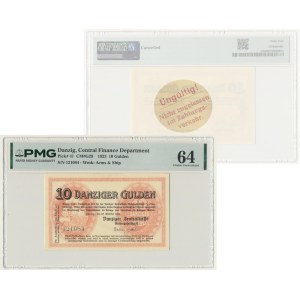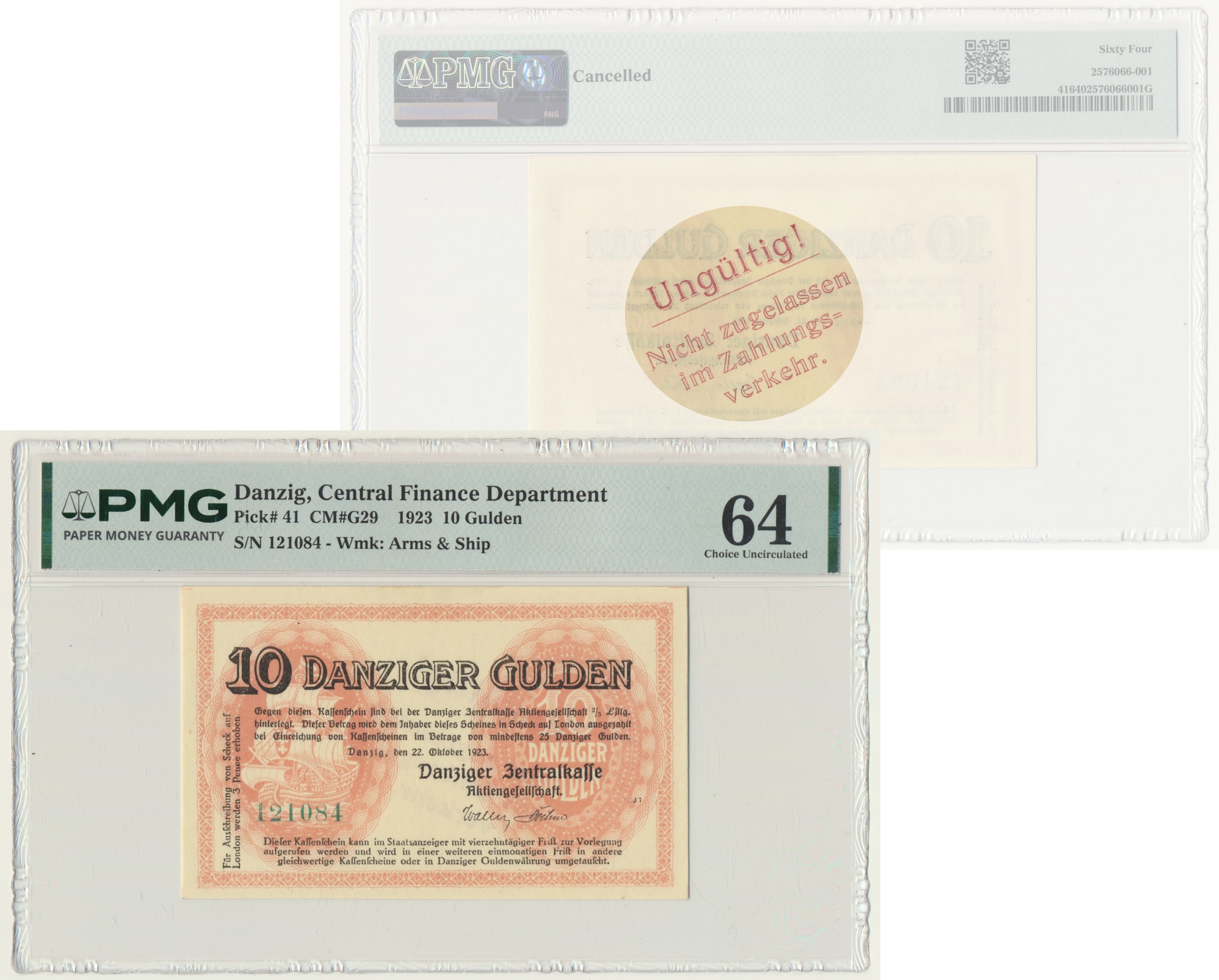
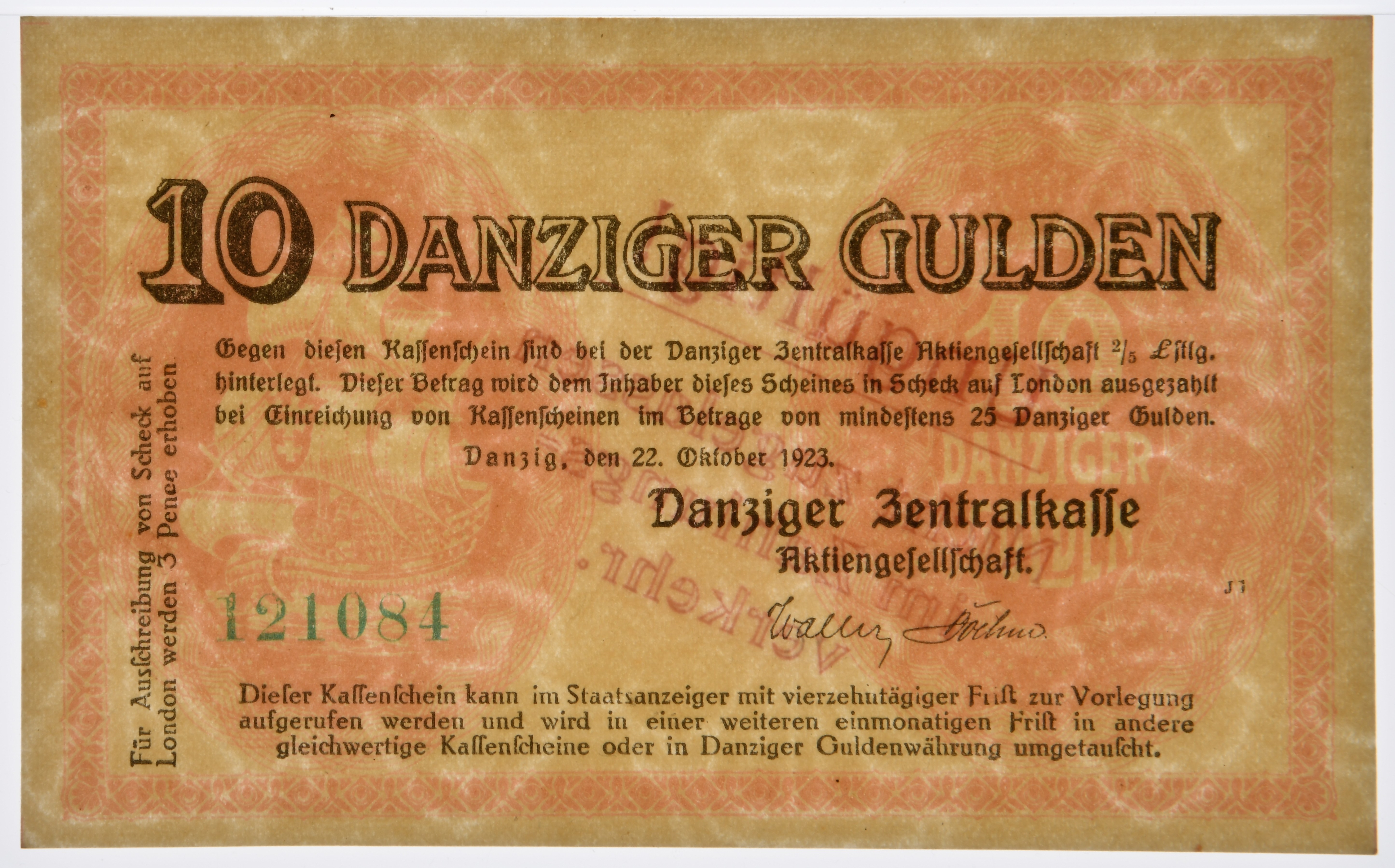
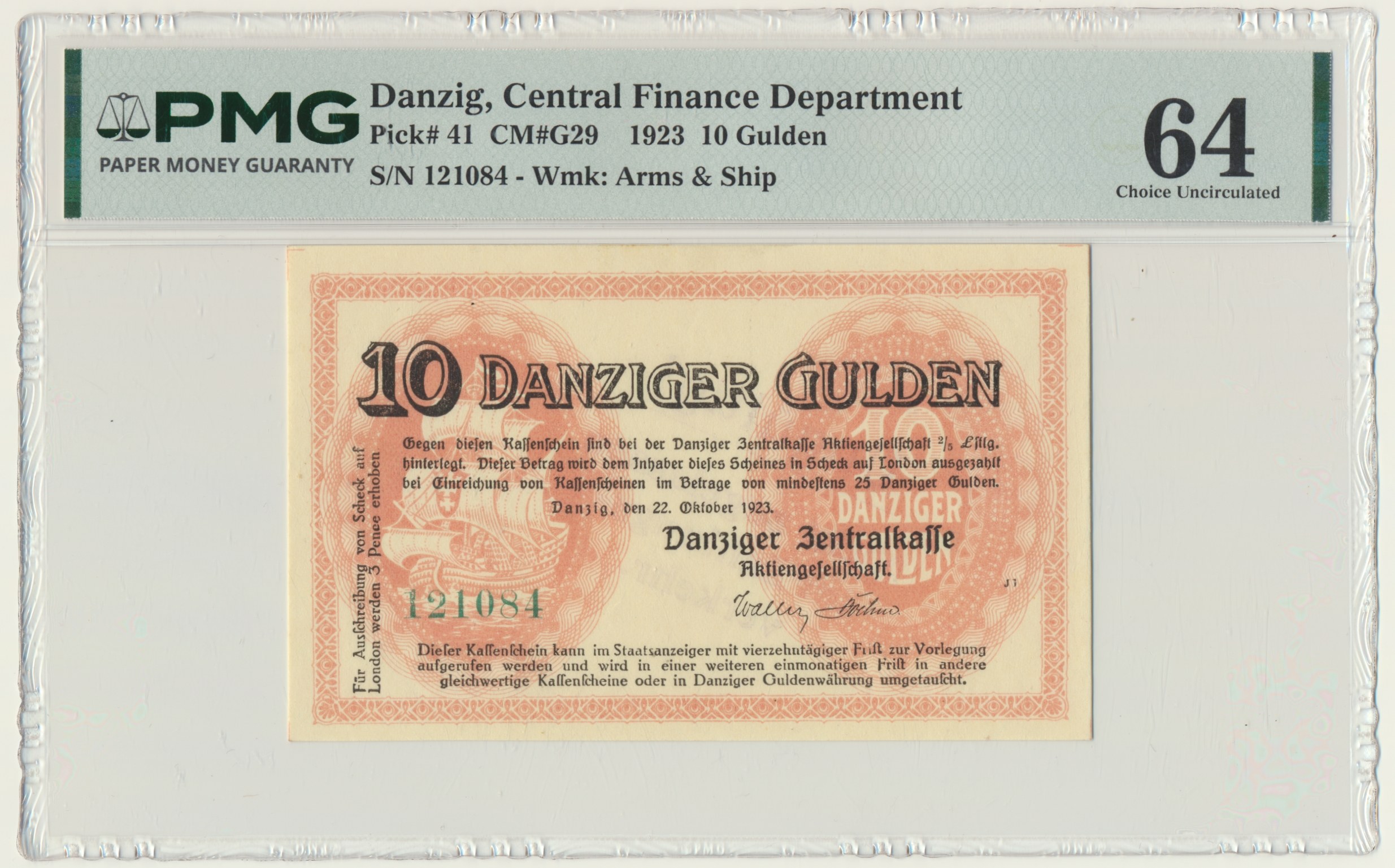
A highly rare banknote of the Free City of Danzig. A high and sought-after denomination of the first guilder issue.
A rare item in any state of preservation.
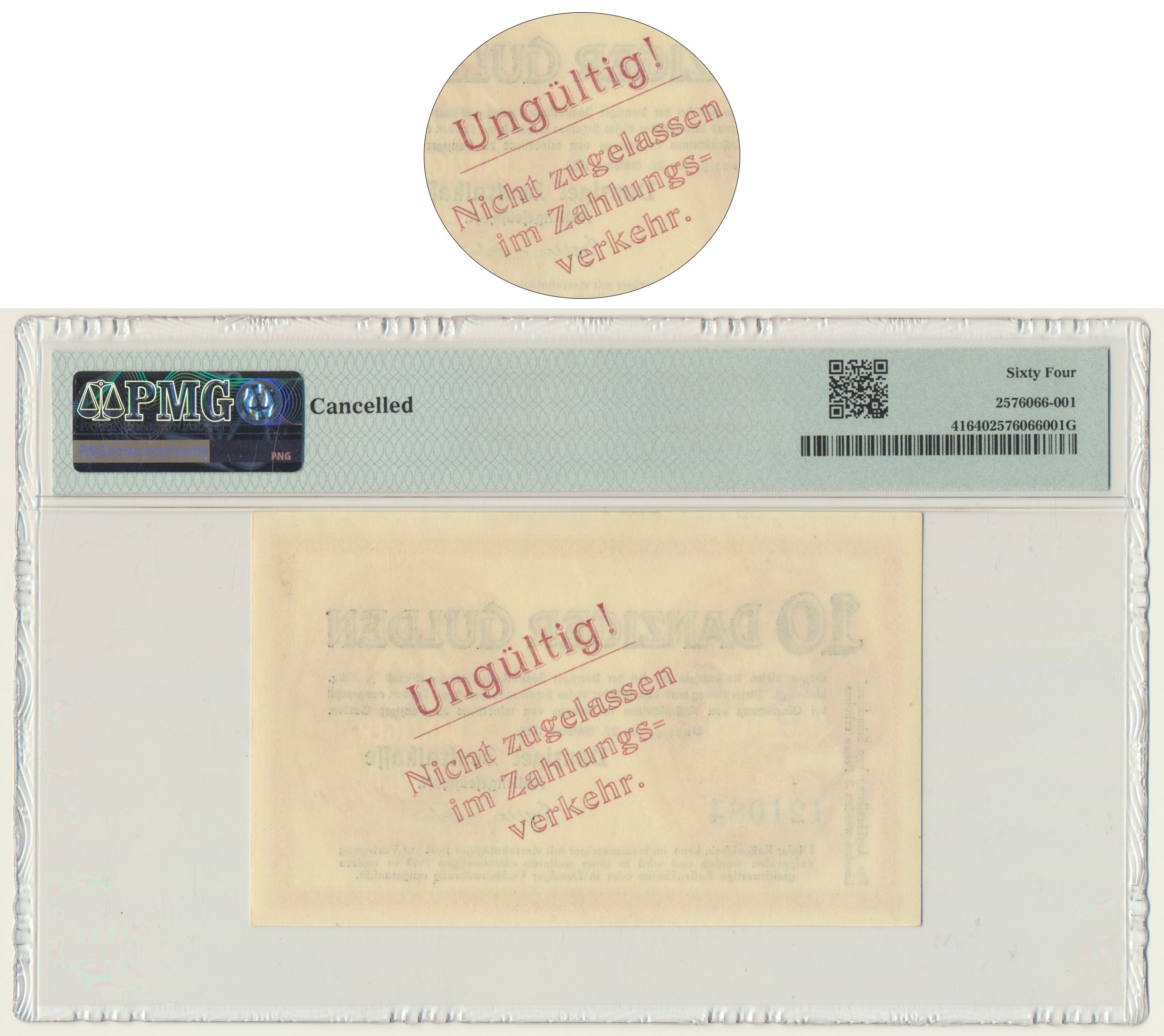
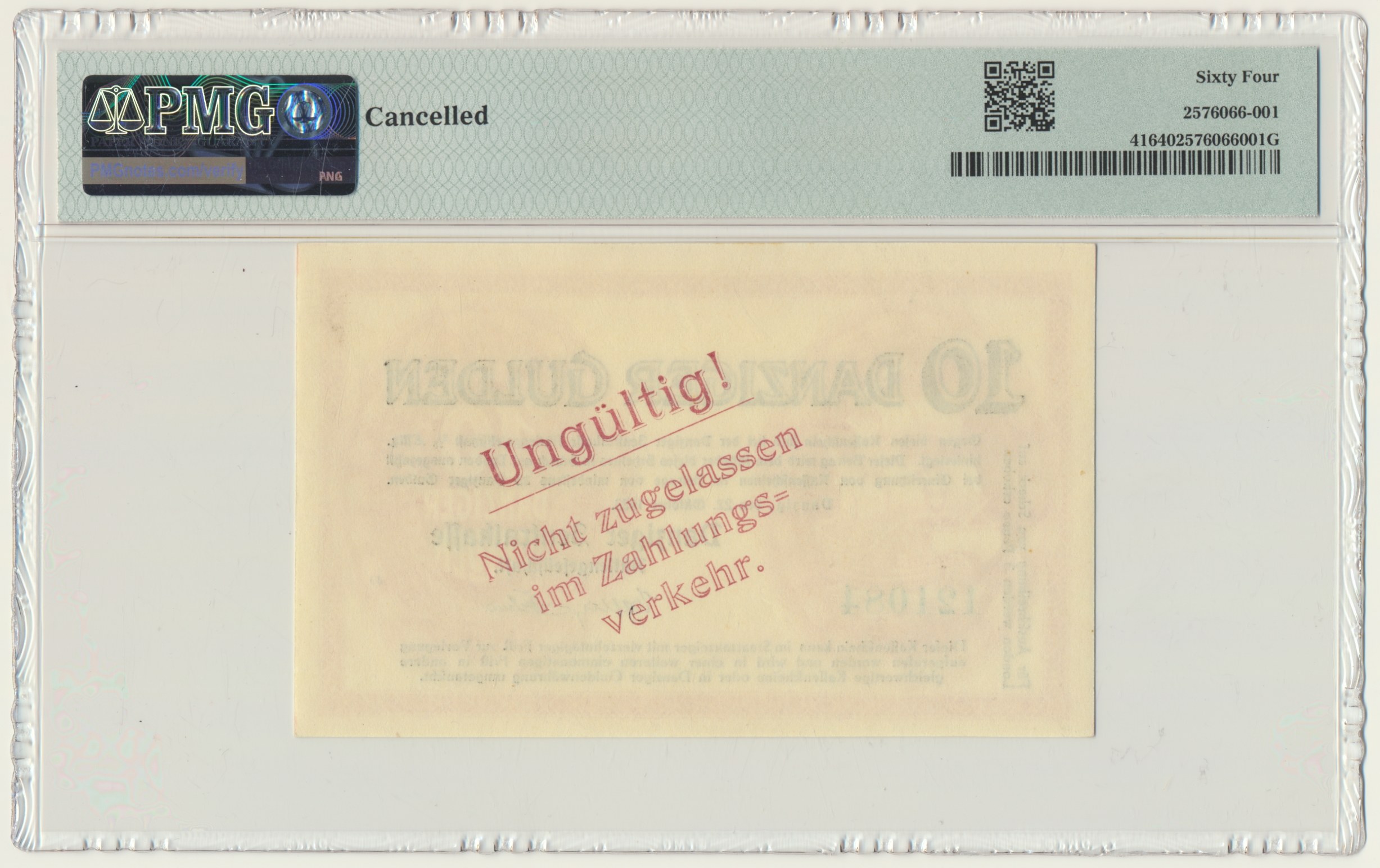
Ungültig print on the reverse! / Nicht zugelassen / im Zahlungs = / verkehr.
The PMG 64 grade is ideal for this type of banknote. The second highest in the register (the higher grade is PMG 64 EPQ).
One of the rarest WMG banknotes in issue condition.
The best piece ever to appear at auctions in Poland.
The Free City of Danzig was established in November 1920 under the terms of the Treaty of Versailles. The currency system was left to the discretion of the city authorities. Initially, the German mark was retained. However, due to rampant inflation in Germany, a decision was made to establish its own currency – the guilder, divided into 100 pfennigs. This became legal tender in late 1923 and remained until 1939. The paper currency issued in Danzig featured the city's iconography.
On November 20, 1923, when the currency was changed from the mark to the guilder, the exchange rate was set at 1 guilder = 750 billion marks. Because the decision to change the currency took place on November 6, 1923, there was insufficient time to prepare coins and banknotes. Initially, Gdańsk banks established a temporary issuing institution – the Gdańsk Central Cash Office, which was to operate until March 31, 1924. It issued one-sided temporary paper currency in denominations of 1, 2, 5, 10, 25, and 50 pfennig, and 1, 2, 5, 10, 25, 50, and 100 guilders. This currency remained legal tender until April 30, 1924. After that date, it was exchanged for Bank von Danzig currency for six months. The first guilder banknotes issued by the new Gdańsk issuing institution appeared in circulation in mid-March 1924. All shared a common design. Their graphic design incorporated the city's coat of arms, elements of urban architecture, and sculptural detail. All guilder banknotes were printed by the British securities printer Bradbury, Wilkinson & Co. Ltd., New Malden, Surrey.