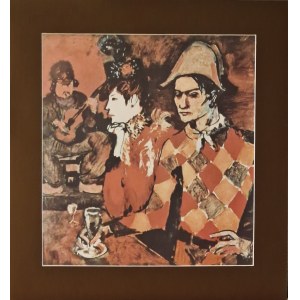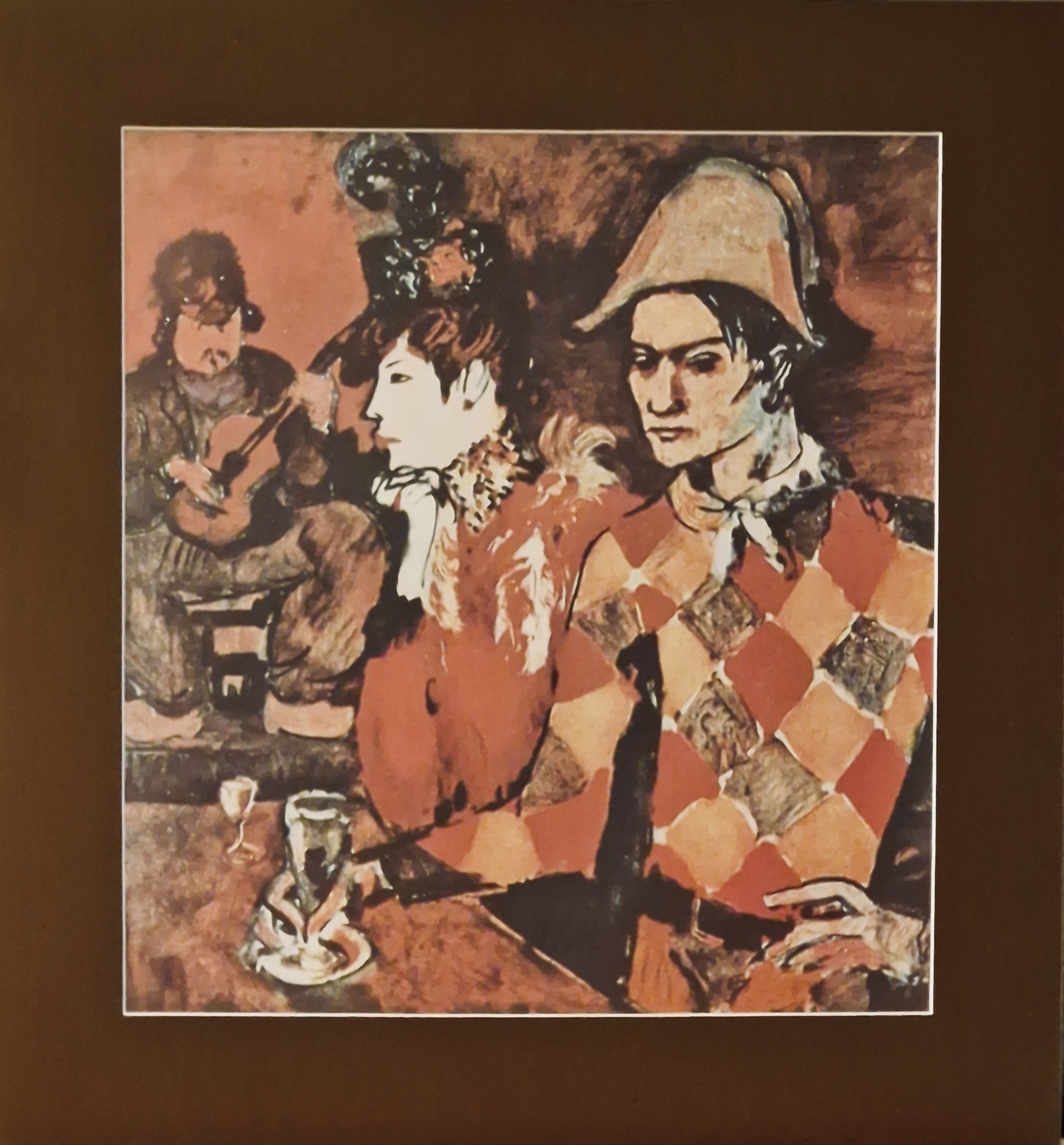
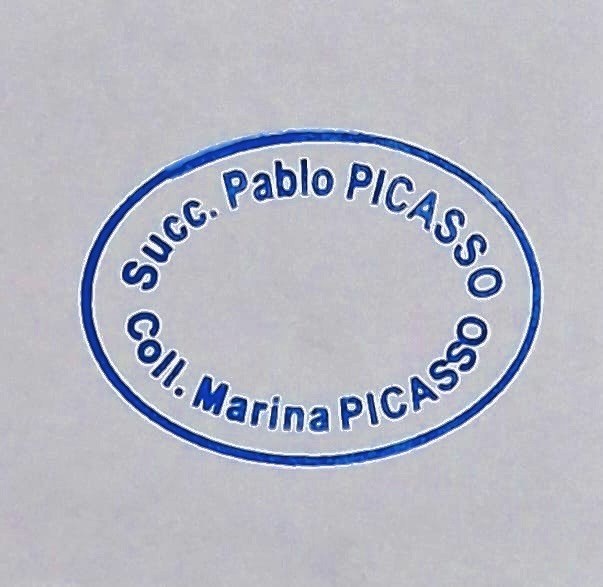
Workshop lithograph, paper specially produced for this edition by Cartier Sterzi, 47 x 32 cm in light of the passe - partout of 57 x 42 cm; publisher Centro Diffusione Cultura Milano under license from Succ. Pablo Picasso ( oval stamp "Succ. Pablo Picasso" on the back), edition of 1000 copies; the lithographic plates were destroyed to avoid unauthorized prints.
The image according to which, the presented lithograph was created Picasso painted in 1905 during the so-called Pink Period and is in New York in a private collection. In the scene in Lapin Agile, Picasso gave Harlequin his own features - he is accompanied by Germaine Pichot, his new lover and Casagemas' tragic love.
After the blue period, a pink period arose in Picasso's work between 1904 and 1906. It was a time of optimism and a warming of the image of his works after the melancholic blue period. Picasso's pink period, which fell between 1904 and 1906, was a time of marked change in his biography and works. It was characterized primarily by a warm color palette, dominated by shades of pink, orange and brown, which contrasted with the cool tones of the previous blue period. This color evolution reflected a change in the artist's mood, which shifted from melancholy to more optimistic, though still reflective, themes.
The painting technique in the pink period became much more refined. Picasso began using more complex textures and experimenting with lighting effects, which allowed him to emphasize the psychological significance of figures, mainly from circus life, traveling artists, clowns, acrobats and harlequins, etc. This new formal sensibility was also related to the artist's personal stabilization, initiated by his meeting and collaboration with model Fernanda Olivier, which brought him not only inspiration, but also emotional balance.
The works of the Pink period play an important role in Pablo Picasso's biography and serve as a bridge between his earlier, dramatic works and the subsequent stylistic experiments that revolutionized 20th century art and represented the birth of Cubism.
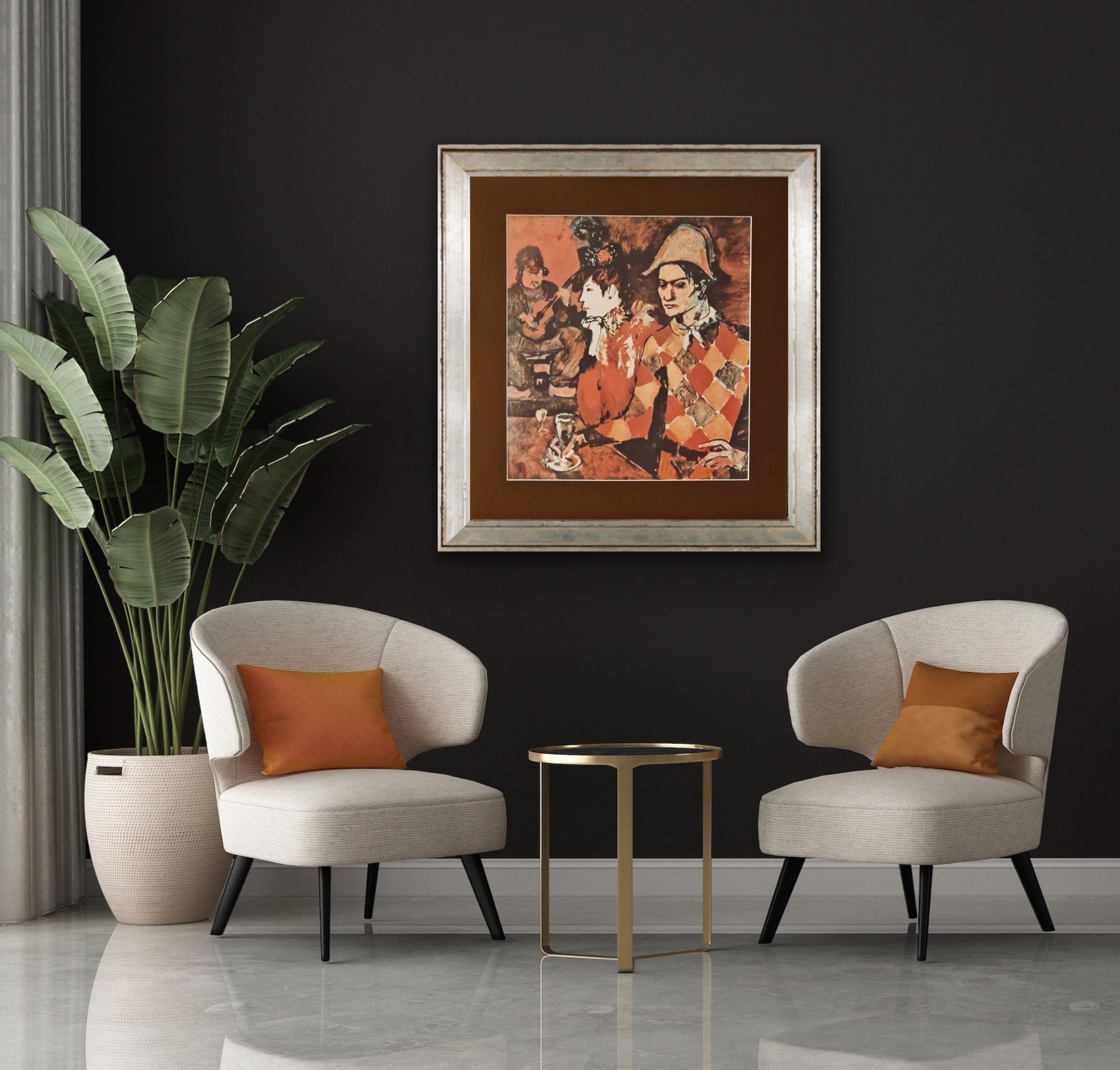
The framing shown in the visuals is for illustrative purposes only and does not constitute a commercial offer