


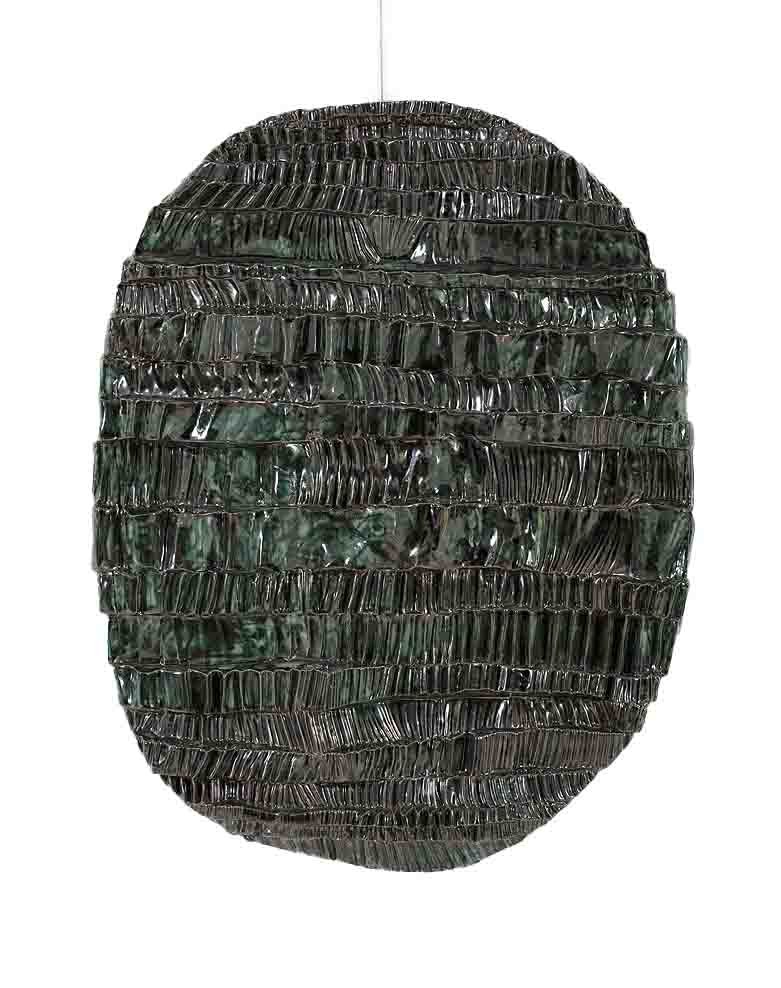

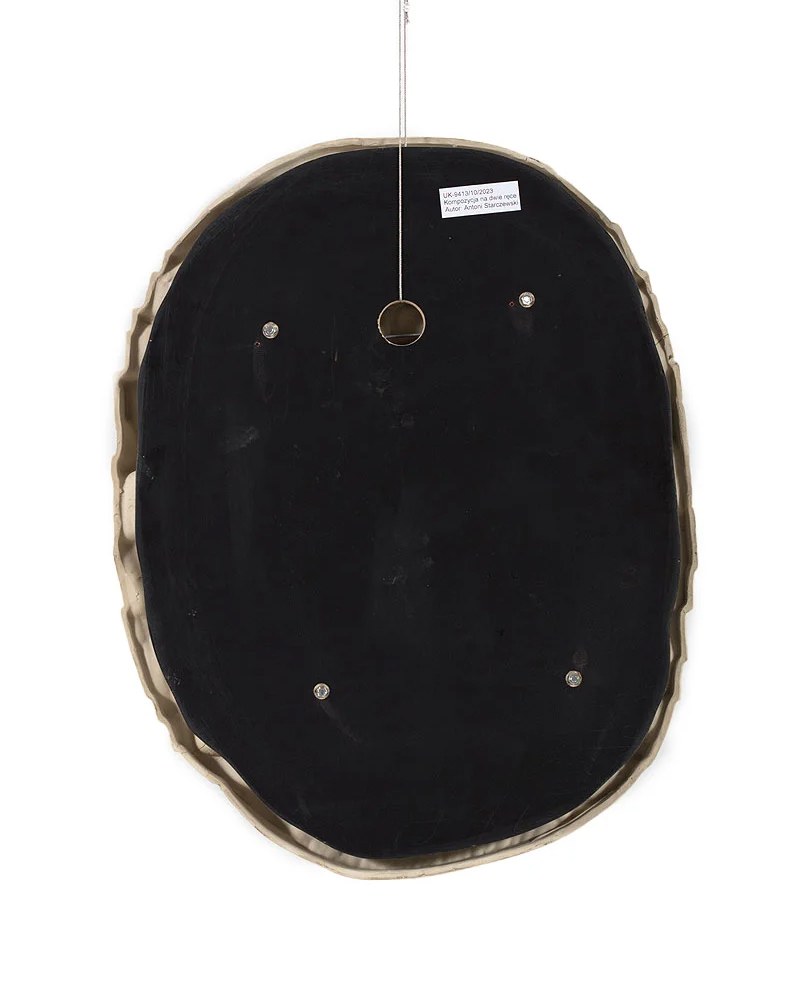
Dimensions: 58.5 x 45.5 cm
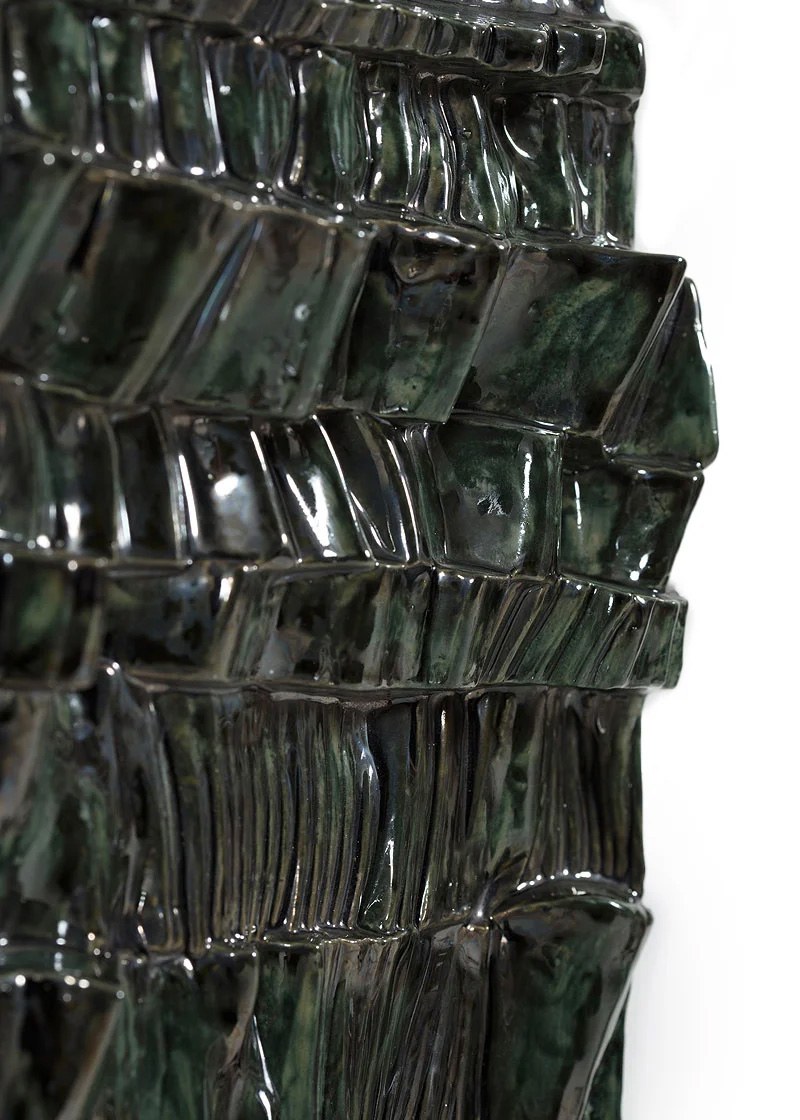
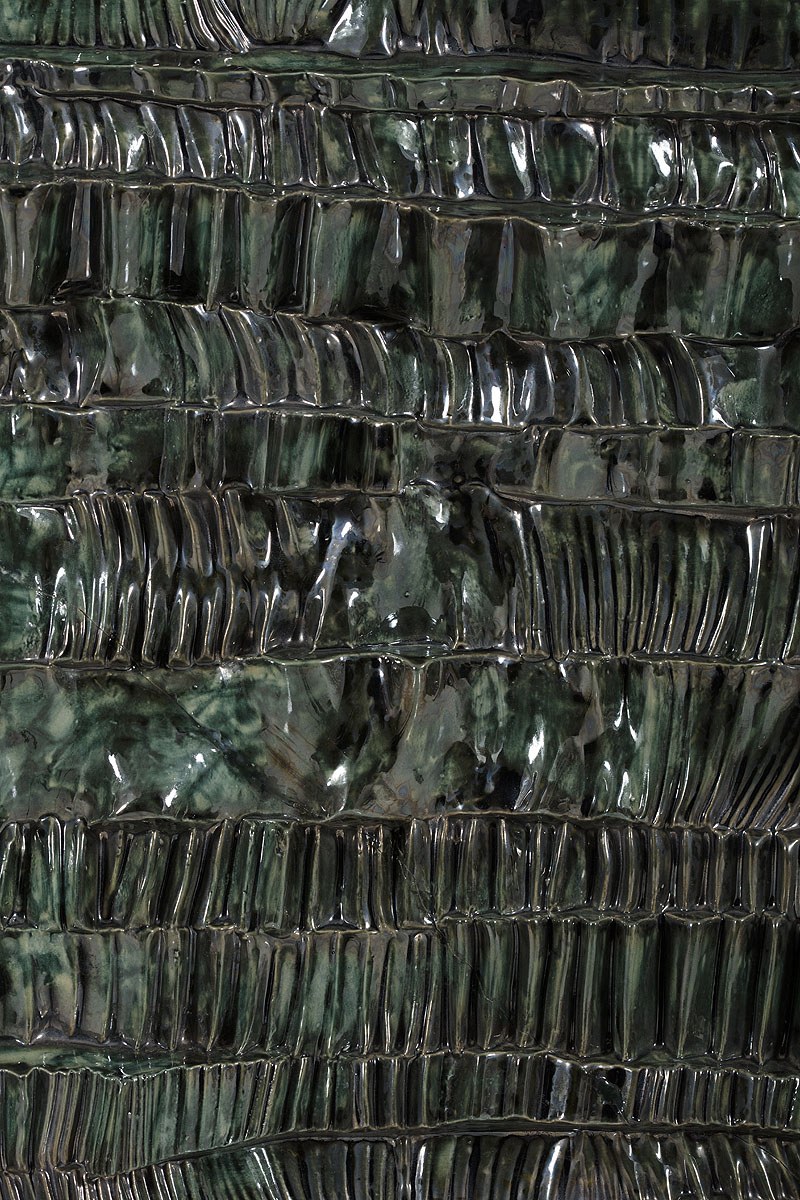
The offered composition was created while working on a monumental bas-relief titled "Arrangement for Two Hands", which was realized in 1957-59 by Antoni Starczewski as a commission for the lobby of the University Library in Lodz. The oval form, measuring 320 x 240 cm, was composed of about 160 unique elements, framed by a striped horizontal arrangement. Both the main realization and the accompanying smaller versions of "Arrangement..." took up the theme of light, which, falling on a concave-convex surface, evokes the impression of rippling, pulsating, vibrating. This makes it an extremely expressive composition and the artist explained it this way: "It was created with the simultaneous use of both hands and is a reference, among other things, to the movements made by a conductor directing an orchestra" (Kowalewska M., Musiał G. [ed.], Antoni Starczewski. Transpositions, published by the Central Museum of Textiles in Lodz, Lodz 2020, p. 23).
Starczewski repeatedly emphasized the connection of his work with music and equated the process of creating rhythmic compositions with the act of composing a musical work. The score of a musical work consists of signs. Similarly, in the offered composition, which is based on modular elements arranged in a linear order. The individual elements differ from each other. Juxtaposed in dynamic ribbons, they form a peculiar notation. The conceptual work on "Arrangement..." and its accompanying compositions became the reason for Starczewski's development in 1963 of a group of about 30 elements that could be juxtaposed like printing fonts. Two years later, the artist went a step further and transposed the idea initiated in "Arrangement..." to other disciplines within sculptural forms - ceramics, wood and metal.
The offered work is part of a concept that played a not inconsiderable role in shaping the creative output of Antoni Starczewski. It began a period of exploration of the relationship between visual arts and music, and opened the way to works-partitions whose common denominator was rhythm and the medium - ceramics, fabric, metal - played a secondary role. It can be said today that the compositions "for two hands" became the germ of one of the most important phenomena of Lodz's post-war avant-garde.










