Author: JanJONSTON
Title: Theatrum universale de avibus, adorned with sixty-two plates engraved in copper by the most celebrated Mathias Merian, compiled with the utmost care from both ancient and more recent writers [...] and other sources, and reprinted for its rarity by Franciscus Josephus Eckebrecht, bookseller of Heilbronn.
- Place of publication: Francofurti ad Moenum (Frankfurt am Main)
- Year of publication: 1756
- Publisher: printed by Christian de Launnoy
- Number of pages: [ 5], 238, [9], [11] blank
- Illustrations, maps: p. 62 (copper engravings), vignettes
- Dimensions: folio , 34.5 cm
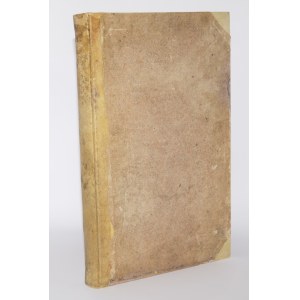
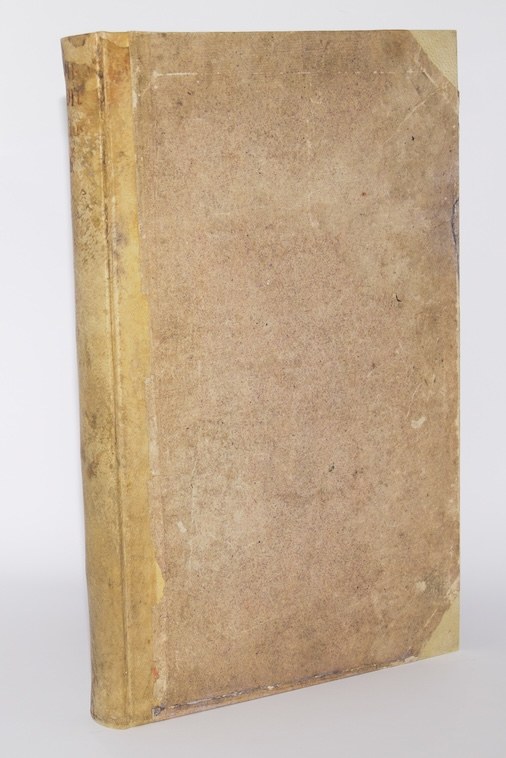
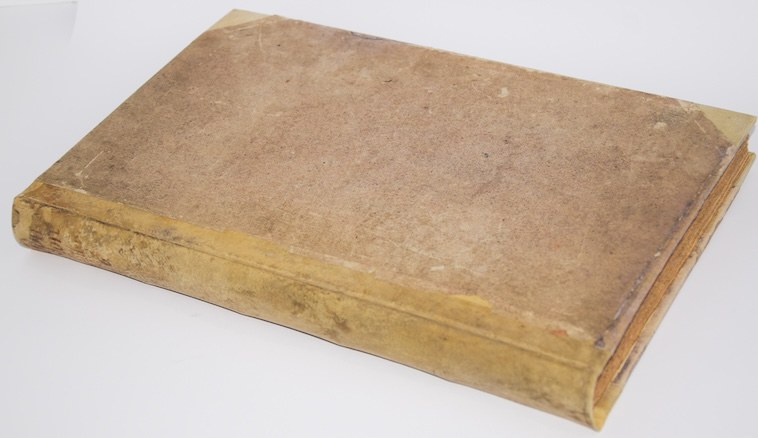
- Binding: half-parchment , secondary
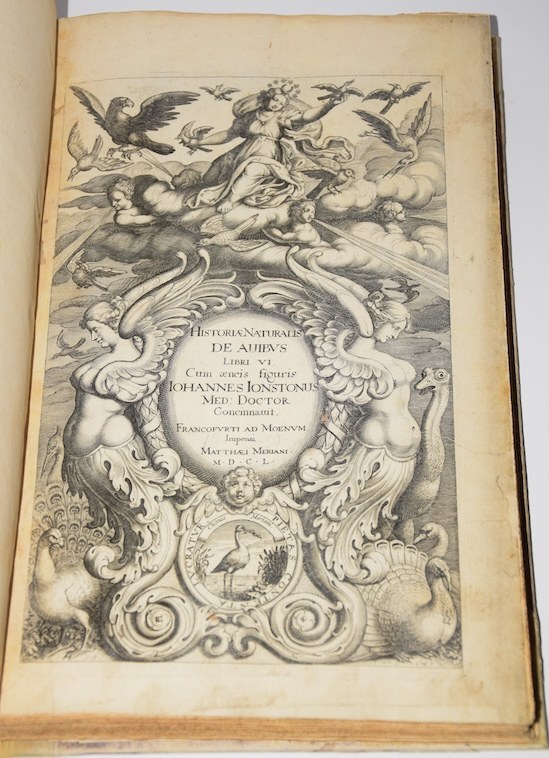
- Condition: binding restored; title page missing; the fully engraved title page from the first edition of 1650 is preserved (restored, verso doubled), which serves as the frontispiece in this edition; all engravings printed from Merian’s plates; otherwise, in very good condition! At the end, 11 blank pages were sewn in during the period for possible notes
- ISBN: ---
Description:
VD18 14842114; Nissen IVB 482; Anker 237; Estreicher XVIII, 614.
One of the most important works by Jan Jonston (1603–1675) —an outstanding naturalist, physician, and polymath of Polish descent, whose monumental *Historia naturalis* was among the most significant European zoological compendia of the 17th and 18th centuries.
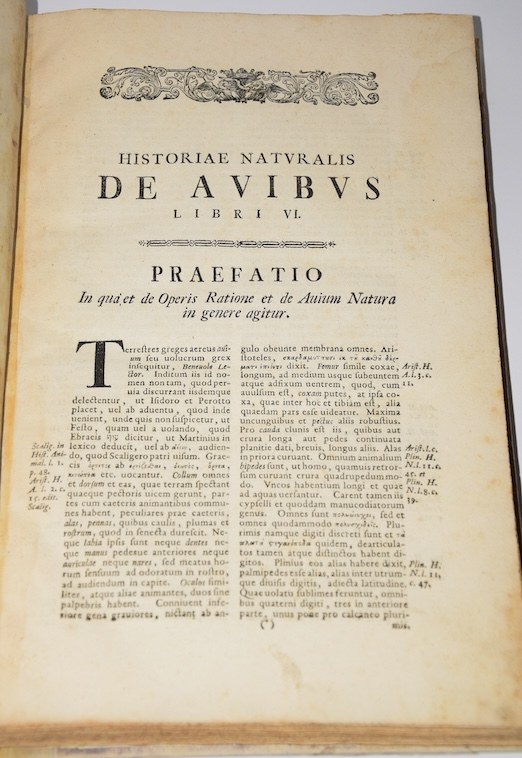
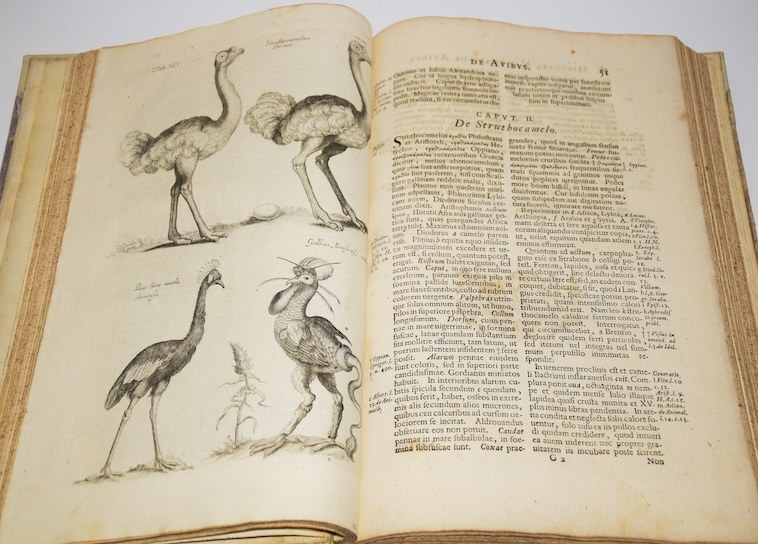
*Theatrum universale de avibus* is a work devoted to the world of birds and constitutes the first volume of the *Theatrum universale historiae naturalis* series . The first edition was published in Frankfurt in 1650; the edition offered here was published in 1756 on the initiative of the Frankfurt bookseller and publisher Franz Joseph Eckebrecht. The bibliography confirms that this edition contains 62 copperplate engravings and 238 pages of text.
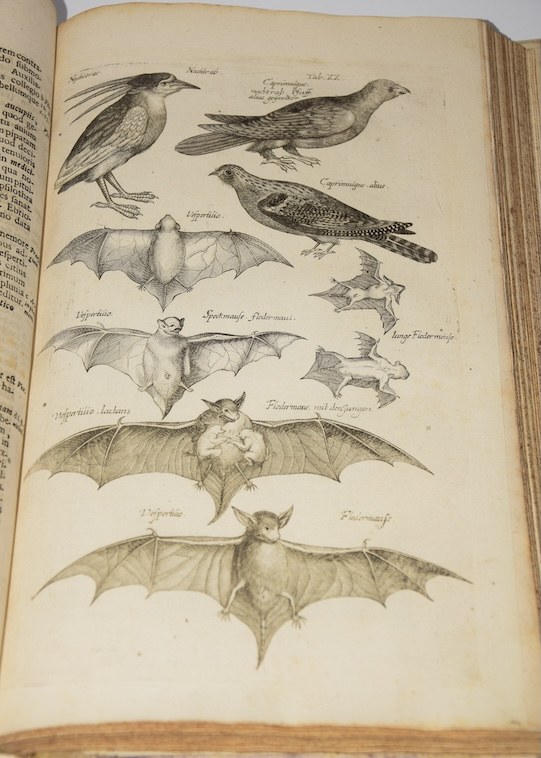
In this work, Jonston compiled knowledge drawn both from ancient authors—including Aristotle, Dioscorides, Aelian, and Pliny—and from later works on natural history. It depicts numerous bird species, providing their Latin names along with information on their appearance and habits. Characteristic of the era is a broad understanding of the animal world—Jonston also included bats among the creatures depicted.
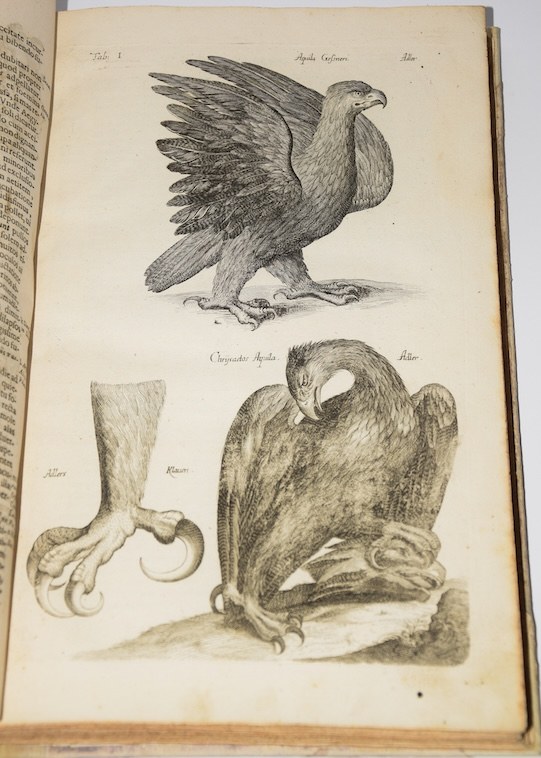
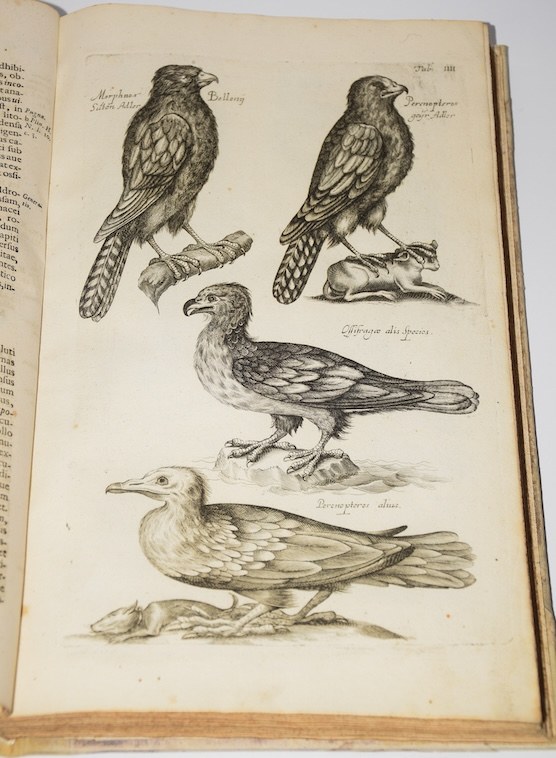
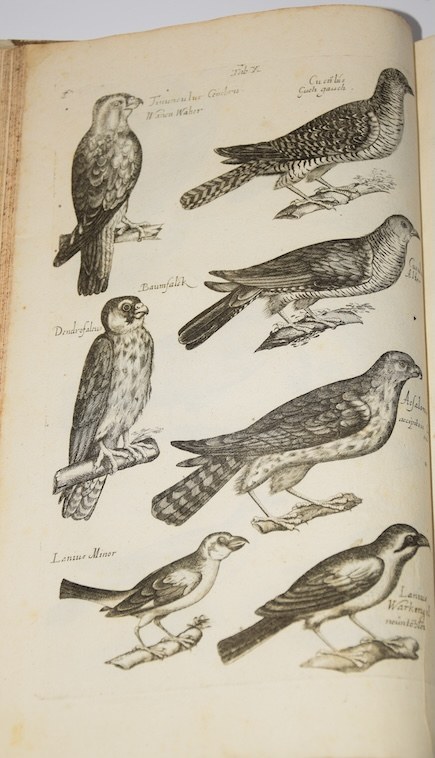
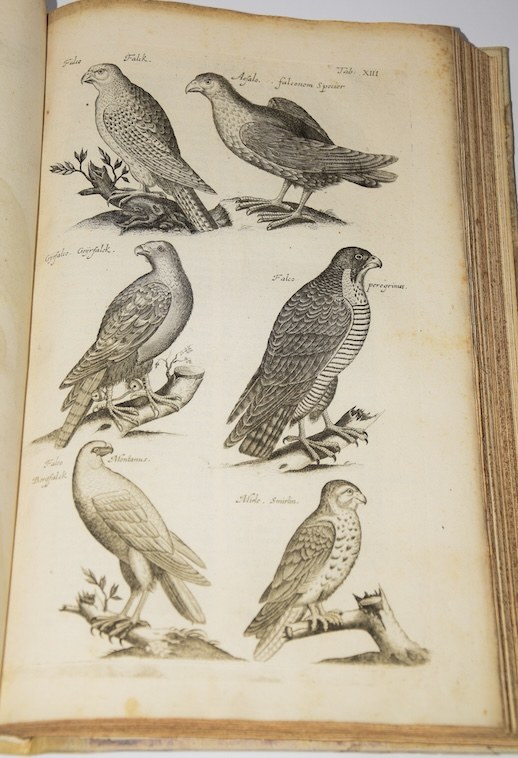
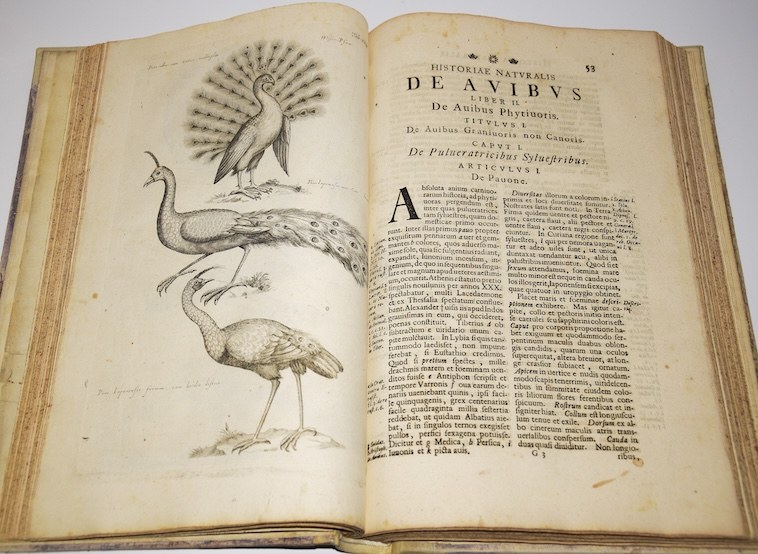
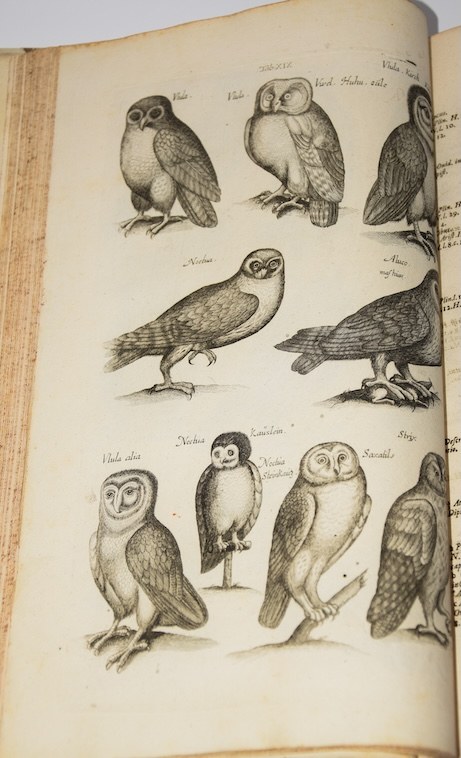
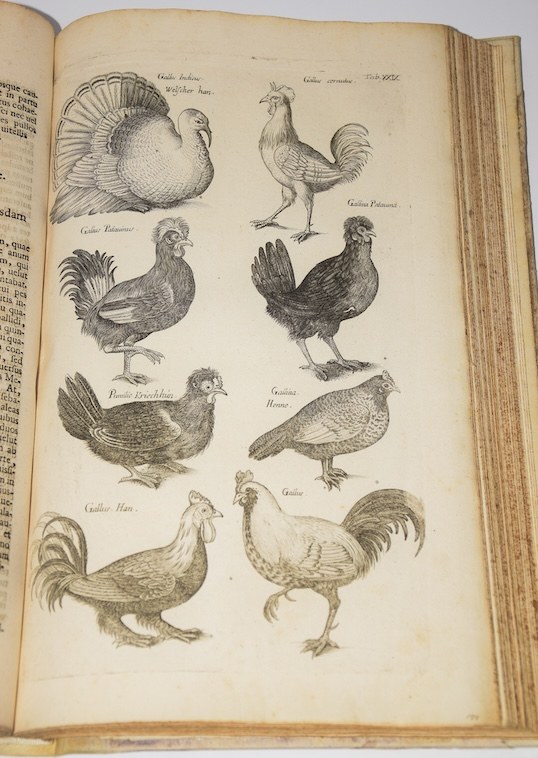
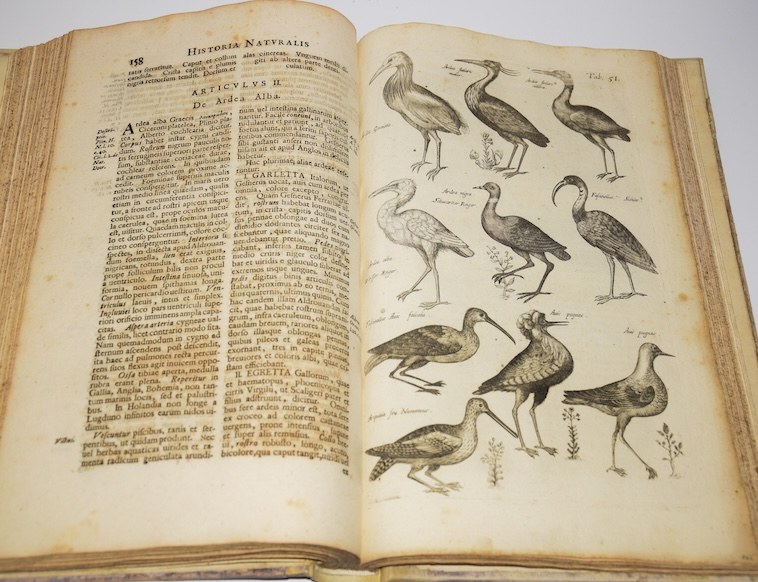
The greatest strength of the work is its exceptionally rich illustrative material. The 62 full-page copperplate engravings contain hundreds of depictions of birds, presented in compositions characteristic of 17th-century natural history illustration. The plates include, among others, birds of prey, land birds, herbivorous and insectivorous birds, waterfowl, exotic birds, and fantastical creatures.
Of particular interest is the fact that the 1756 edition was produced using the original copperplate engravings associated with the first edition from 1650. Bibliographic sources emphasize that earlier intermediate editions, including those from Amsterdam, used plates made as mirror-image reprints, whereas the 1756 edition reverted to Merian’s original plates.
The piece offered here is particularly interesting due to the fully preserved engraved title page of the first edition from 1650, which serves as the frontispiece in this edition. The actual title page of the 1756 edition has not survived. The engraved title page from 1650 has been restored, and its verso has been duplicated.
At the end of the volume, 11 blank pages sewn in during the period have been preserved; they were likely intended for notes, additions, or the owner’s personal annotations.
Jan Jonston was one of the most prominent figures in 17th-century Polish natural science. Thanks to a combination of extensive encyclopedic knowledge and rich illustrative material, his works enjoyed immense popularity in Europe and were reprinted numerous times.
A rare edition of one of the most important works in Jan Jonston’s oeuvre, of exceptional iconographic and bibliophilic value!