



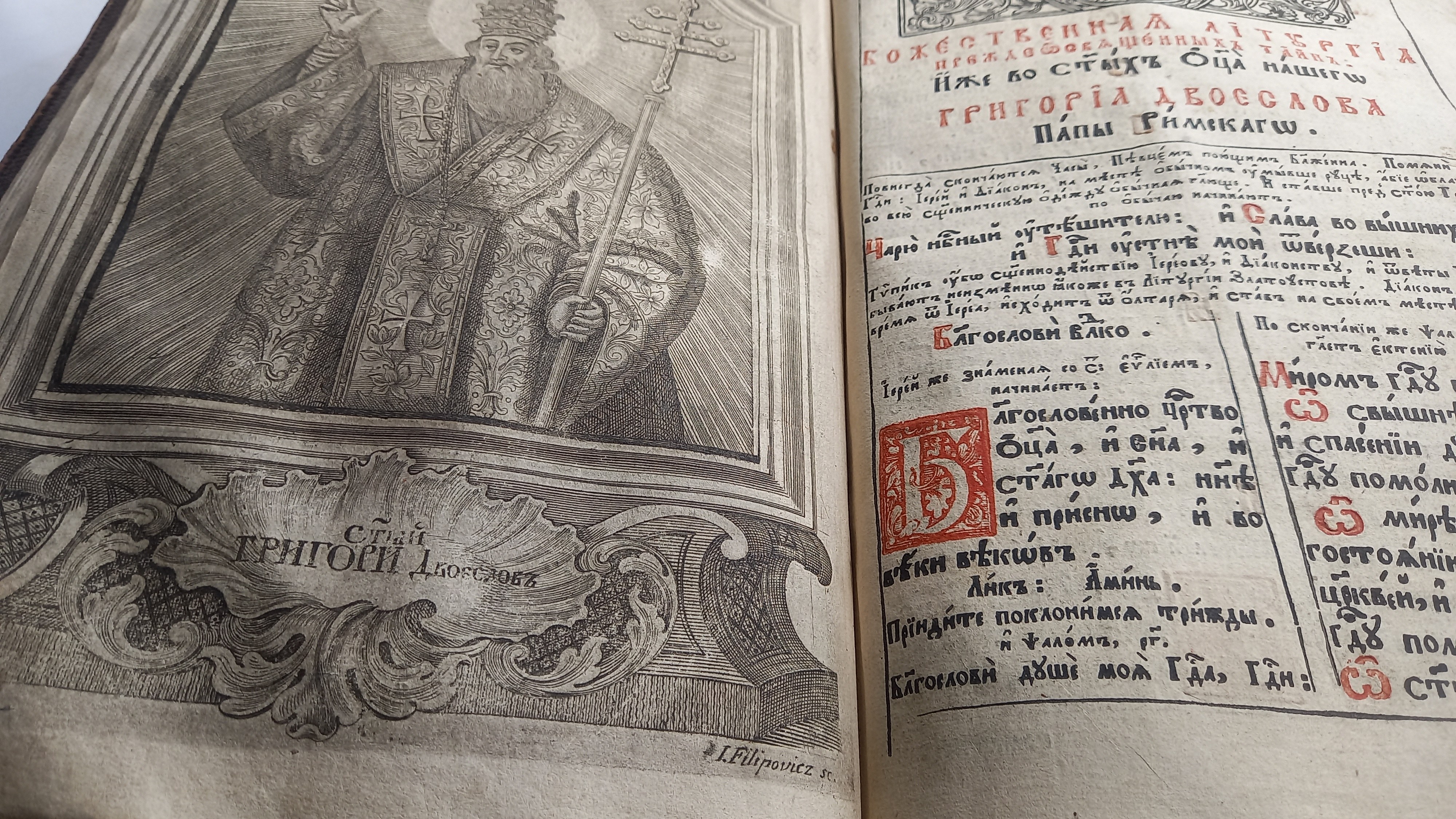
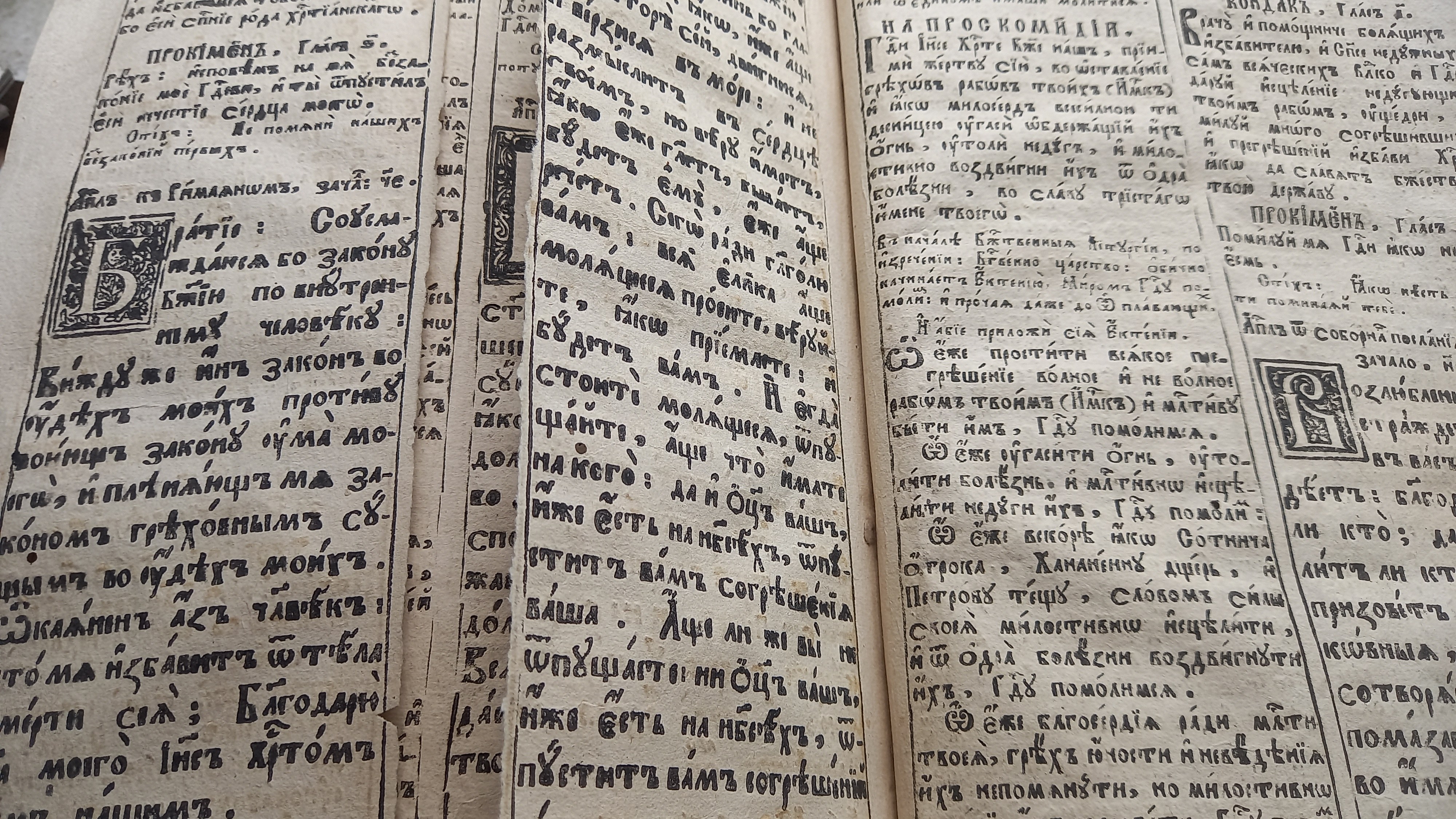




Liturgikon (Service Book) in Church Slavonic and Ukrainian, published by the Printing House of the Brotherhood of the Church of the Dormition of the Mother of God in Lviv in 1780.
Complete piece.
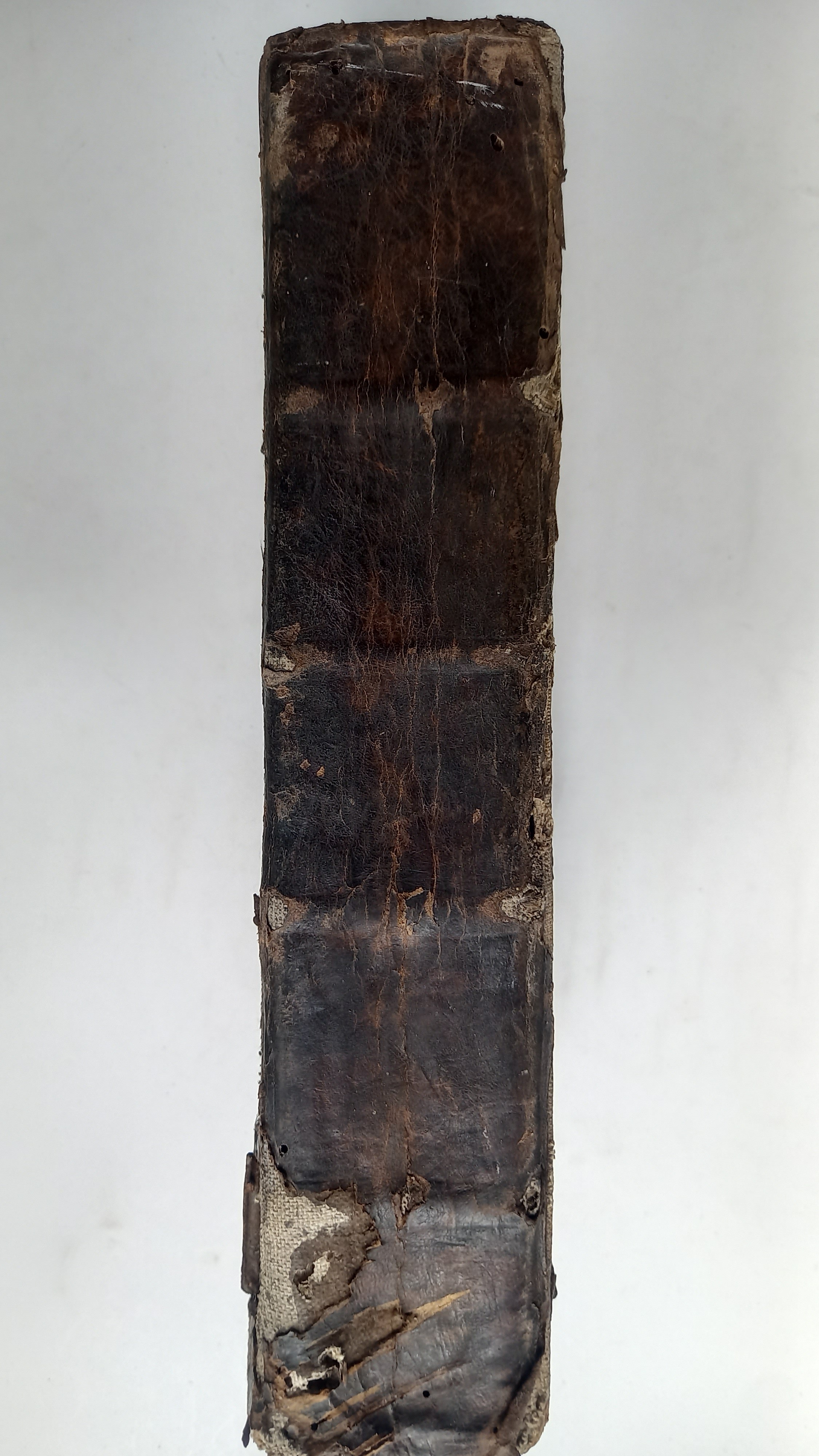
Hardcover, bookbinder’s binding, spine covered in leather, horizontally profiled at the page-seam.Front and endpapers with handwritten inscriptions (late 19th–early 20th century)—names and a catalog number (?)—23 V.
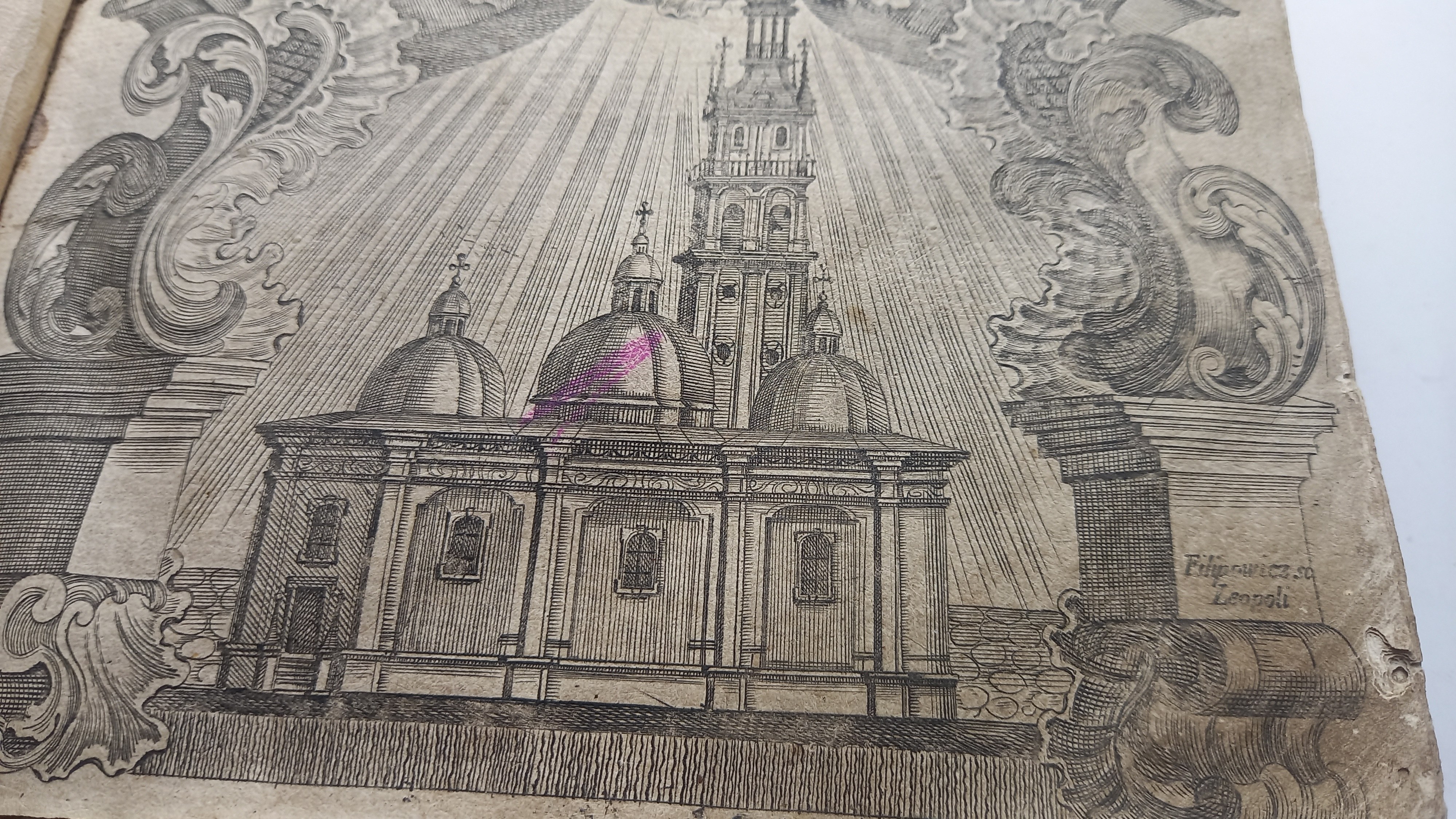
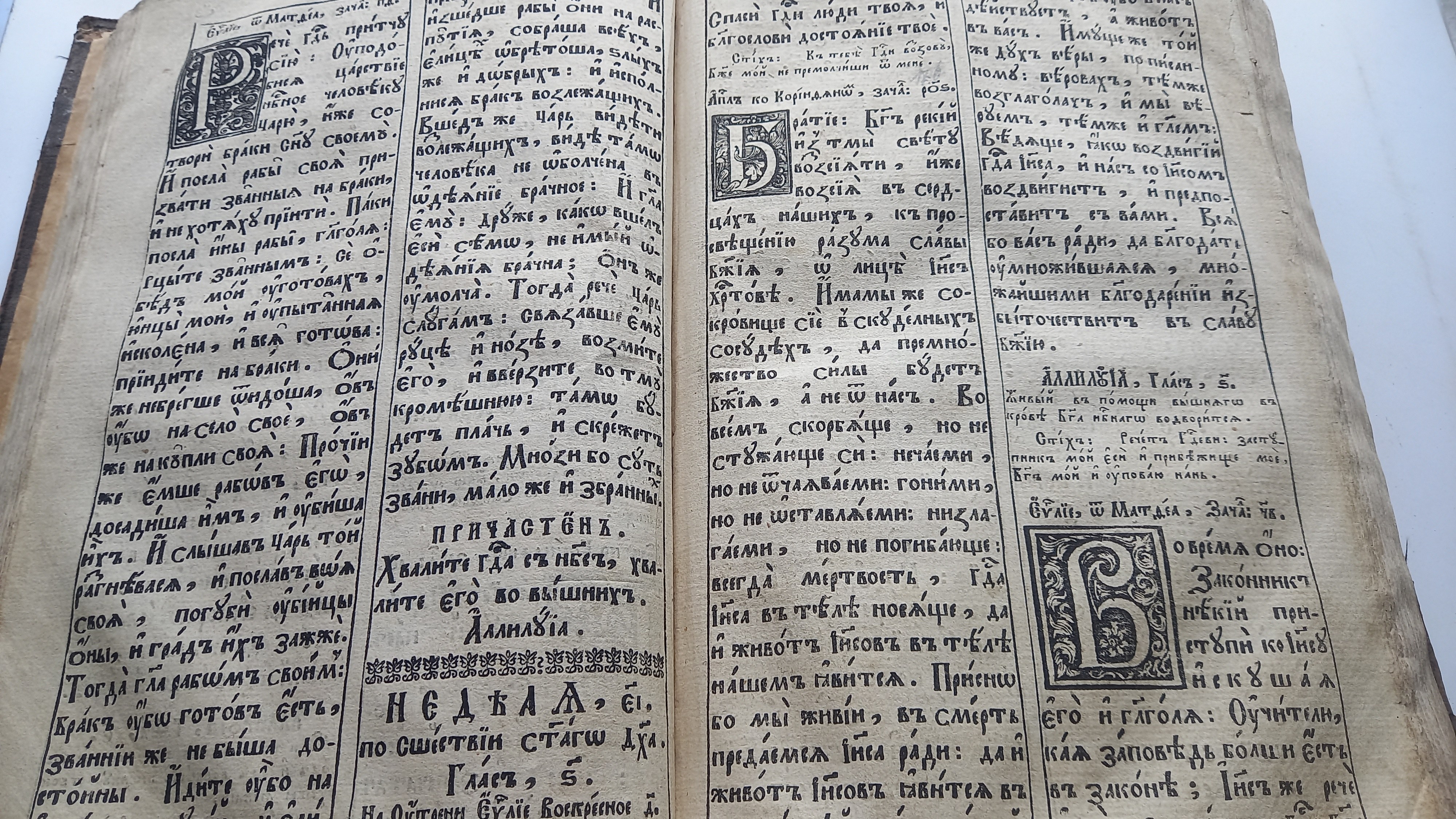
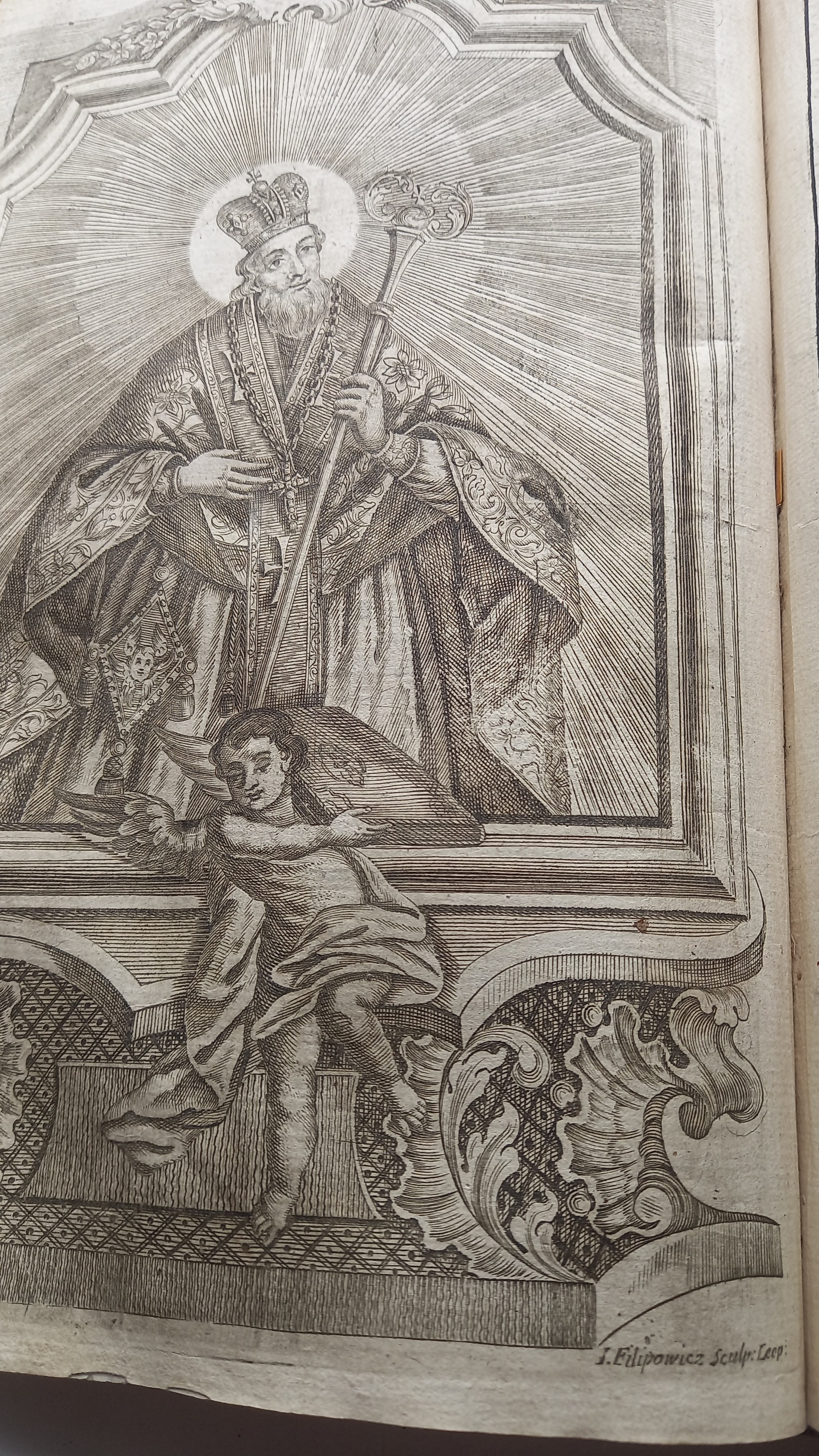
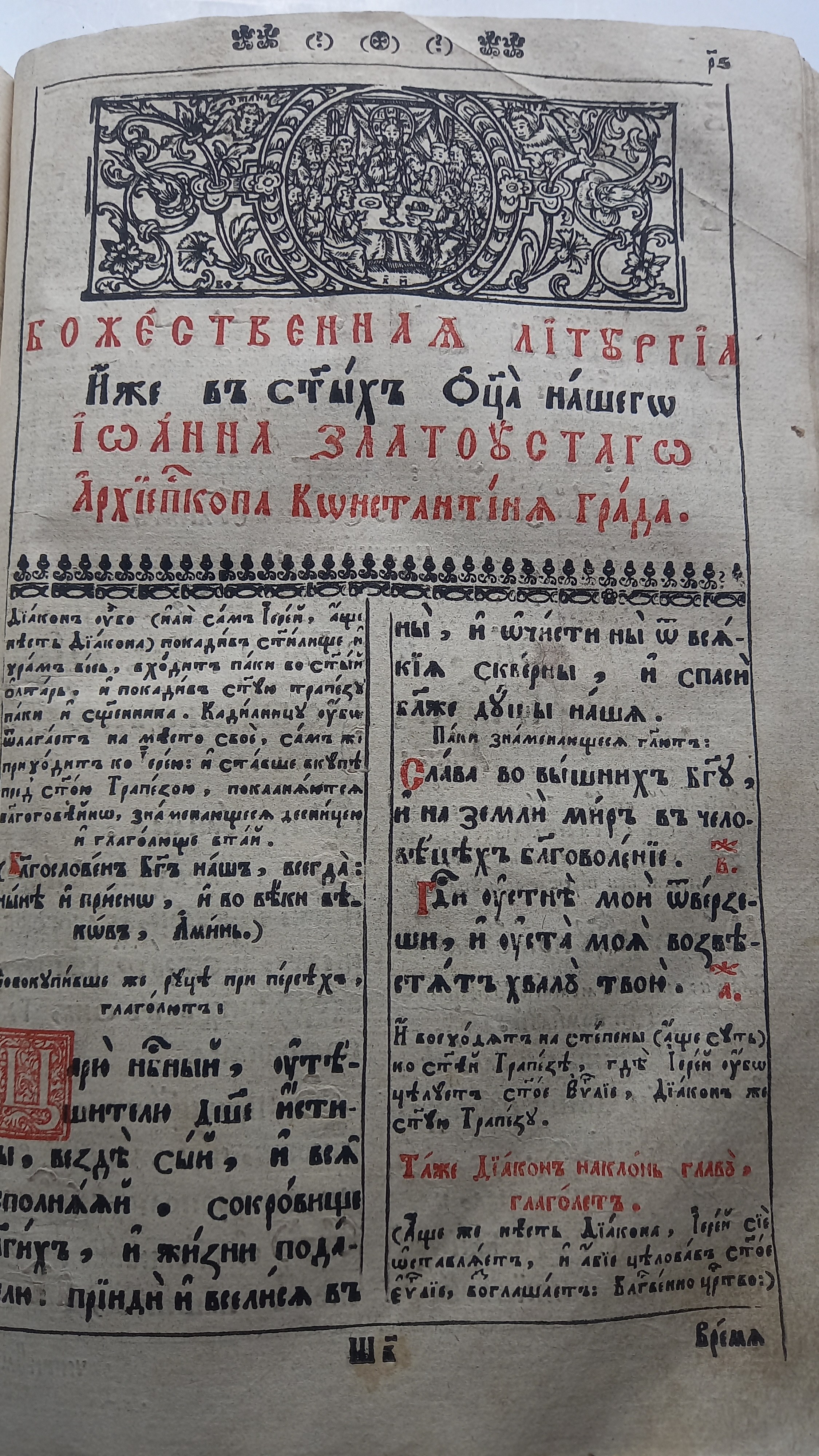
328 leaves, handmade paper, page numbers in Cyrillic script (upper right corner) , two-color printing (black and red), with copperplate and woodcut illustrations, signed: I. Filipowicz, N, Zubrzycki.Full-page (copperplate engravings): frontispiece (with images of the Mother of God, Sts. Peter and Paul, and the Uspenska Church in Lviv) and four more within the text.Numerous vignettes, headpieces, tailpieces, and woodcut initials—both ornamental and featuring figurative depictions (17th and 18th centuries). Two-column page layout, with columns framed by line borders.One leaf is cut, with several small areas of paper loss.
Dimensions of the block: 30 × 20 × 6 cm.
This edition is decorated, among other things, with five copperplate engravings by Jan Filipowicz from 1759. A total of 216 prints by him are known.For the production of the copper plates for the 1759 Service Book, the Brotherhood agreed to pay Filipowicz 20 zlotych, plus 2 grosze for each piece printed.These plates were used by the Brotherhood for 21 years.The long-term use of the same woodcut and copperplate printing plates was a common practice; for example, the woodcut blocks from Fedorow’s printing house in Lviv were used for 245 years.This is confirmed, among other things, by the colophon printed in the 1780 Service Book (page 137 in the first part) as well as 17th-century frontispieces :Nikodem Zubrzycki (“Christ Blessing”), the artist signed “BO3” from 1640 (“The Last Supper” [ref.], “The Crucifixion,” “The Entombment”), and other engravers.
This 1780 Liturgikon is considered one of the best-edited publications of the 18th century.
The item comes with professional documentation (a registration card for a movable cultural heritage object) prepared by an art historian specializing in Orthodox Church art, along with the book’s provenance.









