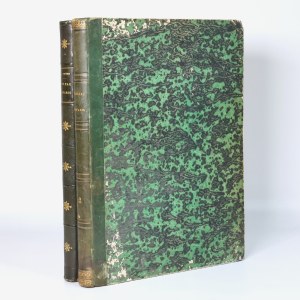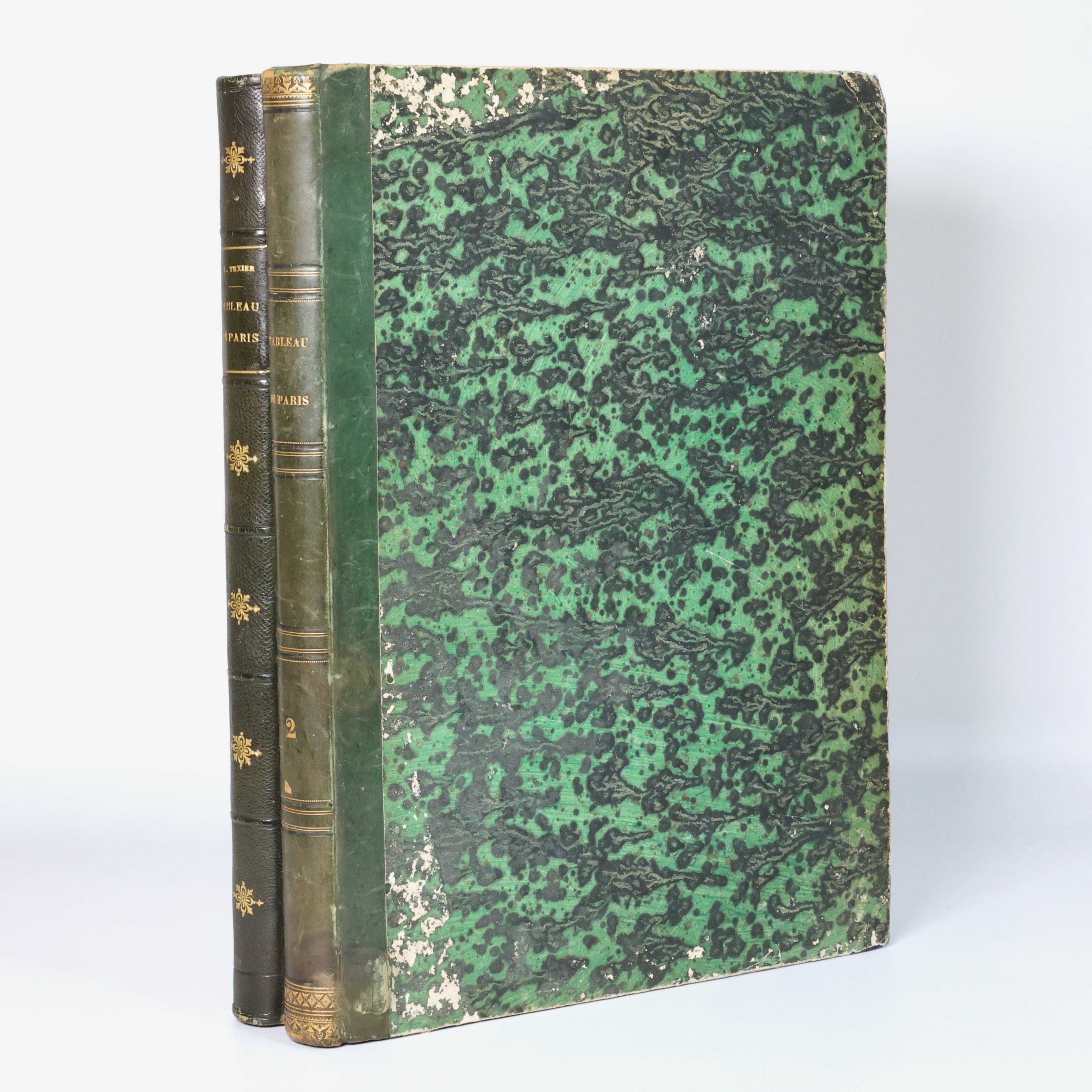
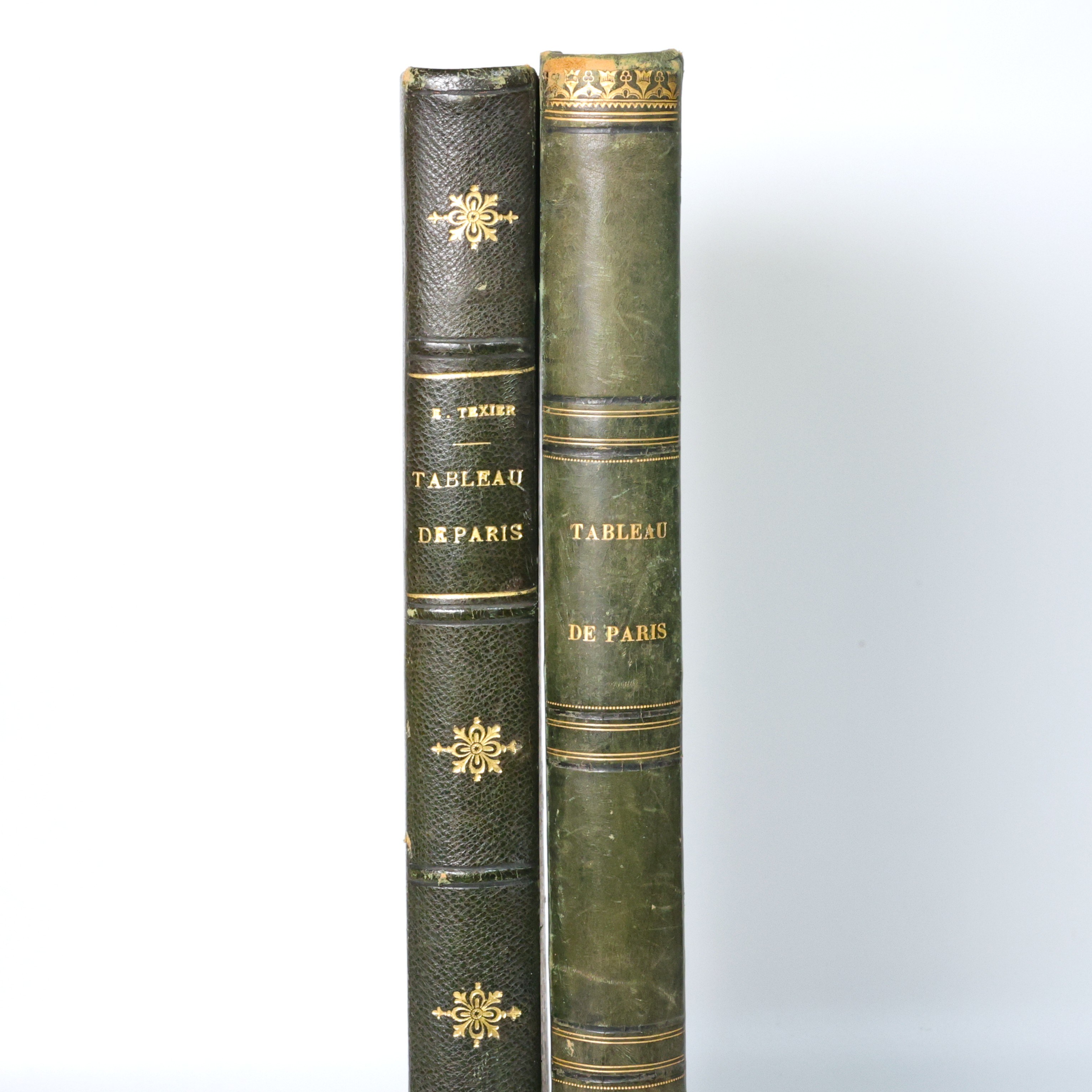
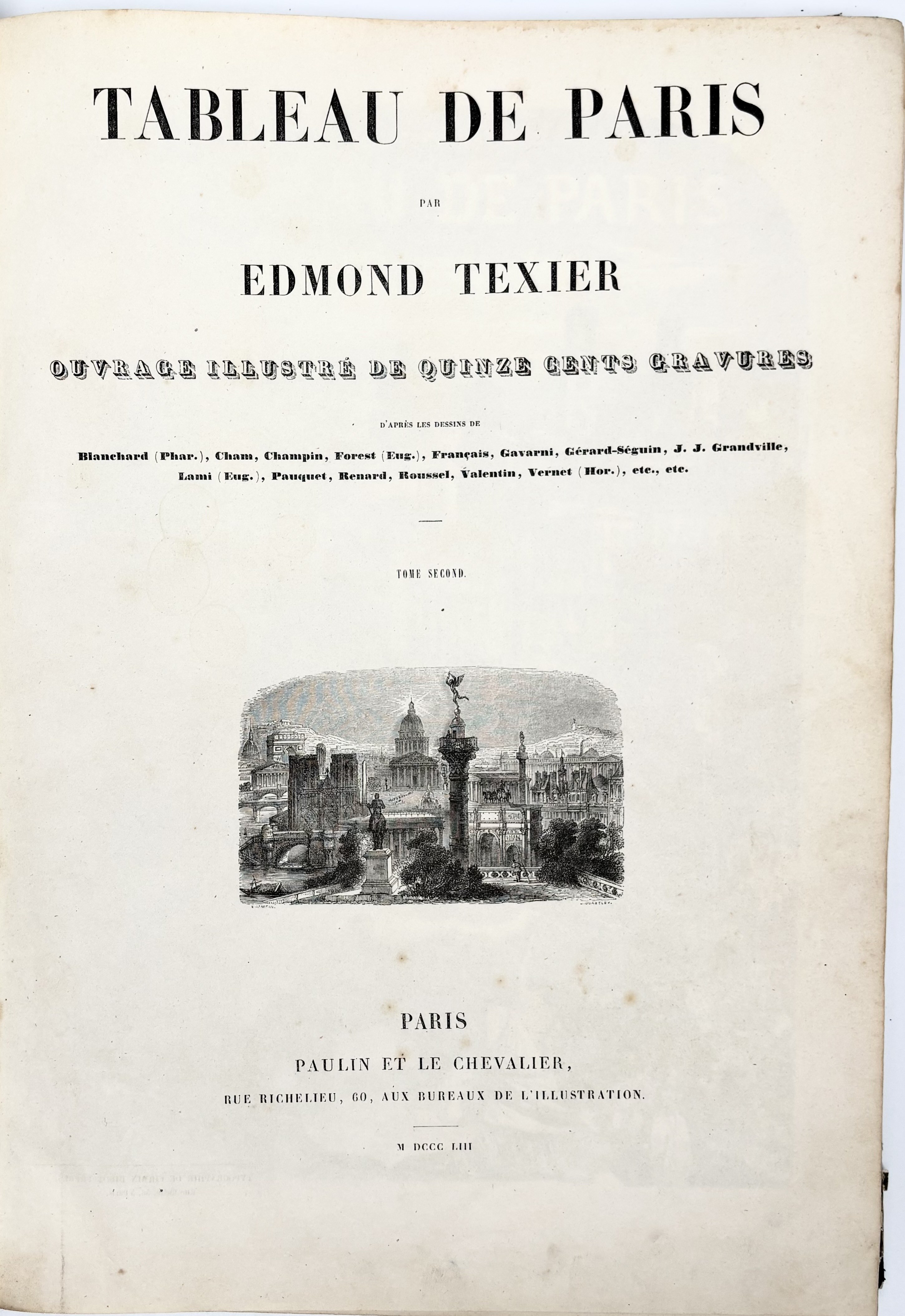
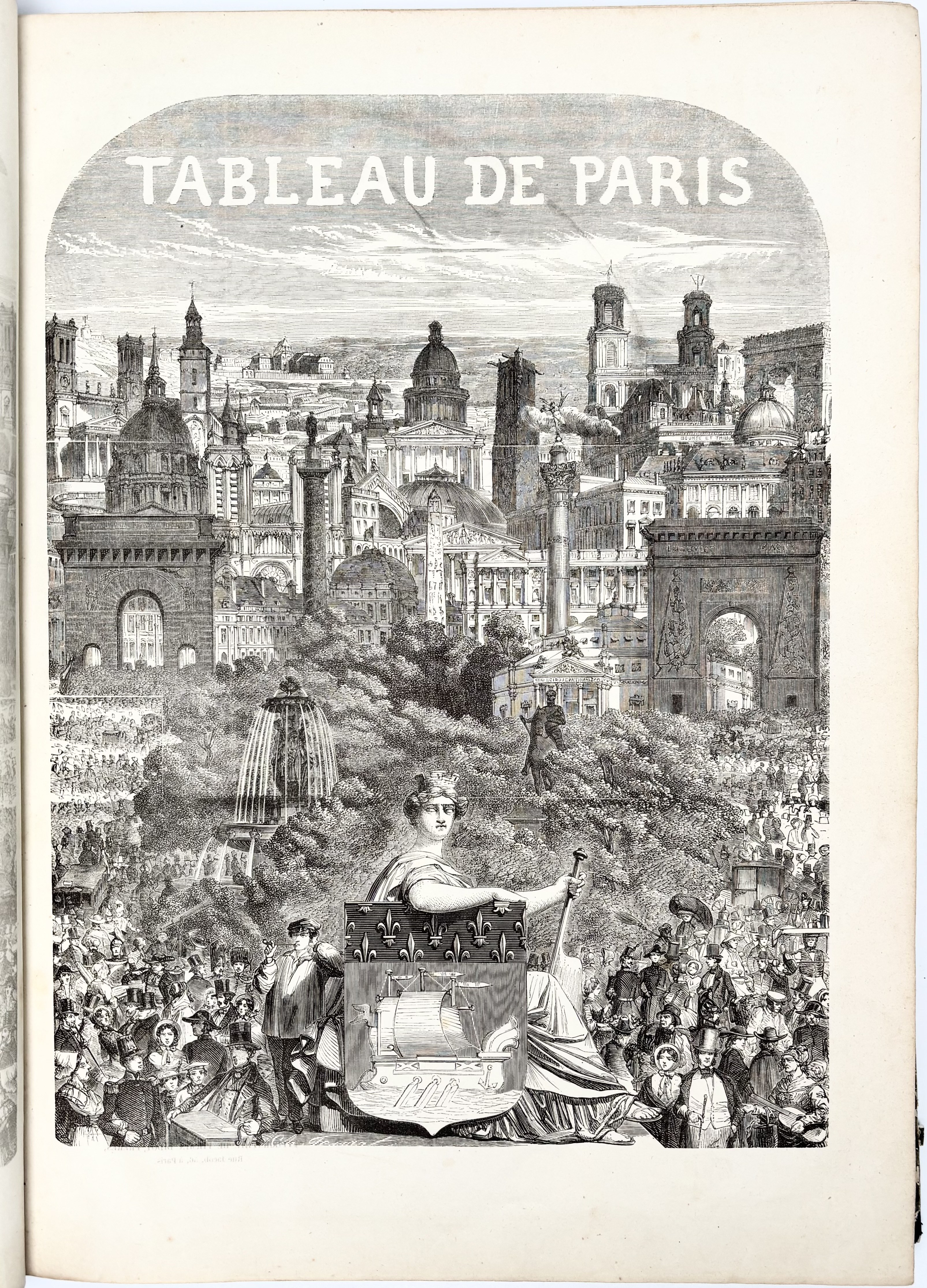
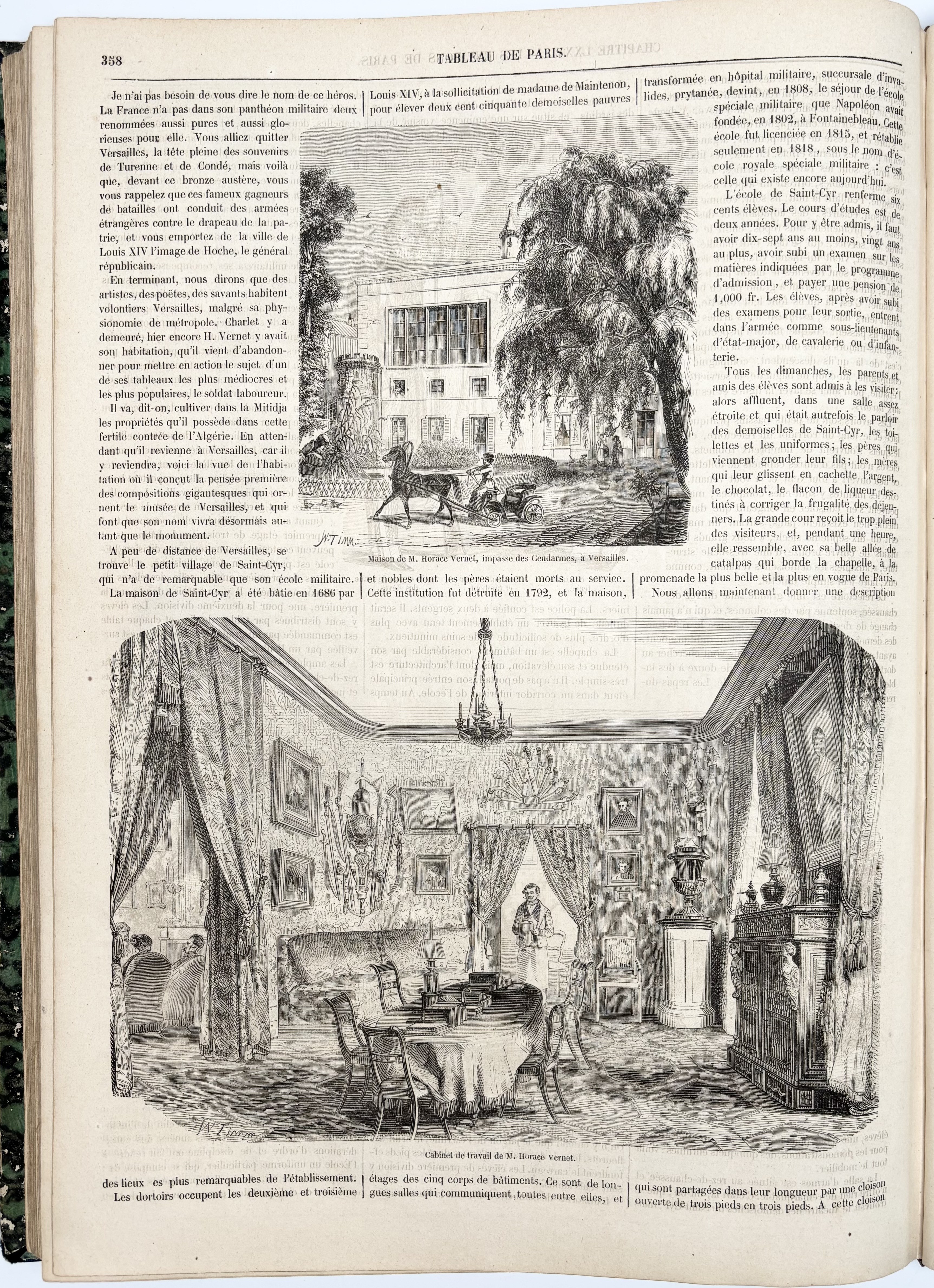
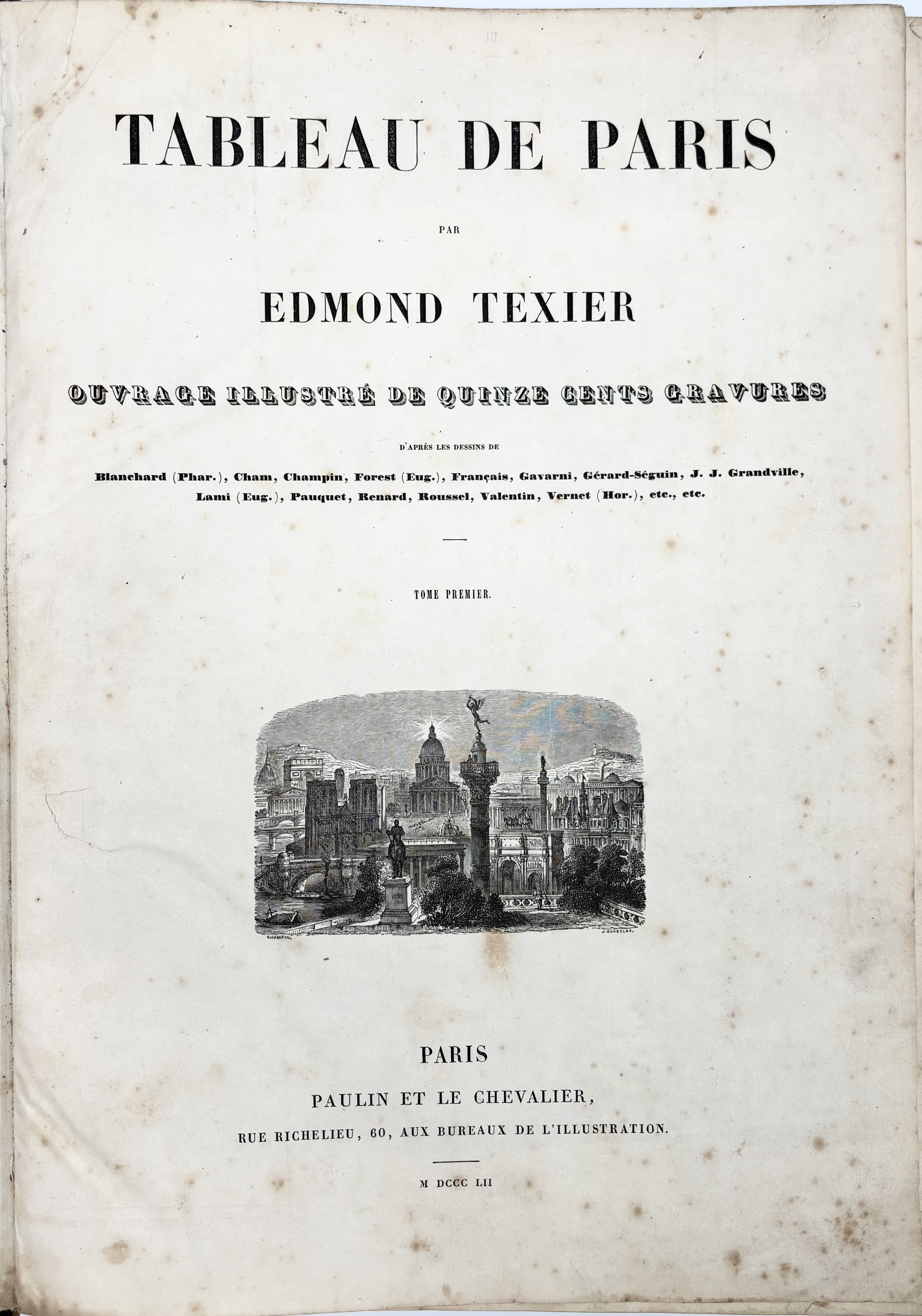
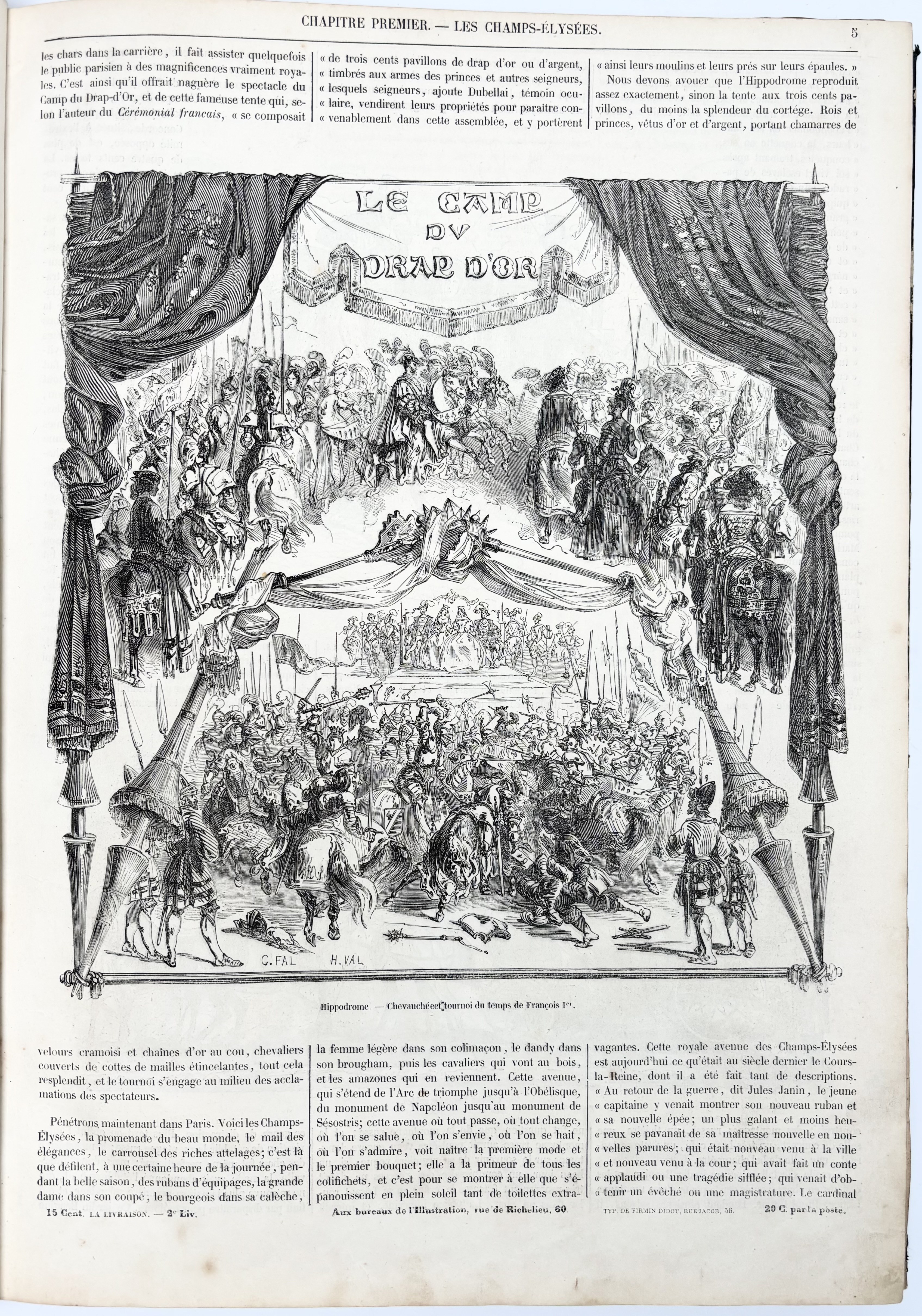
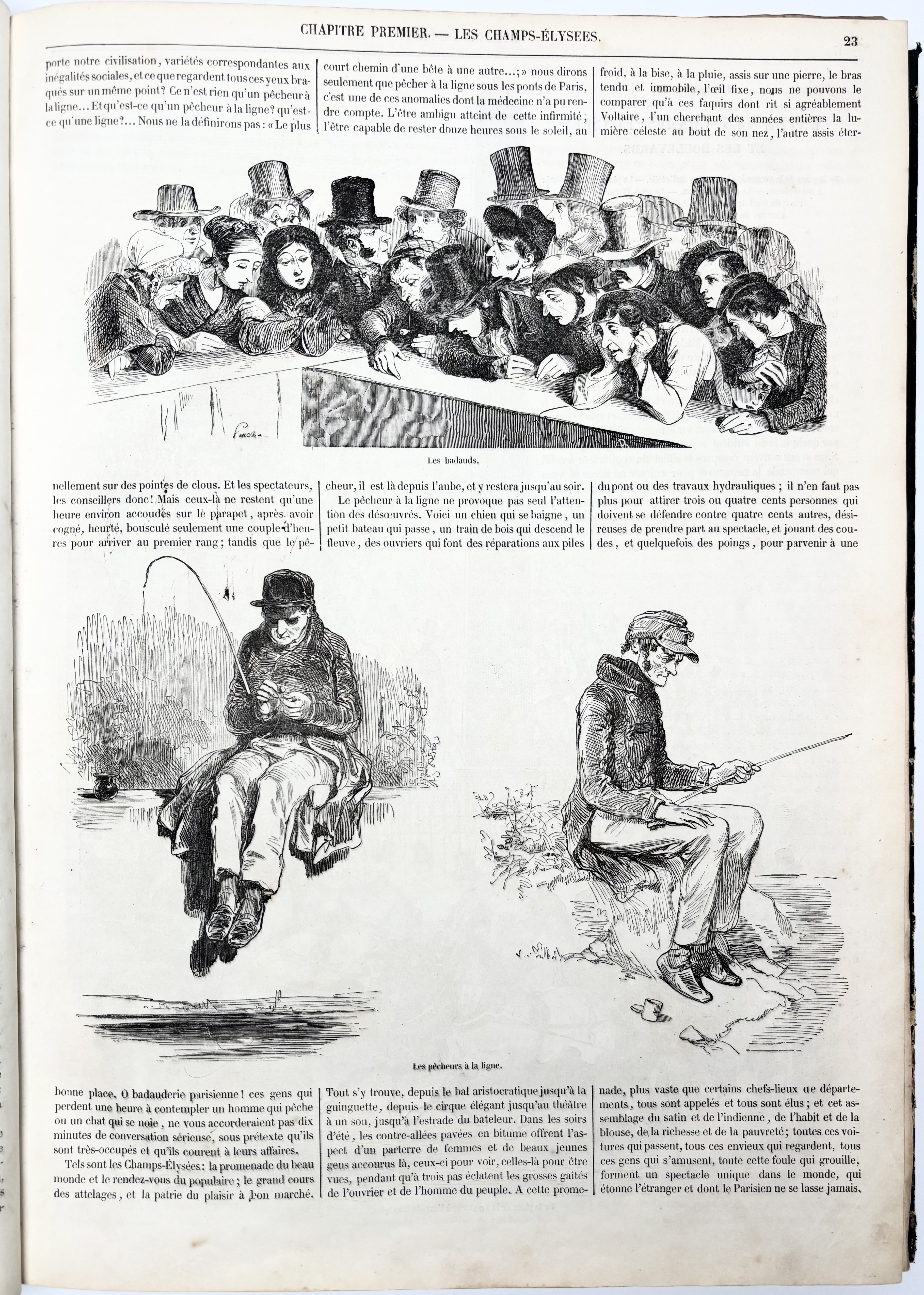

Texier Edmond Auguste/ Tableau de Paris. ouvrage illustre de quinze cents gravures. vol. I, II/ Paris 1852 (vol. I), 1853 (vol. II)/ first edition/ Paulin et Le Chevalier/ bookbinding (a little later), half leather with gilt titling and decoration. Patterned boards/ pp. IV, 388 (vol. I), 396 (vol. II)/ numerous black and white illustrations/ good condition+(vol. I), very good condition- (vol. II), rubbing and scratches of bindings, slight soiling of pages in places, light folds of pages here and there
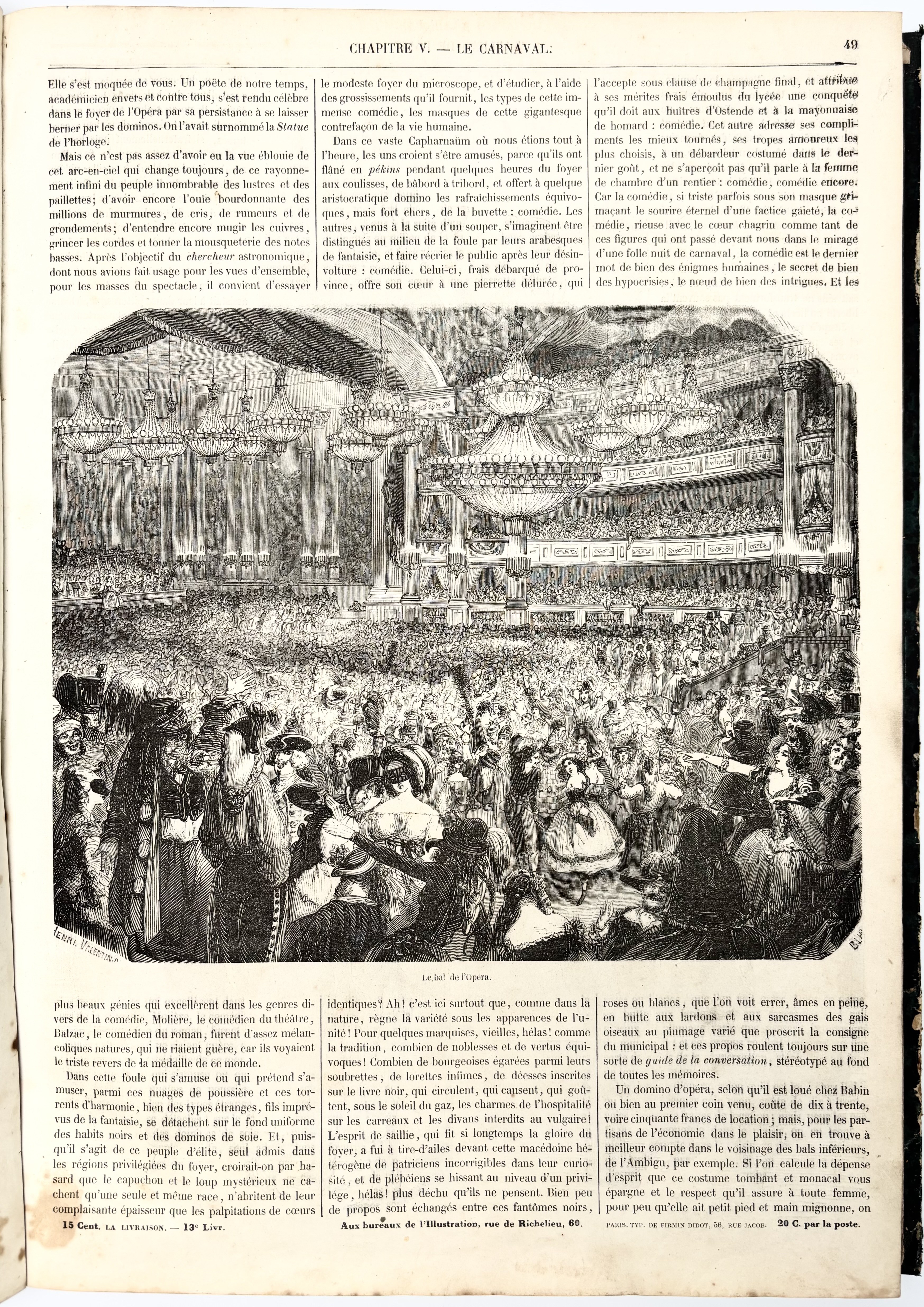
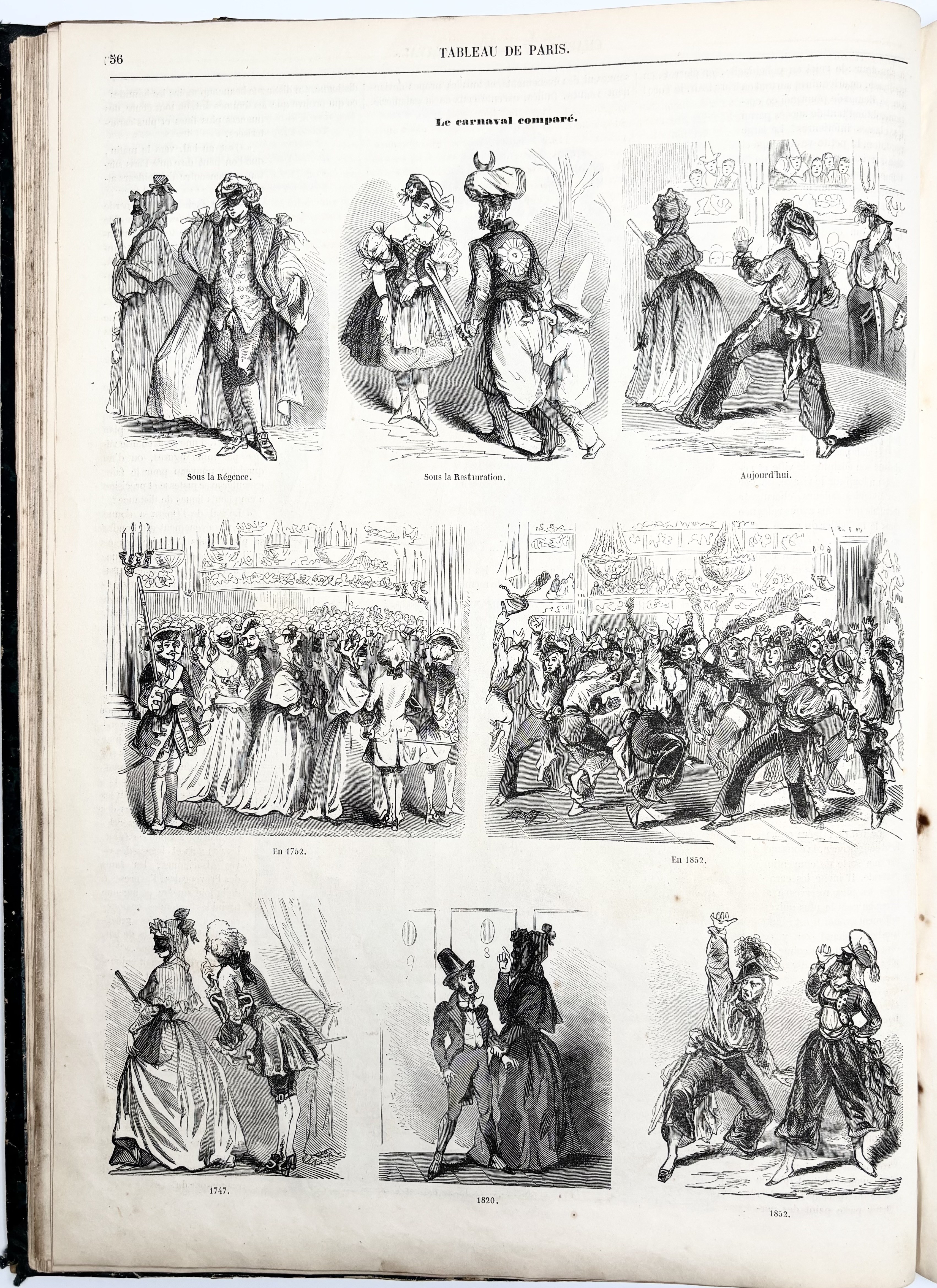
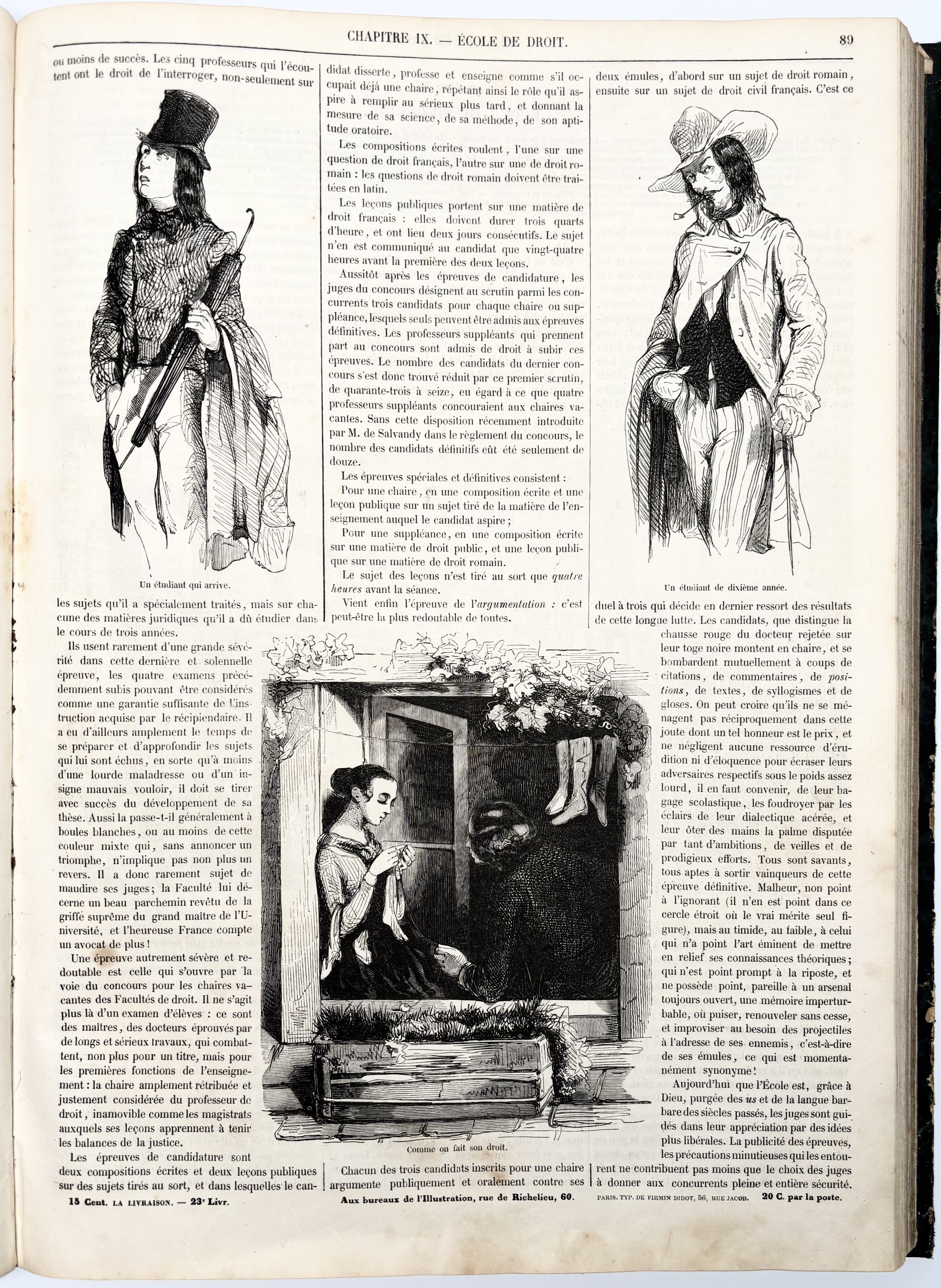
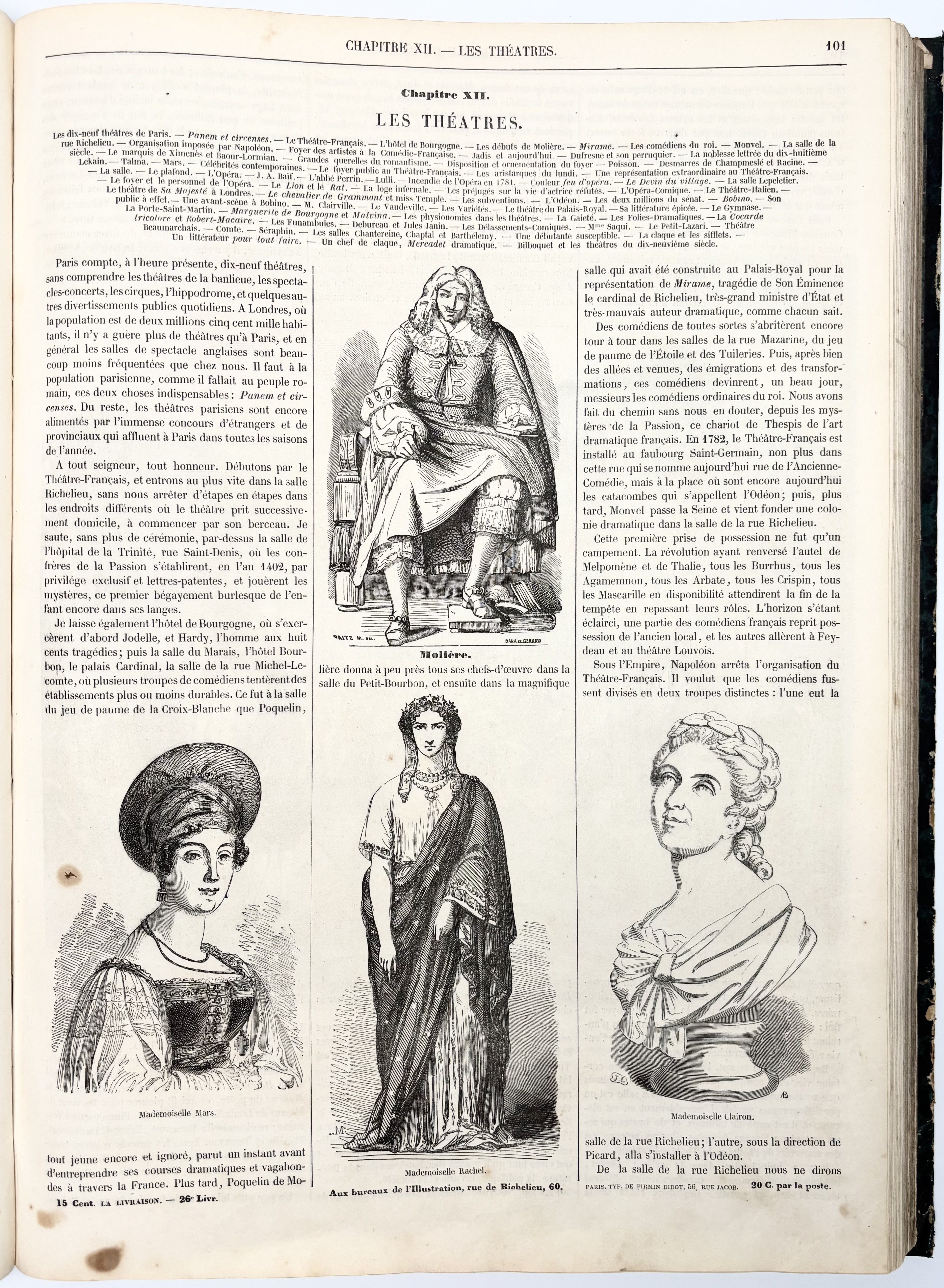
A 19th century, two-volume publication devoted to Paris at the beginning of the Second Empire, being at the same time a broad historical, topographical and moral panorama of the city. The French capital is shown as a constantly living and changing organism: from the history of the former Lutetia, through the successive stages of expansion of walls, bridges, districts and public edifices, to a picture of 19th-century Paris at the dawn of the great urban transformations of theHaussman era(a period of radical rebuilding of Paris under the direction of Baron Georges-Eugène Haussmann, on the orders of Napoleon III). The description of the urban space itself, its skylines, streets, boulevards and gardens, as well as the picture of the Parisian crowd, social types, customs, fashions, professions and daily life, occupy an important place here.
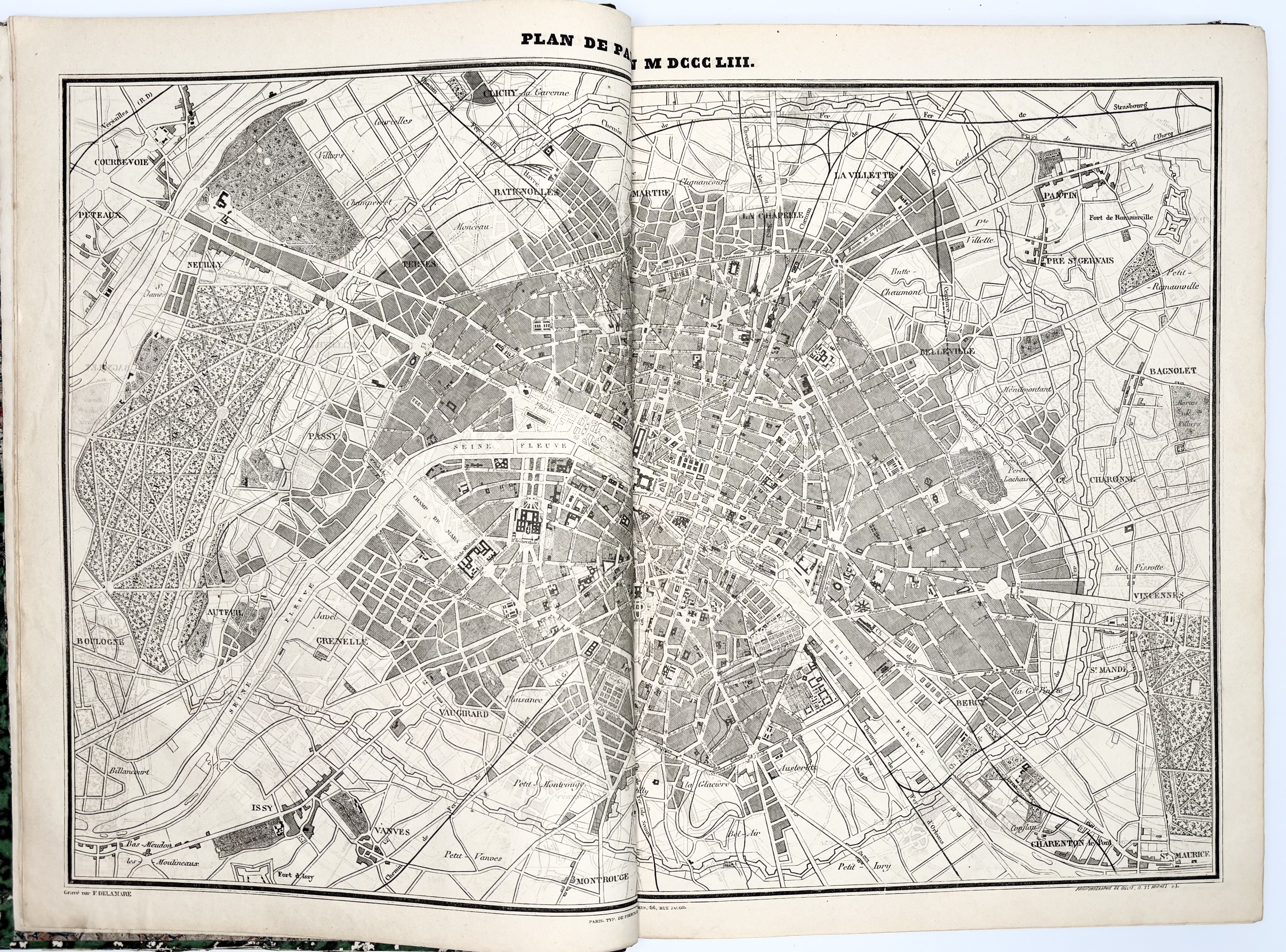
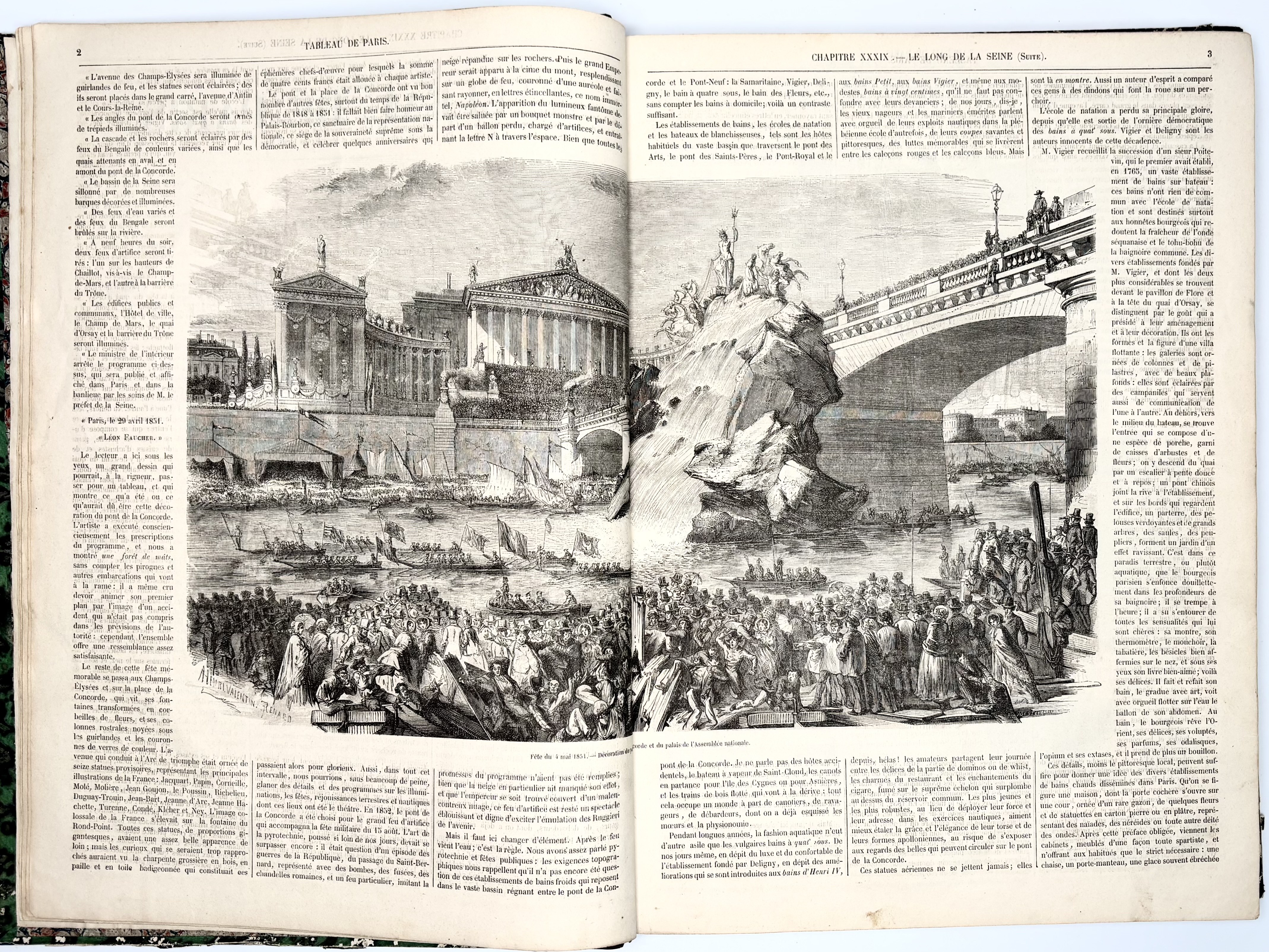
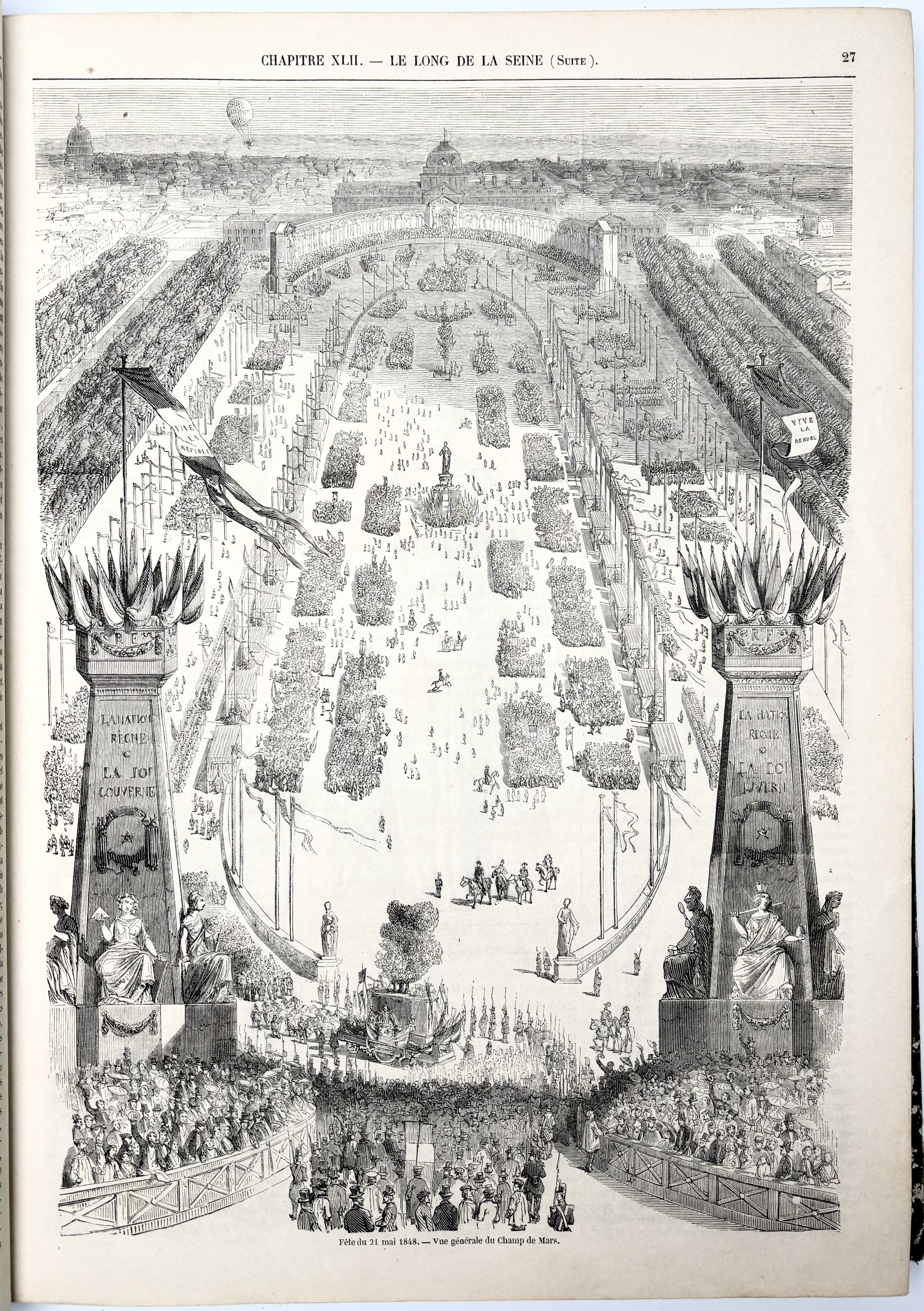
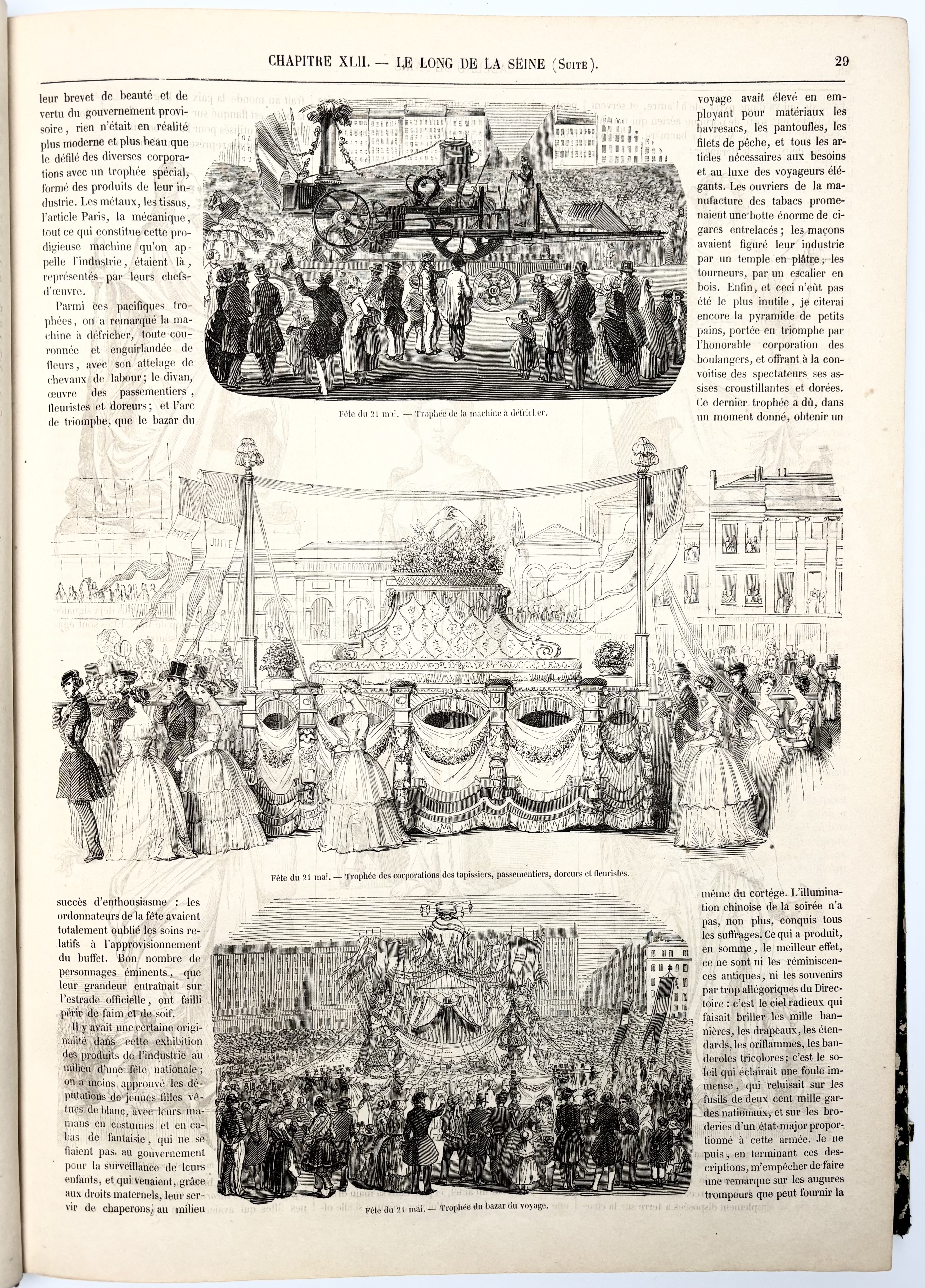
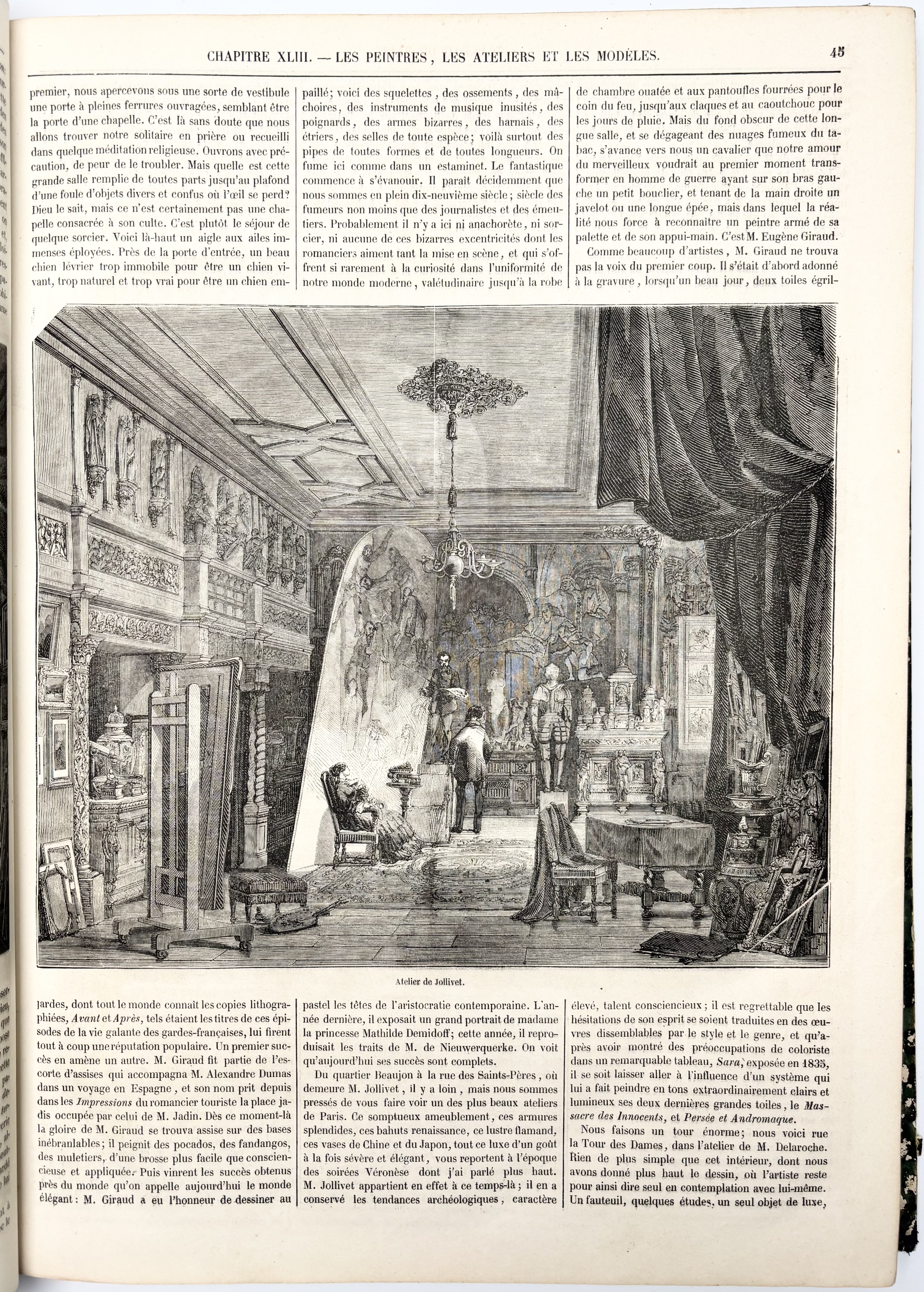
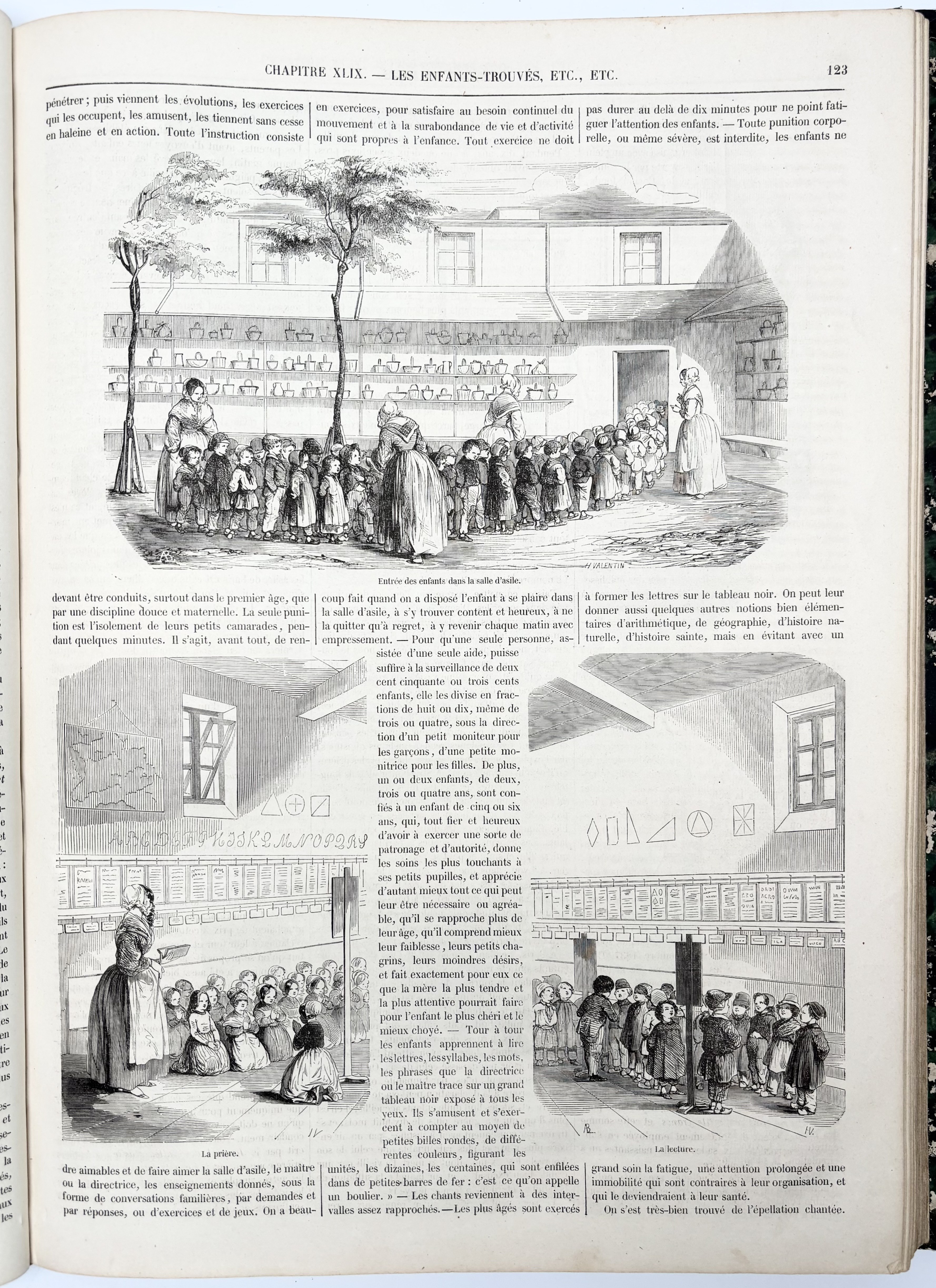
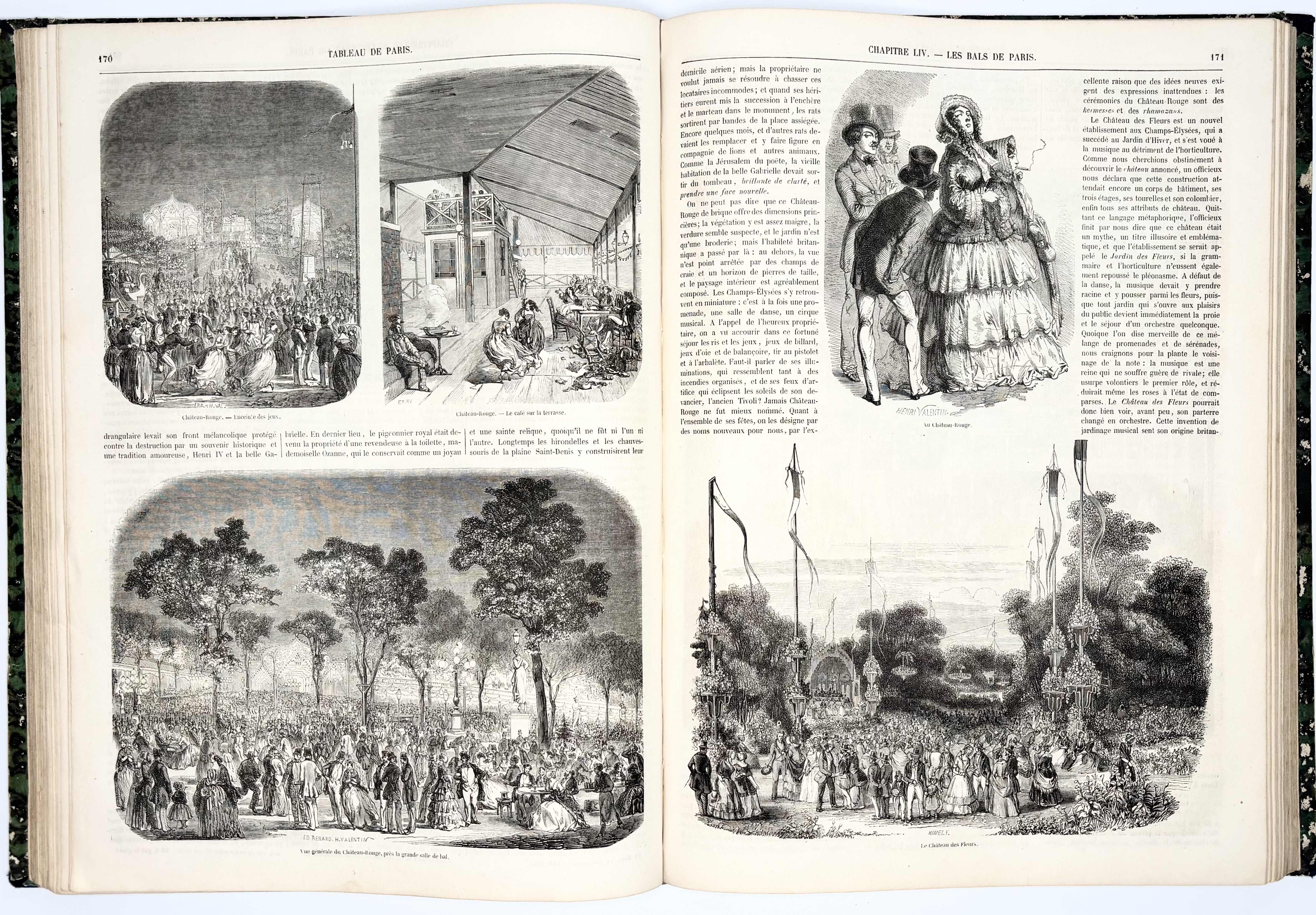
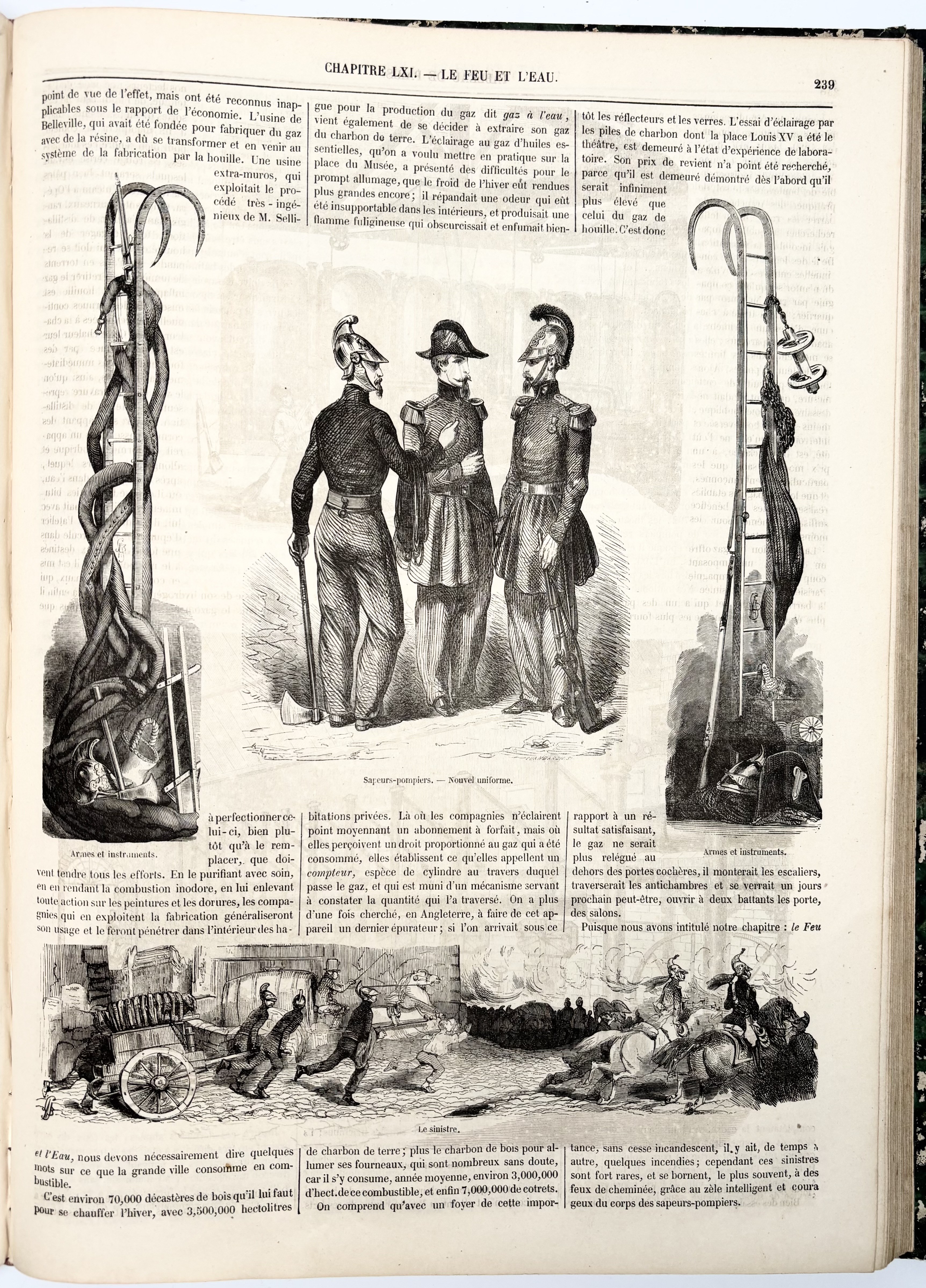
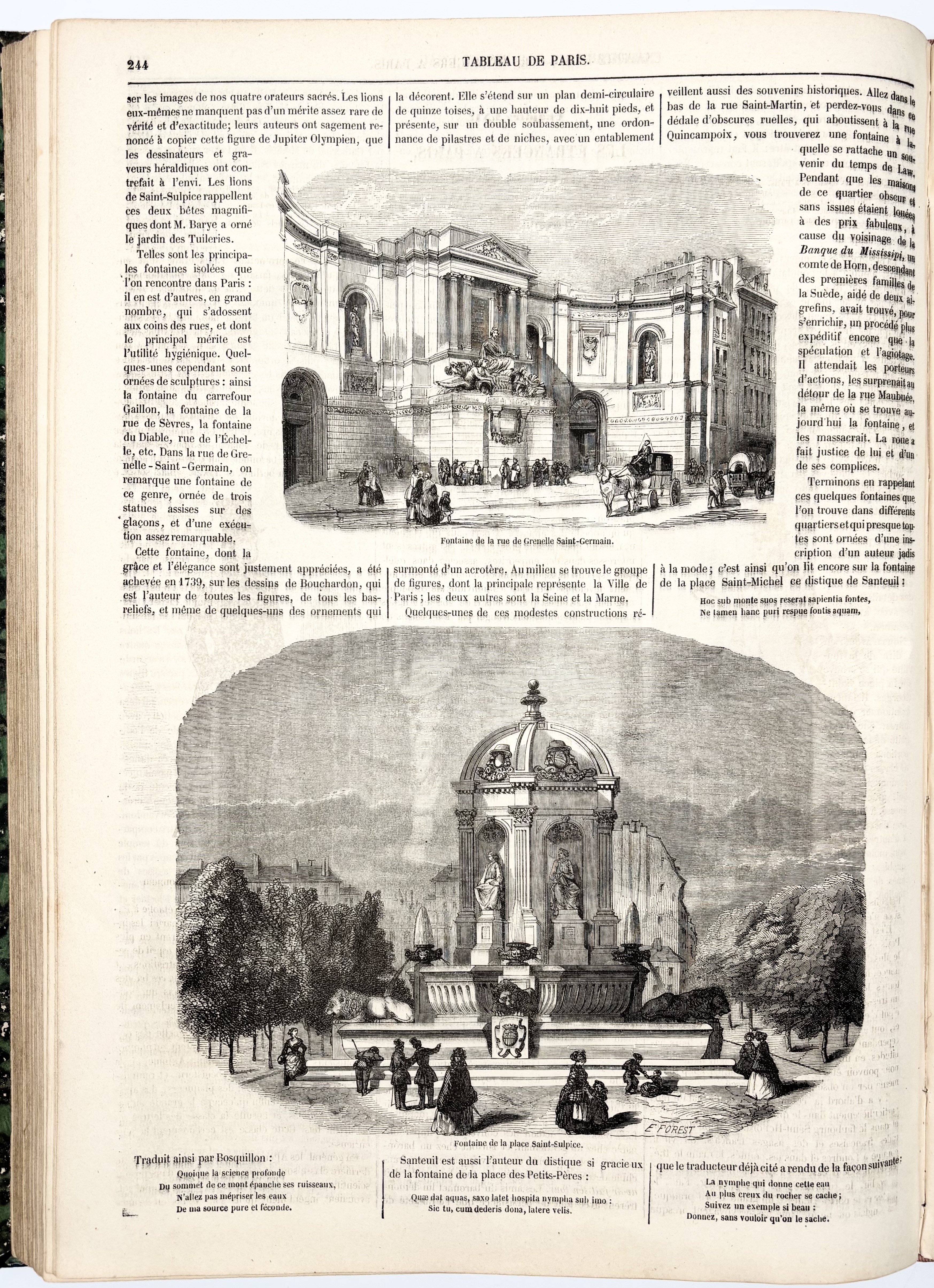
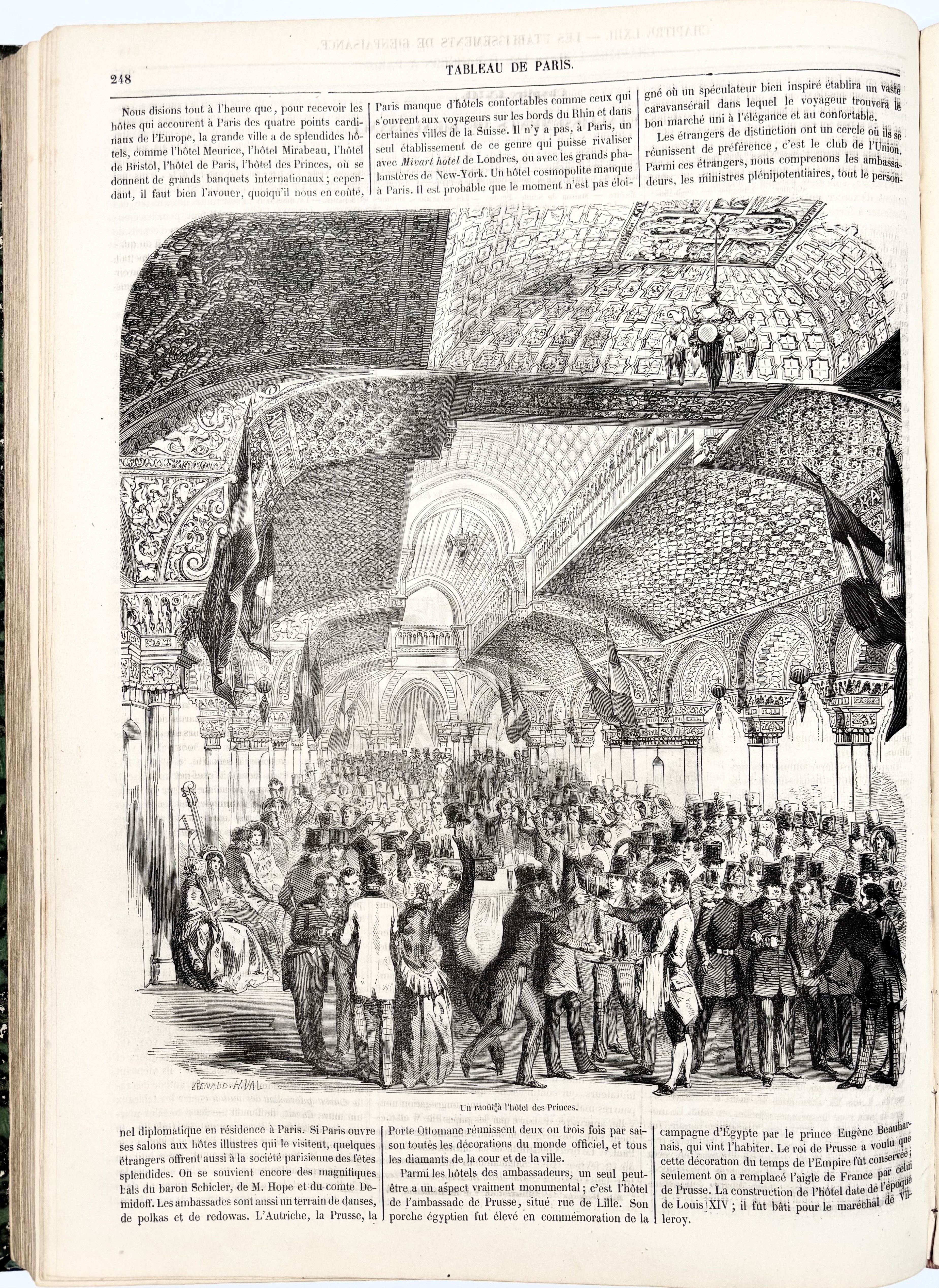
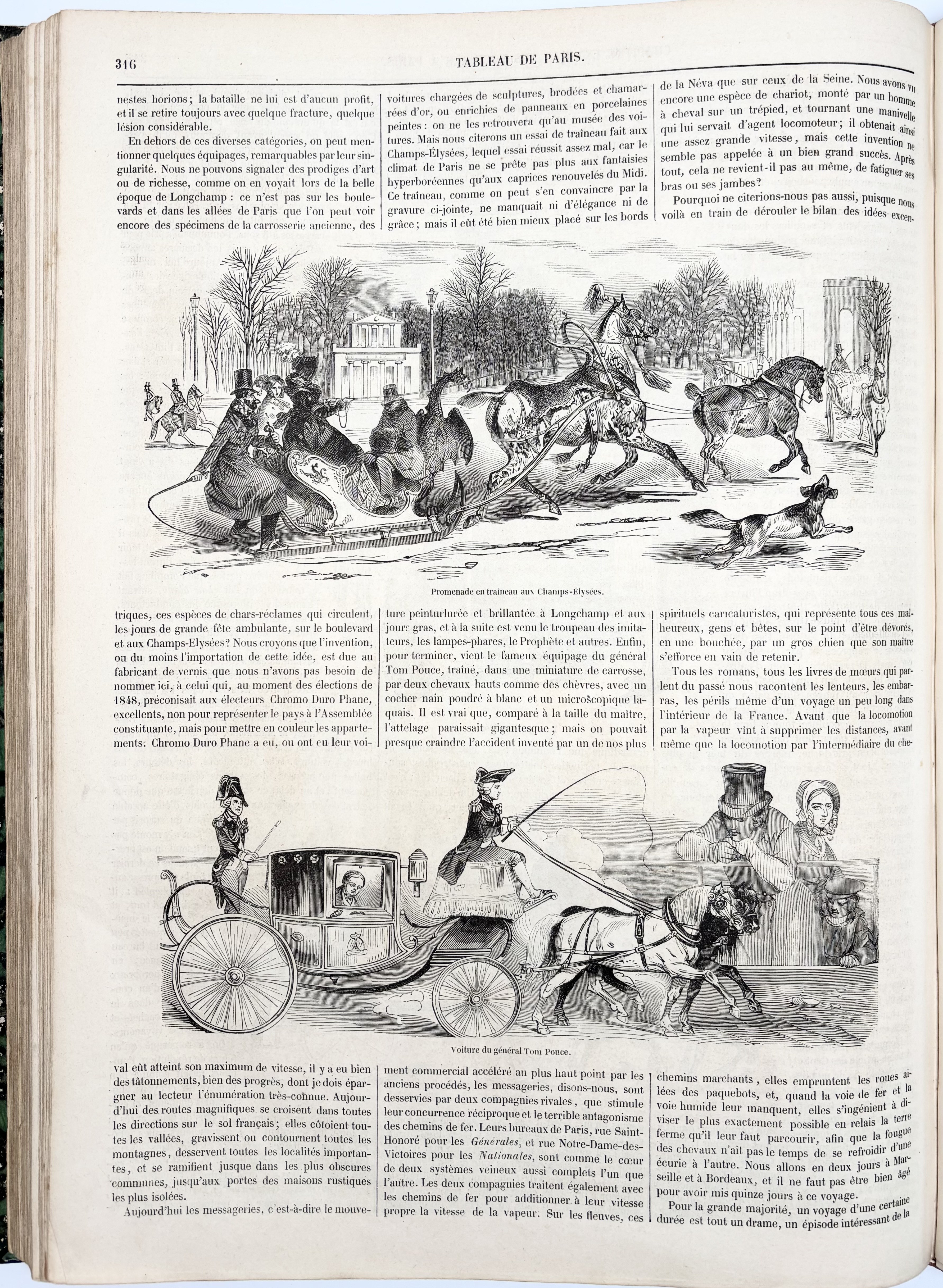
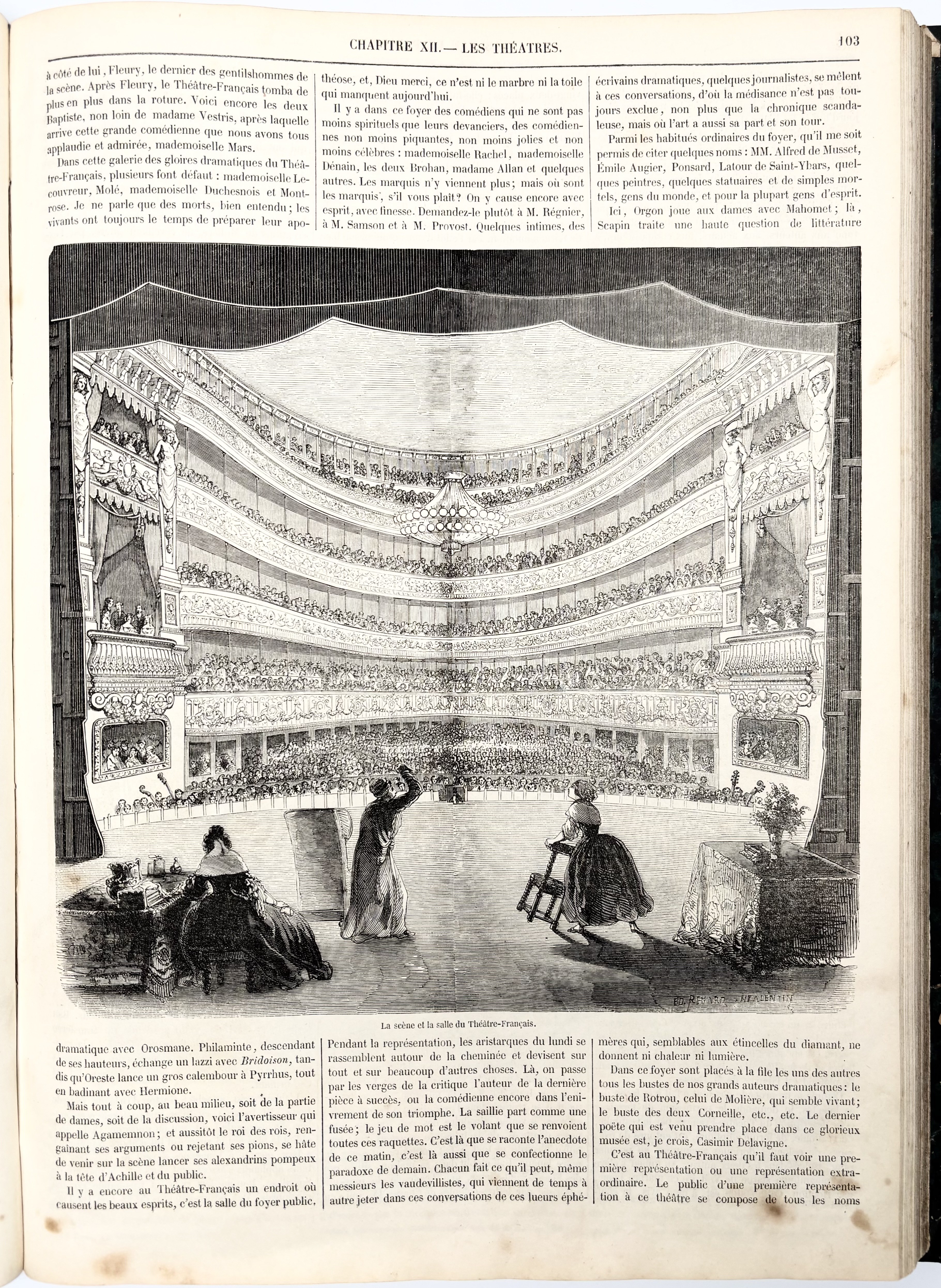
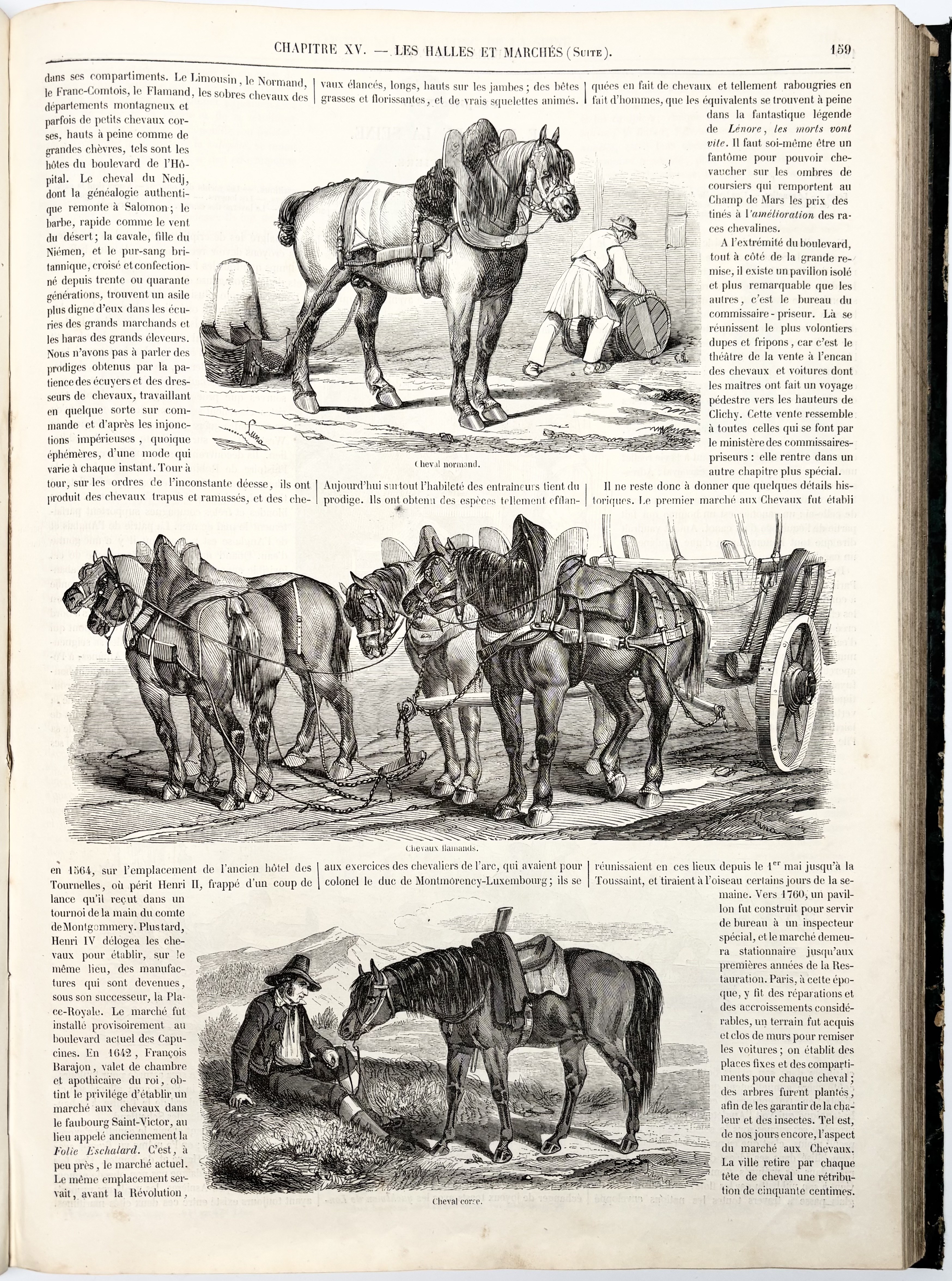
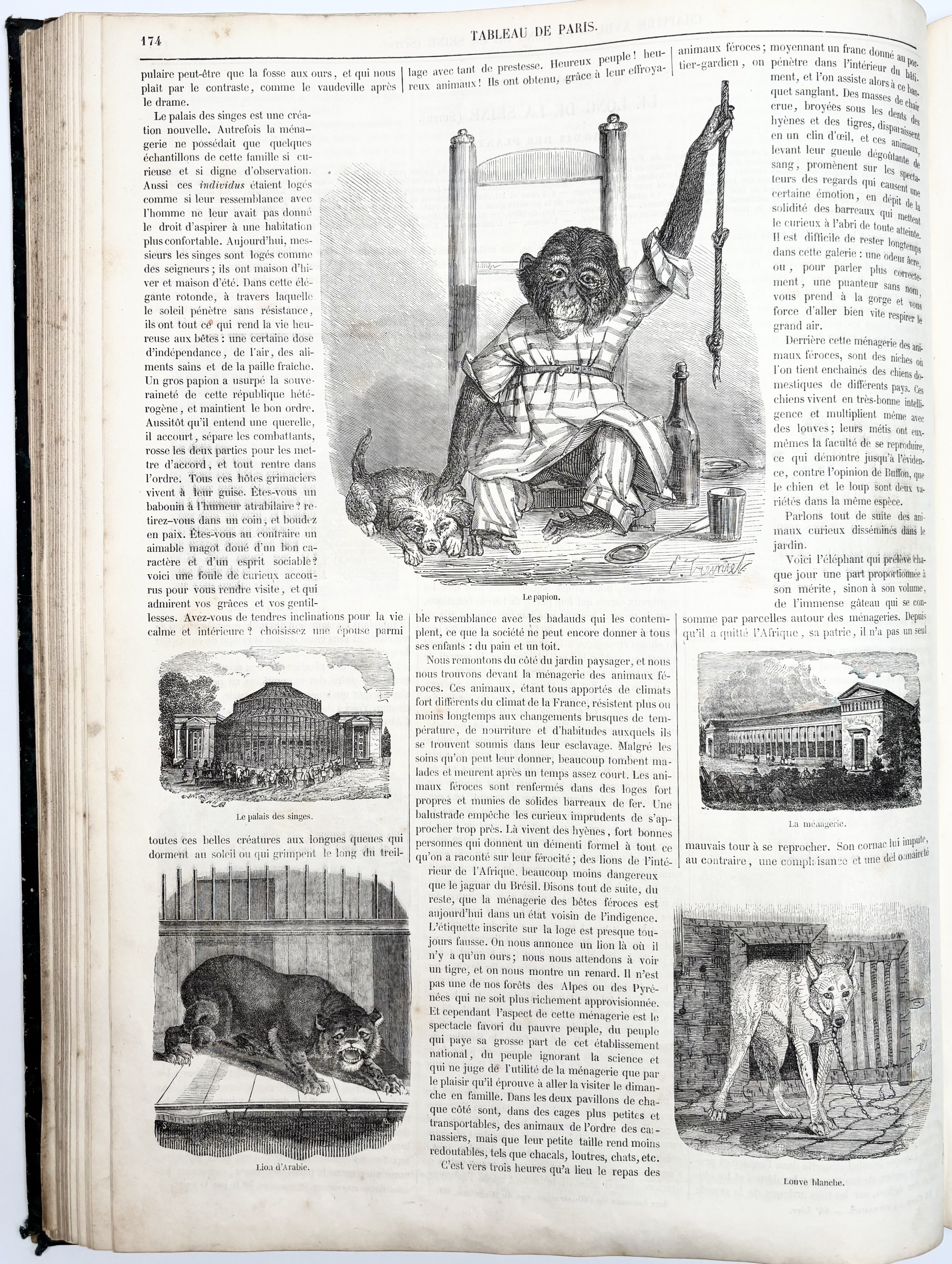
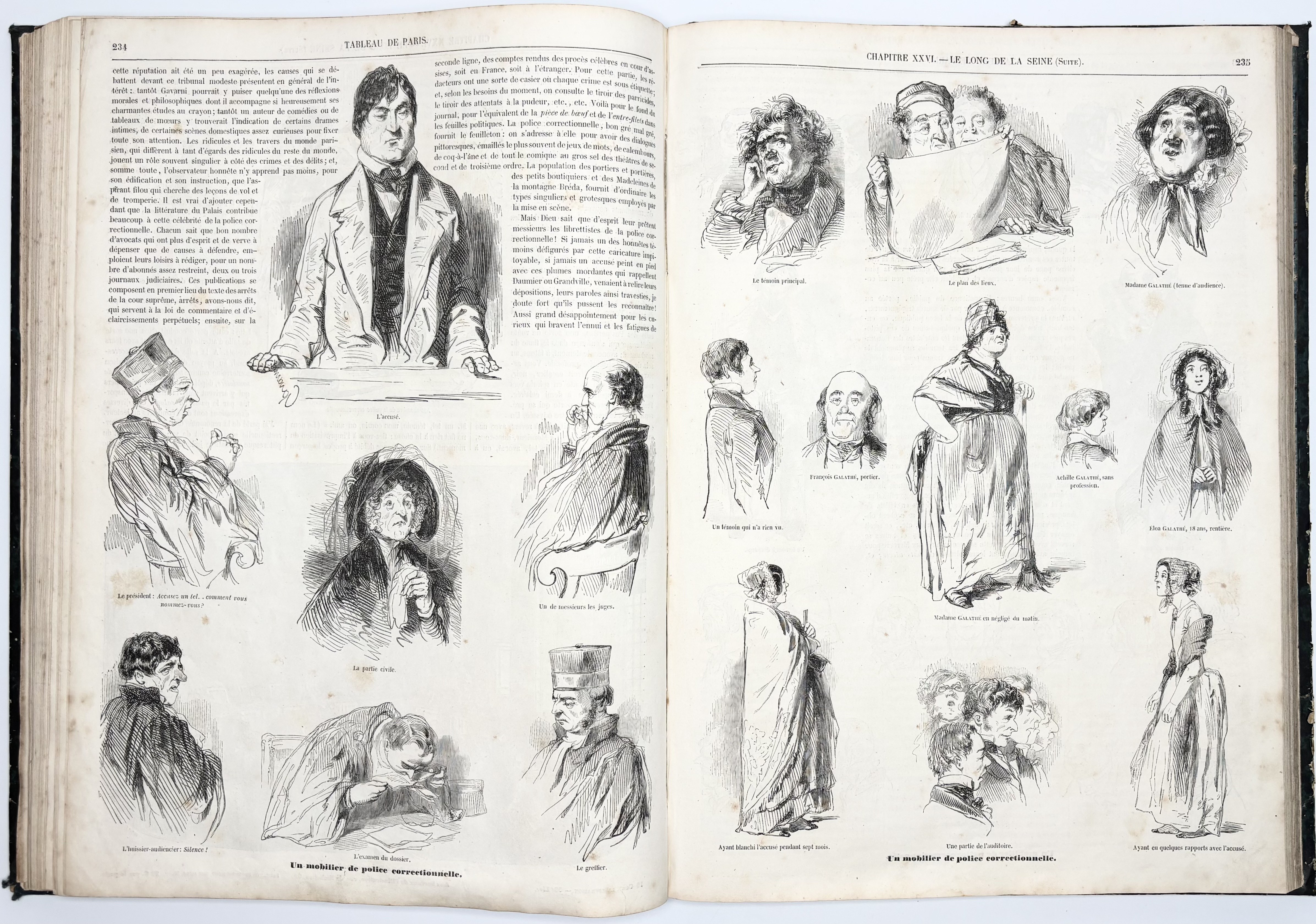
The publication stands out for its exceptionally rich illustrations: it contains as many as 1,500 woodcuts made according to drawings by Blanchard, Cham, Gavarni, François, Grandville, Pauquet, Lami and Vernet, among others. In addition to numerous genre scenes, views of architecture, streets and interiors, striking fold-out compositions are included, including a bird's-eye view of Paris and an 1853 plan of the city. Chapters are arranged both according to places characteristic of the capital, such as the Champs Elysees, the boulevards, the Sorbonne, Pont-Neuf and Luxembourg, and according to moral and social themes.