


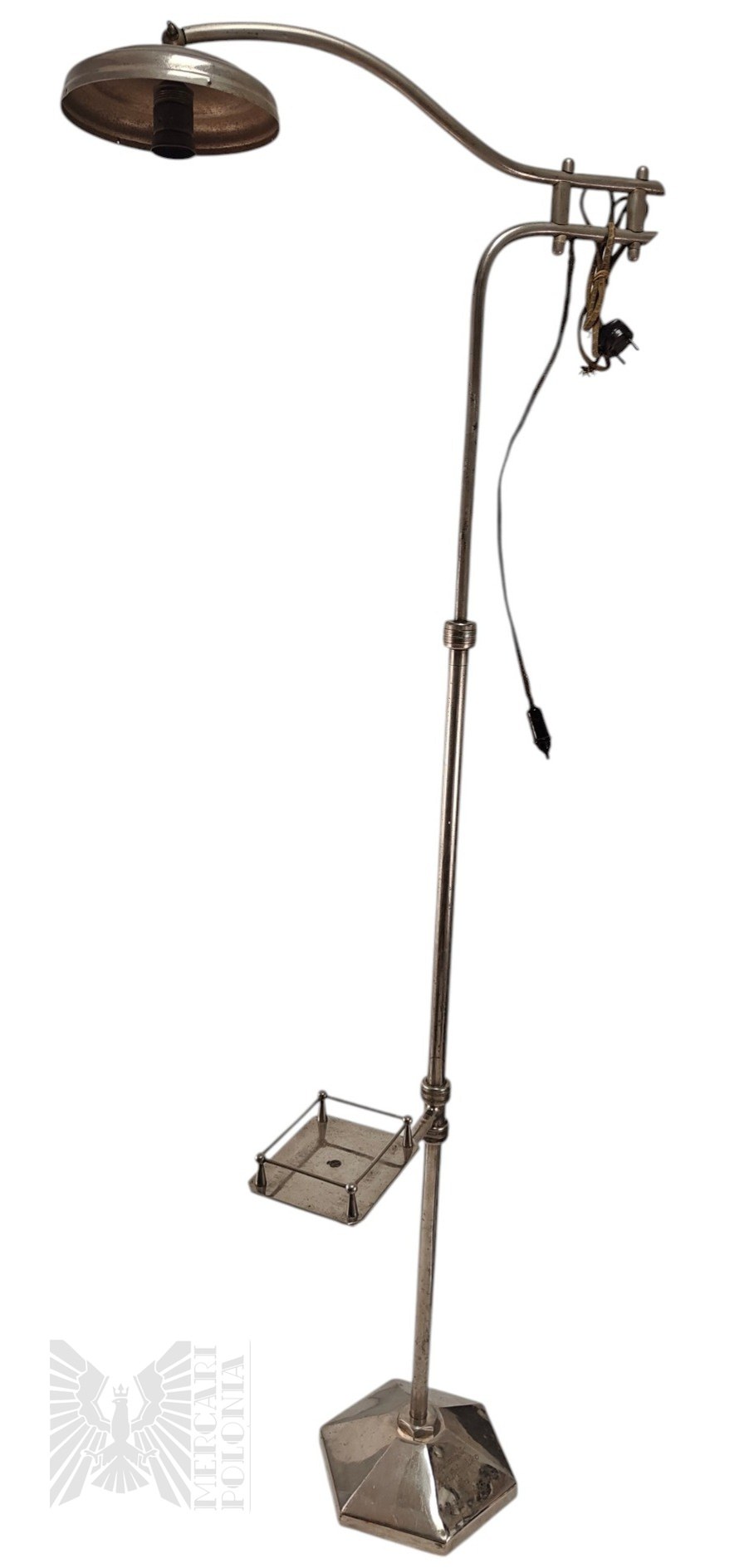
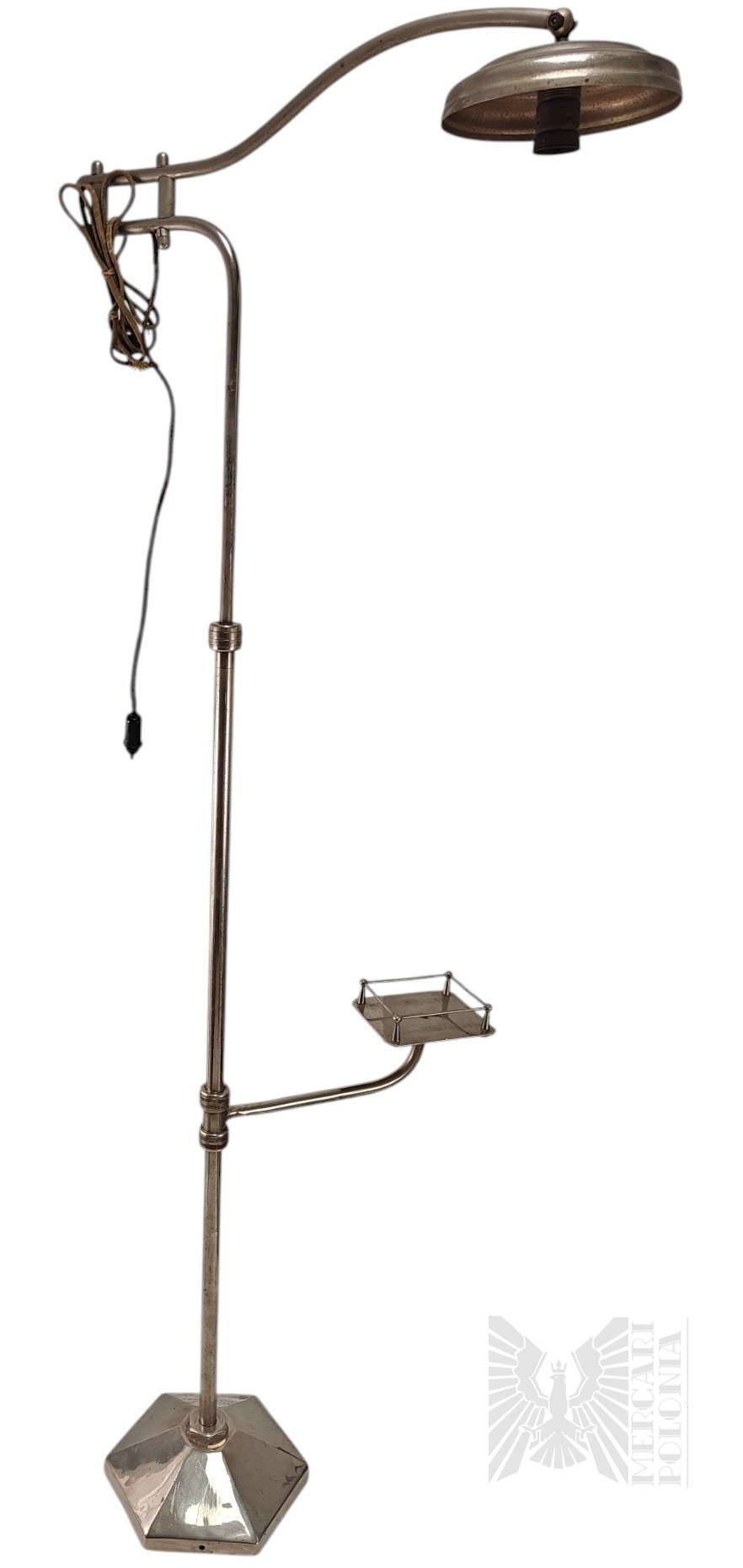
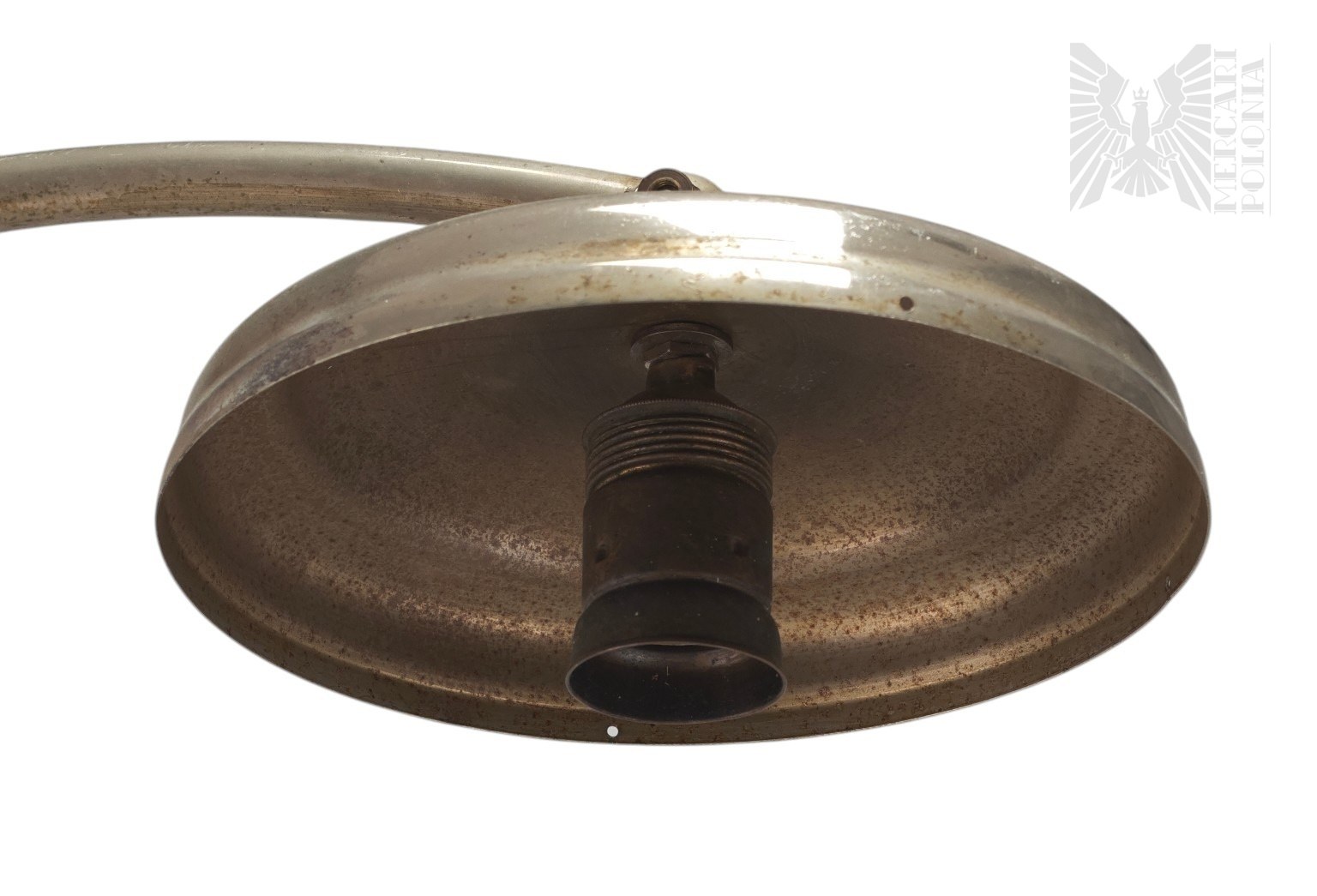
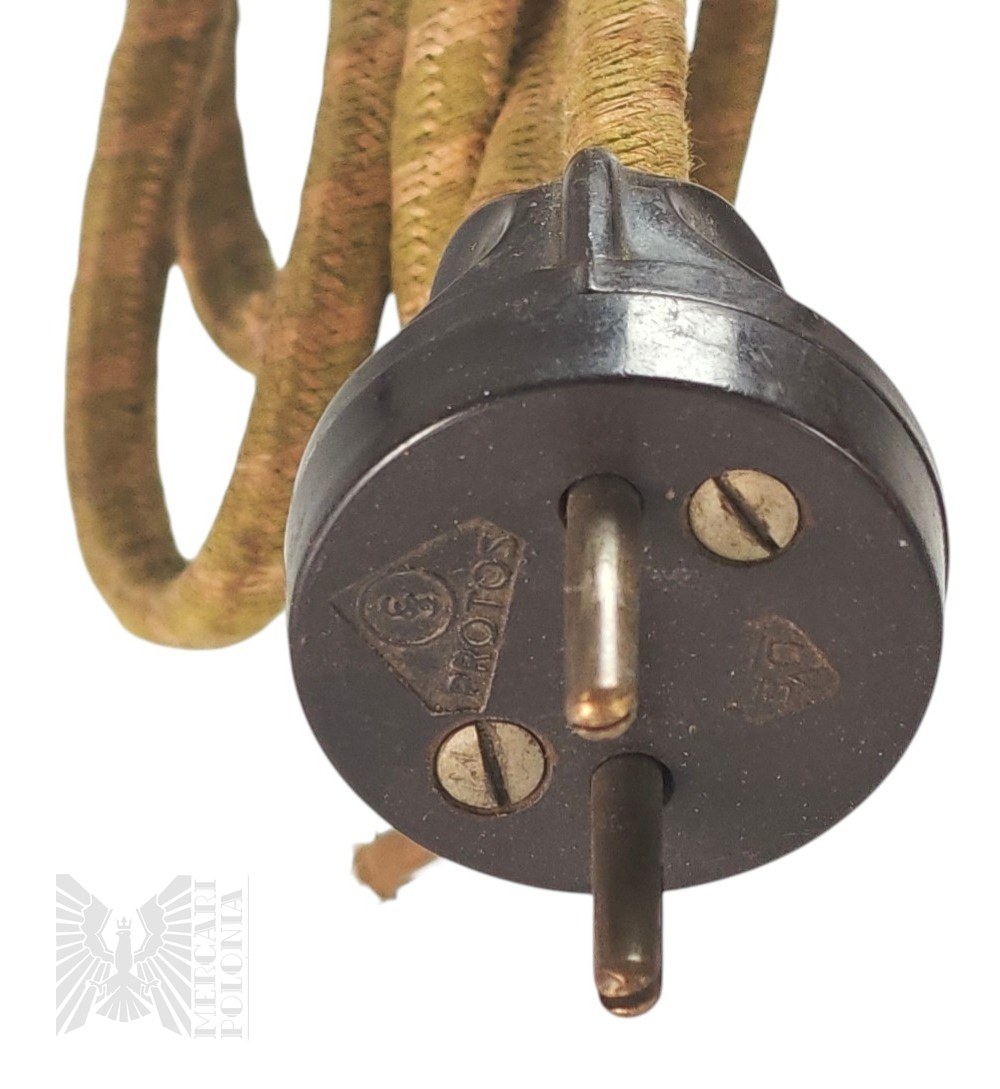
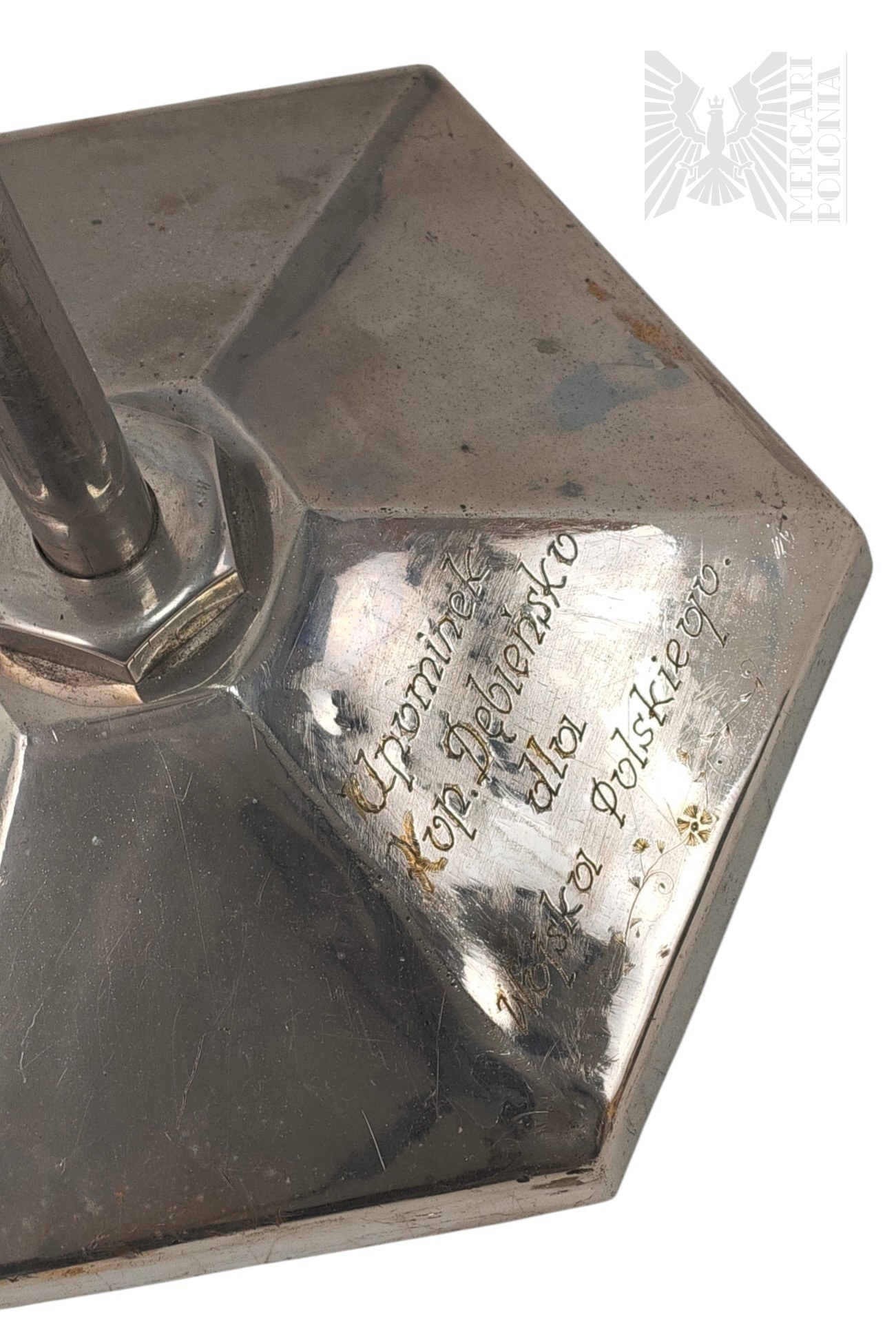
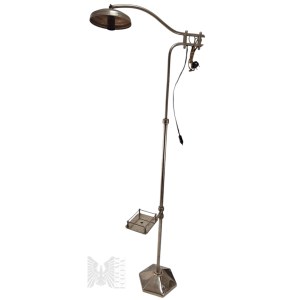
A standing lamp with a vertical, slender design. The body in the shape of a long tube, supported by a hexagonal solid base, with one rectangular shelf, ends in a light element with a round shade. On the base a dedication that reads: "Souvenir of Dębieńsko mine for the Polish Army".
Metal
Dimensions: 175 x 62 cm at the highest and widest point
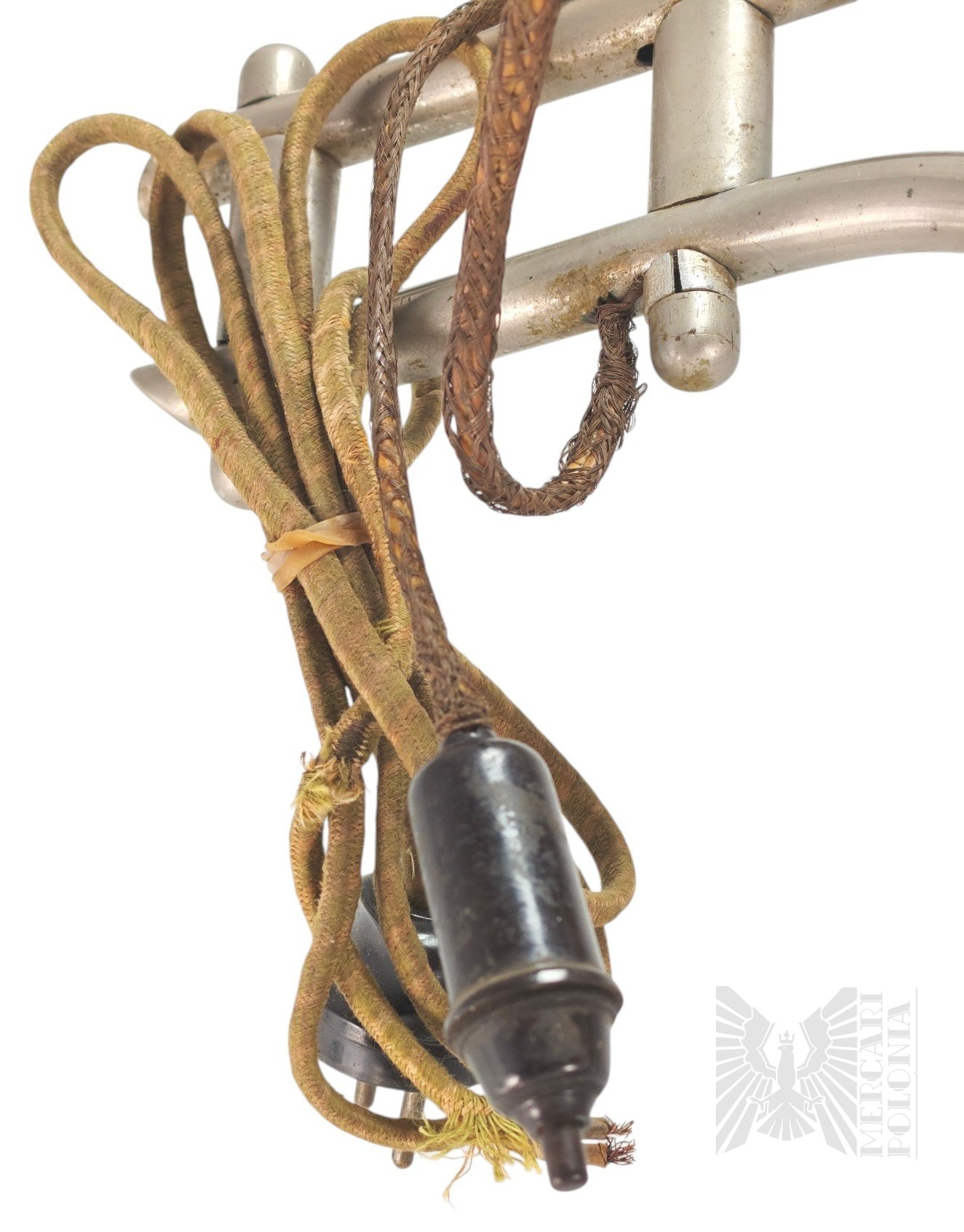
Condition as in photos
The presented lamp is an example of representative industrial craftsmanship of the Second Polish Republic period, when factories - including mines - actively participated in building relations with state institutions, especially the Polish Army. Such facilities served as gifts of honor, emphasizing the importance of heavy industry to the young state and its military and economic potential.
The dedication pointing to the Dębieńsko mine situates the object in the context of the Silesian industrial district, one of the key mining centers of the Second Republic of Poland. Objects of this type, often made in single pieces or short series, combine utilitarian value with a symbolic message - bearing witness to the relationship between industry and state structures.
The object has significant documentary and collector's value, entering the current of institutional memorabilia and material traces of culture of the Second Republic.
The "Dębieńsko" mine was one of the important mining plants of Upper Silesia, located in the area of today's Czerwionka-Leszczyny. Its origins date back to the end of the 19th century, when the exploitation of hard coal deposits began during the period of intensive industrialization of the region.
In the interwar period, after the division of Upper Silesia and the incorporation of part of the region into Poland, the mine was located within the borders of the Second Republic of Poland and functioned as an important part of the Polish mining industry. It was one of the plants supporting the country's economic development and, indirectly, its military potential, which explains initiatives such as the foundation of gifts for the Polish Army.
After World War II, the mine was nationalized and continued to operate as part of state industry. In the second half of the 20th century it was modernized and integrated into the structures of larger mining companies. It finally ceased mining in the early 21st century.










Последно разглеждани позиции
Влезте, за да се запознаете със списъка с артикулите
Любими
Влезте, за да се запознаете със списъка с артикулите