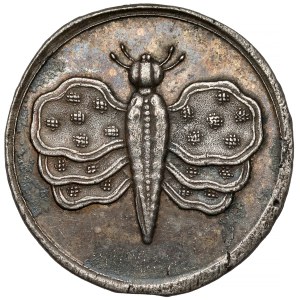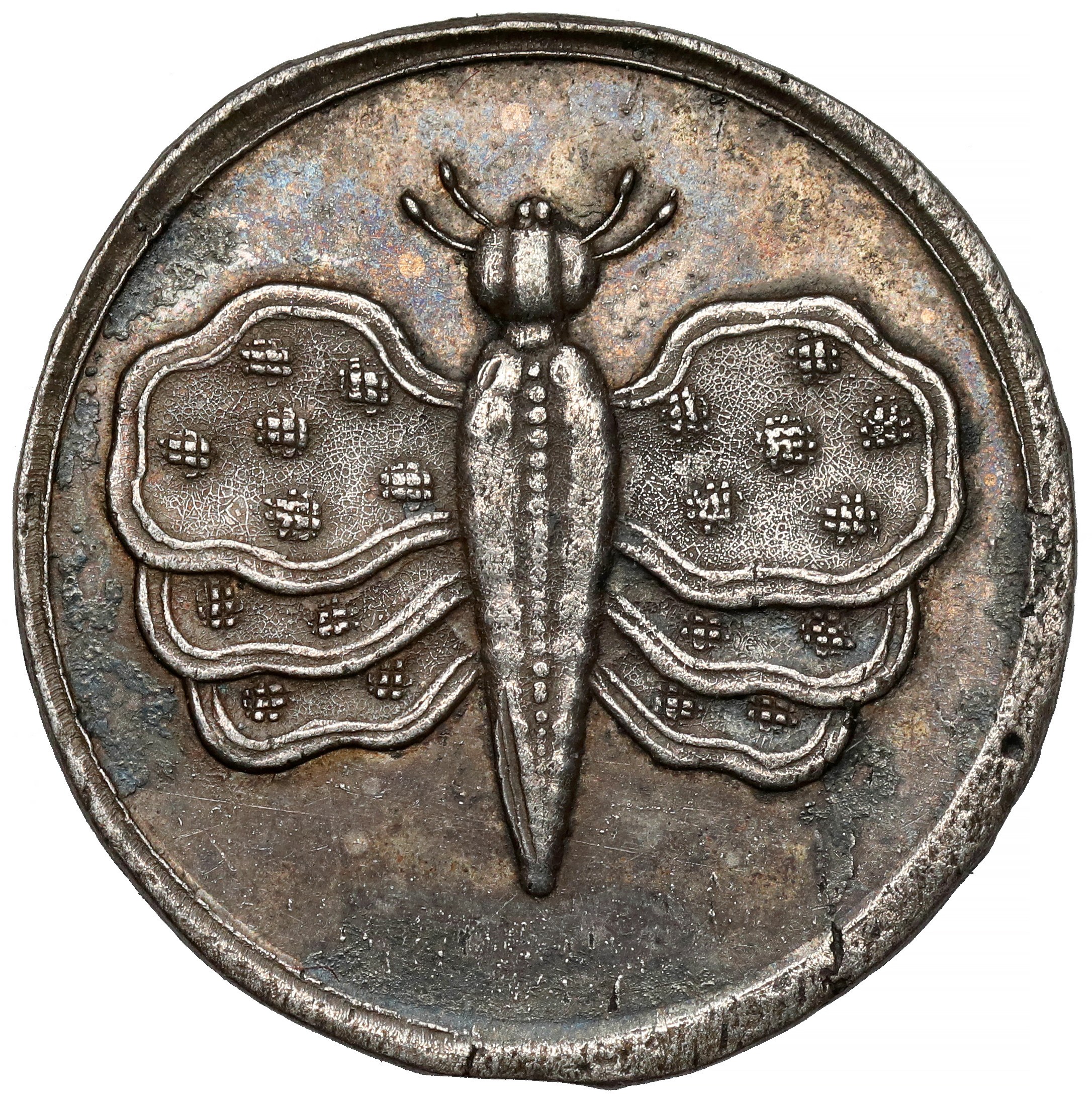
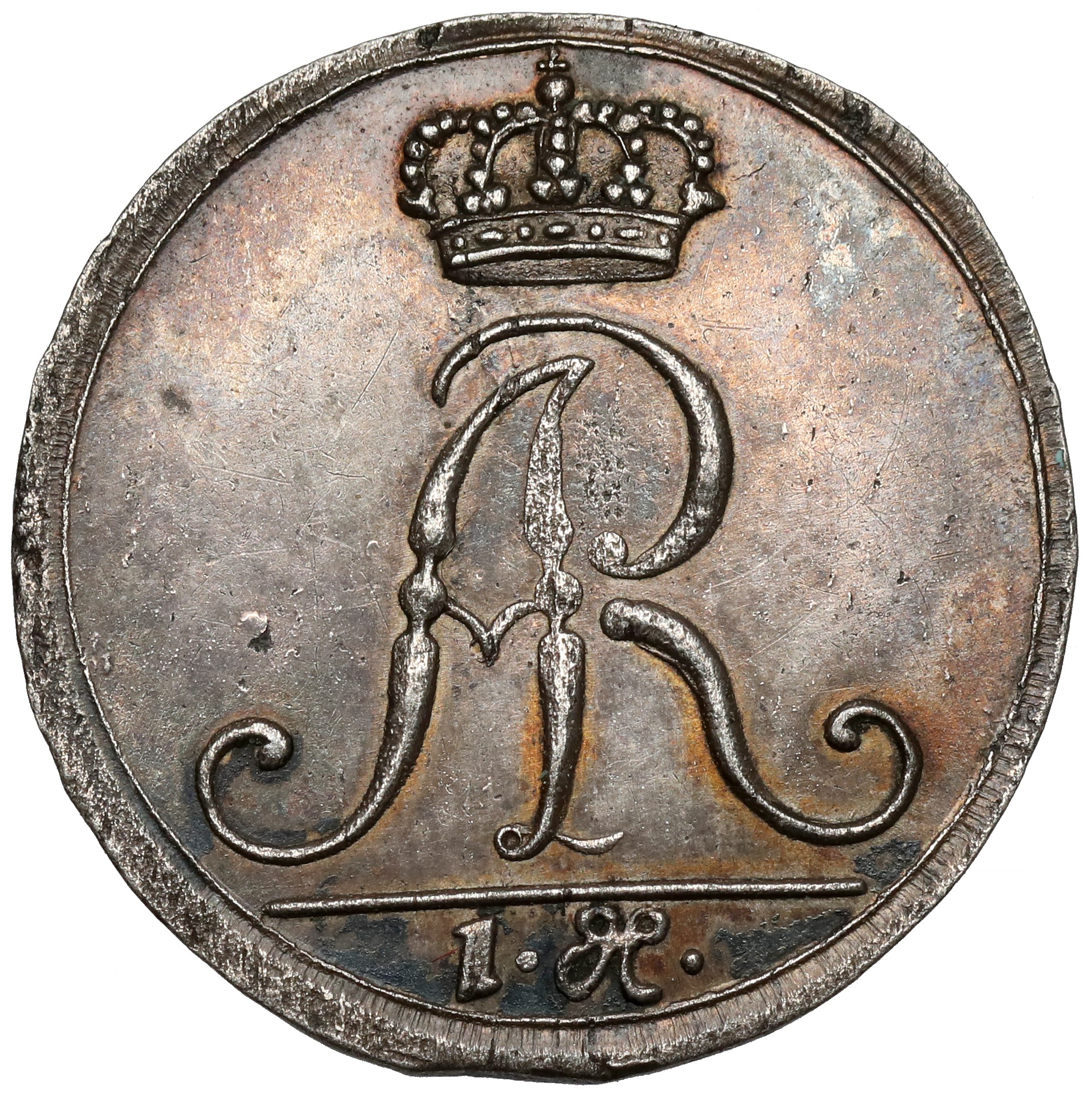
The smallest butterfly from King Augustus’s famous swarm.
A beautifully preserved grosz struck in pure silver.
The coinage of Augustus II of the House of Wettin, much like his life, was both fascinating and rich. He minted not only circulation coins—for both the Polish-Lithuanian Commonwealth and Saxony—but also numerous commemorative issues. The most famous of these was the series of coins featuring butterflies, known among German numismatists asthe “Schmetterlingprägungen.” It is one of the most beautiful series ever struck by Polish kings.
Today, we do not have a definitive answer as to why it was minted. It is believed to have stemmed from a desire to commemorate the king’s mistress, Anna Konstanze von Hoyn, the famous Countess Cosel. It is linked to the construction in Dresden, in 1709, of the magnificent Zwinger Palace and its accompanying buildings. It is also seen as a political statement, hidden in the unusual anatomy of the butterfly with three pairs of wings (representing the three united states: the Electorate of Saxony, the Kingdom of Poland, and the Grand Duchy of Lithuania).
The butterfly (moth) series was issued by the Dresden Mint between 1708 and 1710. The set comprised five denominations—ranging from the thaler to the grosz—and remains to this day a very rare and, at the same time, one of the most enigmatic issues in Baroque numismatics.
Available in our collection for the first time.
Silver, diameter 19 mm, weight 1.95 g