




Silver drachma of Trajan (AD 98–117), struck at the Bostra mint in the province of Arabia in AD 114, belongs to issues produced after the establishment of the province of Arabia Petraea (AD 106) and during a period of intensified imperial activity in the East, connected with preparations for the Parthian campaign. The mint of Bostra, as a newly established administrative center, played a key role in integrating the province into the imperial economic system while preserving local monetary traditions.
The obverse features a laureate bust of the emperor facing right, with the Greek legend AYTOKP KAIC NЄP TPAIAN CЄB ΓЄPM ΔAK, presenting his full titulature together with the victory titles Germanicus and Dacicus. The use of Greek reflects the administrative and cultural realities of the eastern provinces.
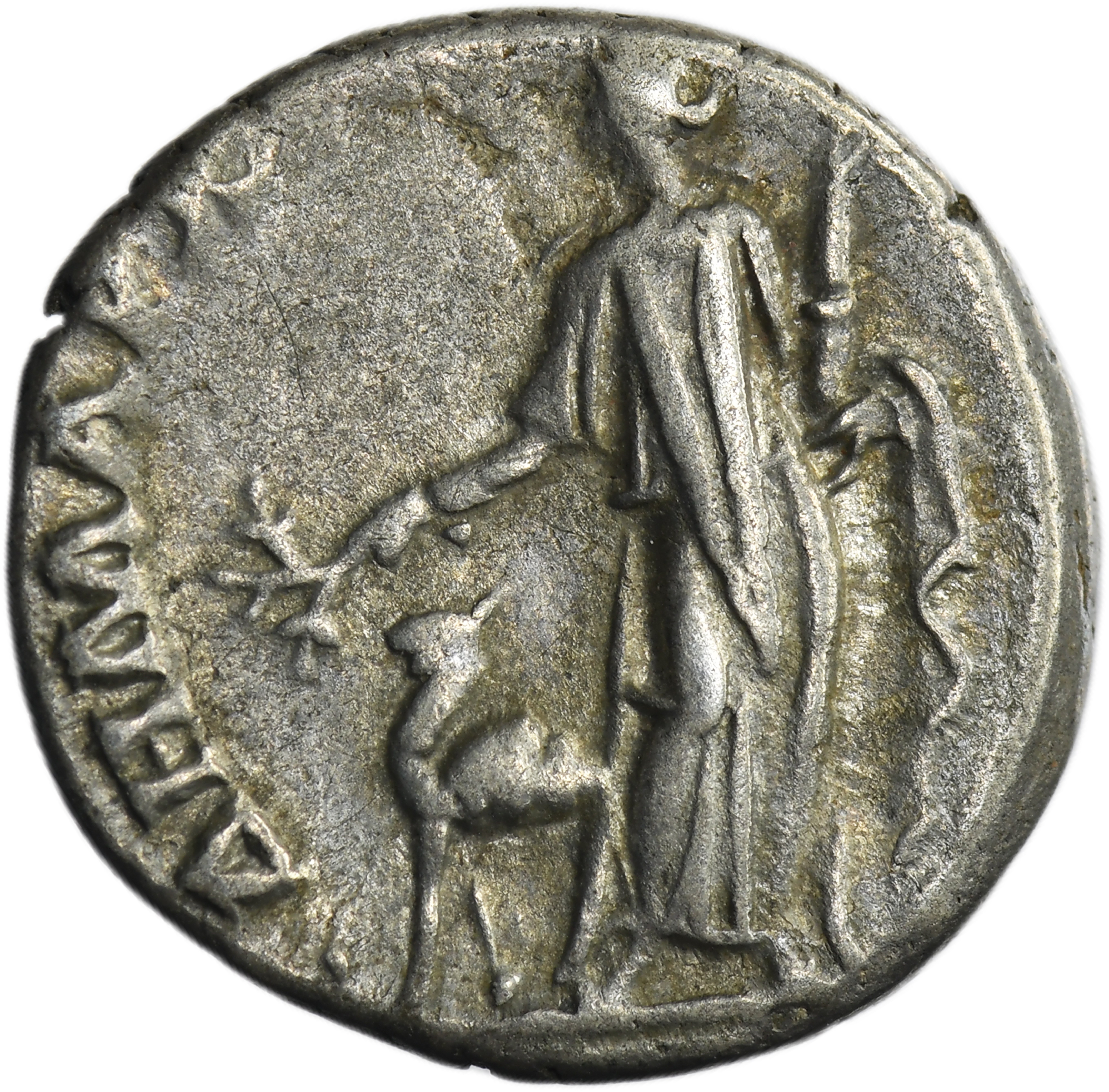
The reverse depicts the personification of Arabia standing left, holding a branch and a bundle of cinnamon, accompanied by a camel standing left, with the legend ΔHMAPX ЄΞ IZ YΠAT Ϛ. The camel, characteristic of the region, symbolizes its geographic conditions and its importance in caravan trade, while the bundle of cinnamon refers to long-distance commerce in luxury goods, well attested in ancient sources describing Arabian trade in aromatics.
The reverse legend includes references to tribunician power and the consulship, allowing the issue to be securely dated to AD 114, immediately prior to Trajan’s eastern campaign. This type forms part of a broader imperial message emphasizing both the incorporation of Arabia into the Roman world and its economic significance.
Roman Provincial
Arabia, Trajan (98-117), Drachm 114, Bostra mint
Obverse: laureate bust right
AYTOKP KAIC NЄP TPAIAN CЄB ΓЄPM ΔAK
Reverse: Arabia standing facing, head to left, holding branch and bundle of cinnamon sticks, camel at side to left
ΔHMAPX ЄΞ IZ YΠAT Ϛ
Diameter 17 mm, weight 3.35 g











