Dimensions: 59.5 x 83 cm
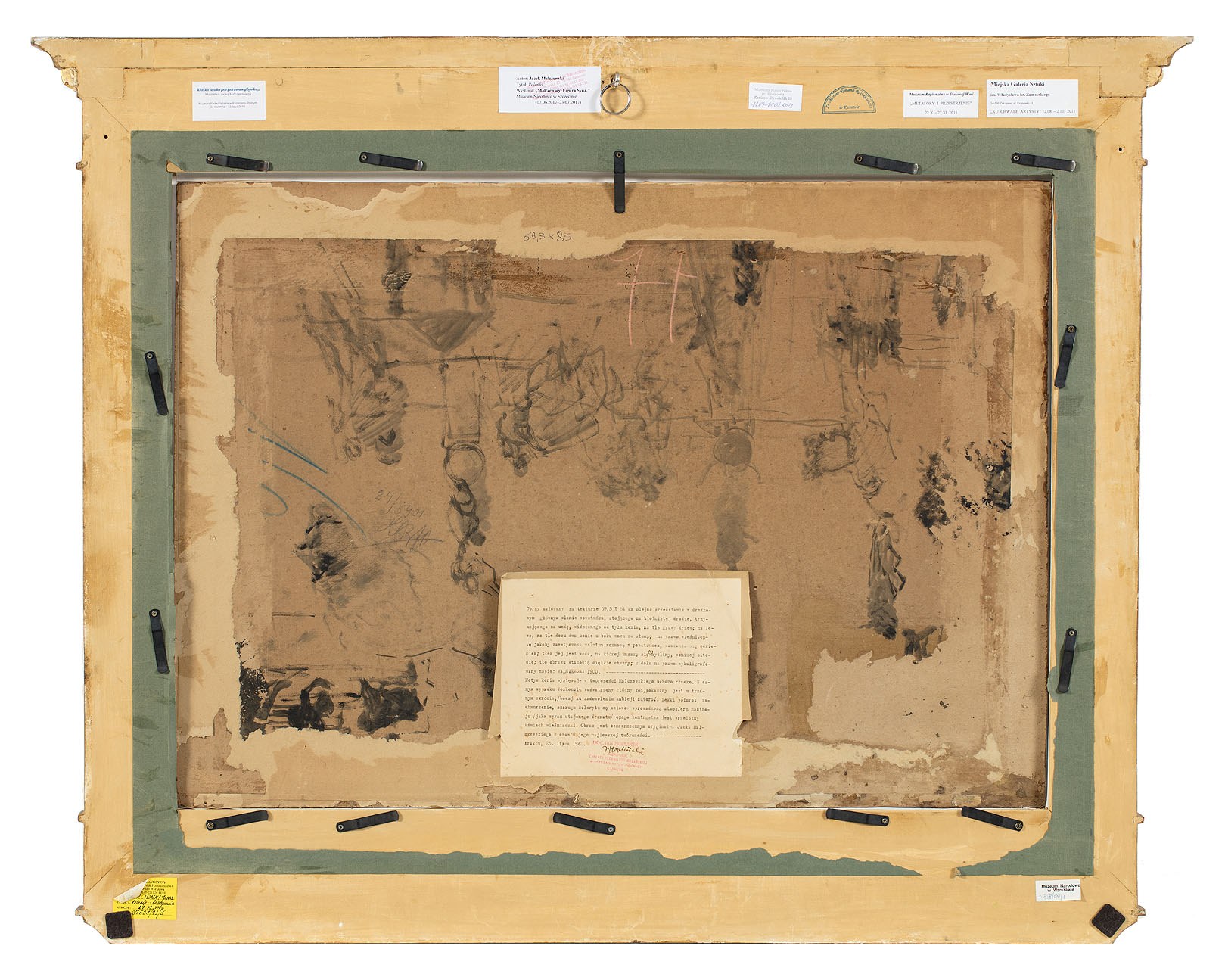
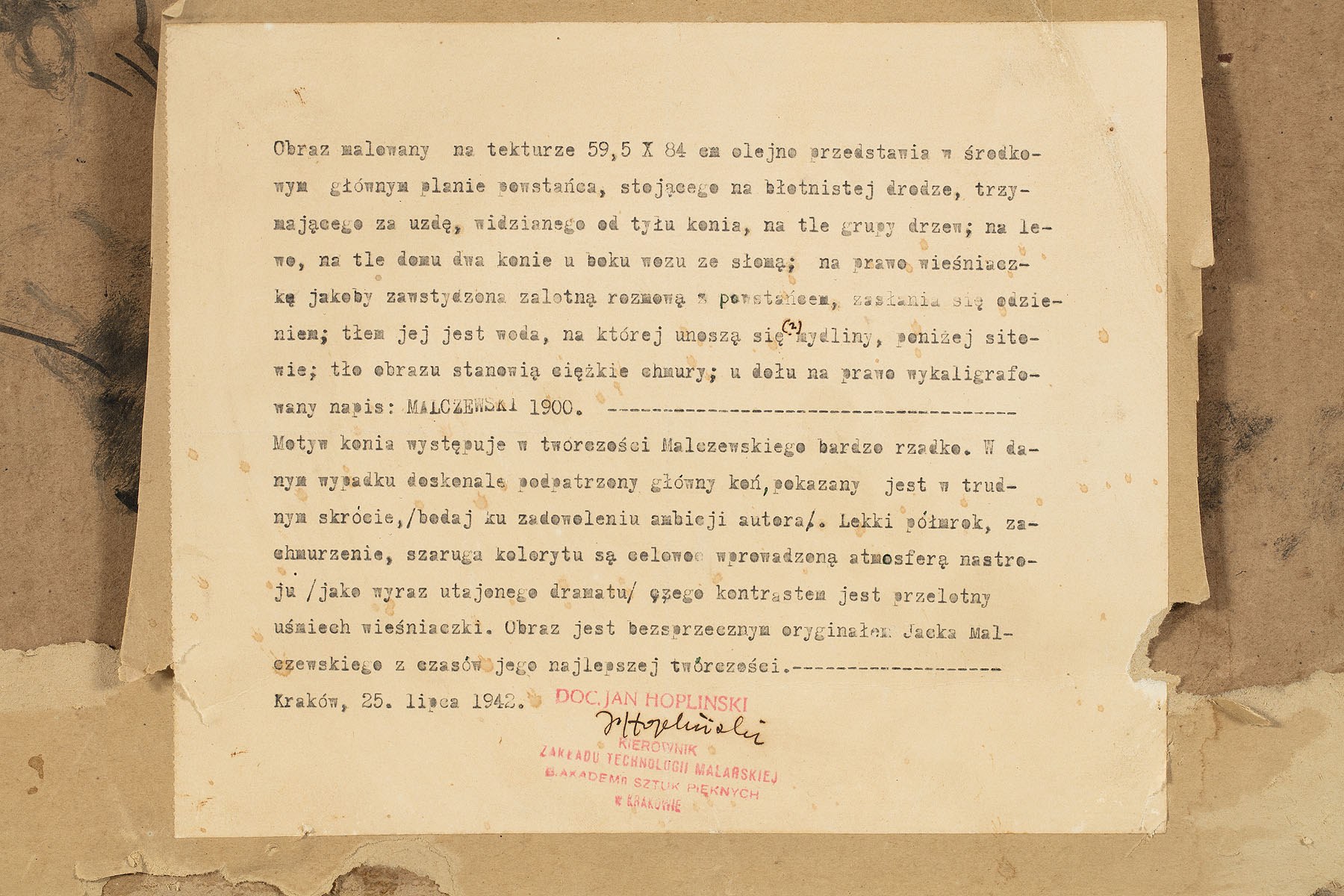
Signature: signature p.d.: J Malczewski 1900; on the reverse: opinion of docent Jan Hoplinski, 1942; on the back of the binding: exhibition stickers and owner's stamp
Provenance
Poland, private collection. Rempex, auction 18.04.2007, item 238; Rempex, auction 17.11.2004, item 227; Cracow, collection of Dr. Wincenty Lepkowski.
Exhibited
Radom, Jacek Malczewski Museum in Radom, Jacek Malczewski. Contexts, September 20, 2024 - January 5, 2025. Kazimierz Dolny, Nadwiślańskie Museum in Kazimierz Dolny, Great art is like the ocean deep...Painting by Jacek Malczewski, April 23 - July 22, 2018. Szczecin, National Museum in Szczecin, Malczewscy. Figure of a Son, June 7 - July 23, 2017. Kraków, Museum of Kraków, Krzysztofory Palace, "In battle let us fly to victory...". On the 150th Anniversary of the January Uprising, May 10-September 15, 2013. Stalowa Wola, Regional Museum in Stalowa Wola, Metaphors and Spaces, October 22-November 27, 2011. Zakopane, Wladyslaw hr. Zamoyski Municipal Art Gallery, To the Glory of the Artist, August 12-October 2, 2011. Warsaw, National Museum in Warsaw, Jacek Malczewski. Return, June-July 2000. Warsaw, Society for the Encouragement of Fine Arts, Catalogue of the Jubilee Exhibition of the Works of Jacek Malczewski, June 1925. Lviv, Society for the Friends of Fine Arts in Lviv, Exhibition of one hundred works by Jacek Malczewski, April-May 1903.
Reproduced
Kozakowska-Zaucha U., Jacek Malczewski Romantic, published by the National Museum in Cracow, Cracow 2022, p. 77. Wolska B.M., Malczewscy. Figura Syna [exhibition catalog], published by the National Museum in Szczecin, Szczecin 2017, cat. no. III.8, p. 86. Posiadała Z., Jacek and Rafał Malczewscy, Radom 2014, p. 148. W bój lećmy zwyciężać ... W rocznicę 150 Powstania Styczniowego [exhibition catalog], published by the Historical Museum of the City of Krakow, Krakow 2013, pp. 28-29. Król A., Metaphors and Spaces. Painting of Jacek and Rafał Malczewski [exhibition catalog], published by the Regional Museum in Stalowa Wola, Stalowa Wola 2011, cat. no. 3, p. 13. Bołdok S., To Jacek Malczewski in the 150th anniversary of his birth, [in:] "Gazeta Antykwaryczna", no. 5/6 [98/99], 2004, p. 33. Micke-Broniarek E. [ed.], Jacek Malczewski. Return [exhibition catalog], National Museum in Warsaw, Warsaw 2000, pp. 60-61. "Tęcza. Illustrated weekly magazine", R. 3, Z. 49, Poznań, 7.12.1929, p. nlb.
Literature
Catalog of the Jubilee Exhibition of the Works of Jacek Malczewski, Society for the Encouragement of Fine Arts, Warsaw 1925, item 107, p. 10 (as "Where the Road Goes"). Guide to the exhibition of the Society for the Encouragement of Fine Arts, No. III, Warsaw 1925, item 107, p. 8 (as "Where the road goes"). Catalog of an exhibition of one hundred works by Jacek Malczewski, Society of Friends of Fine Arts in Lviv, Lviv 1903, item 71, pp. 50-51 (as "Polonia").
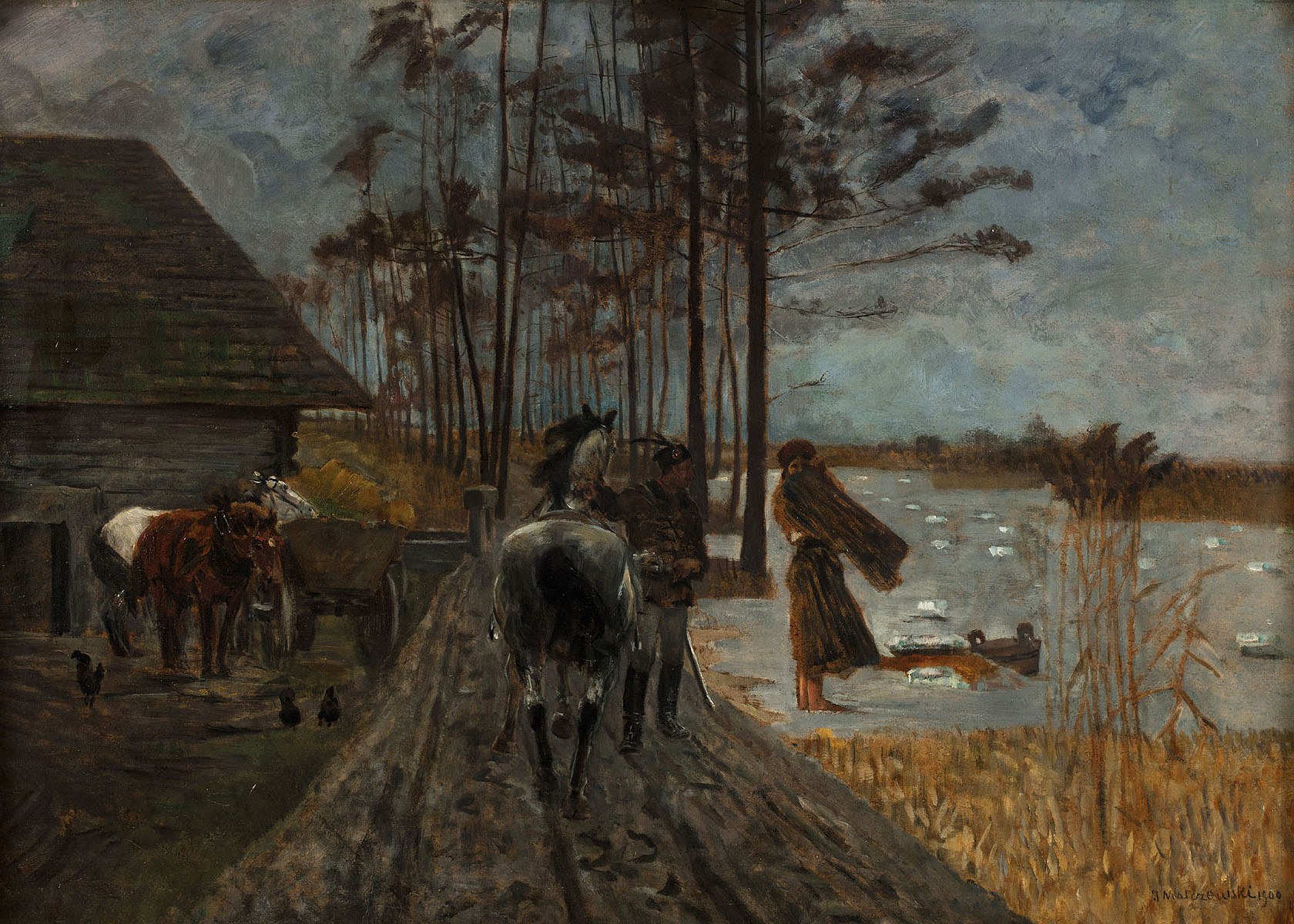
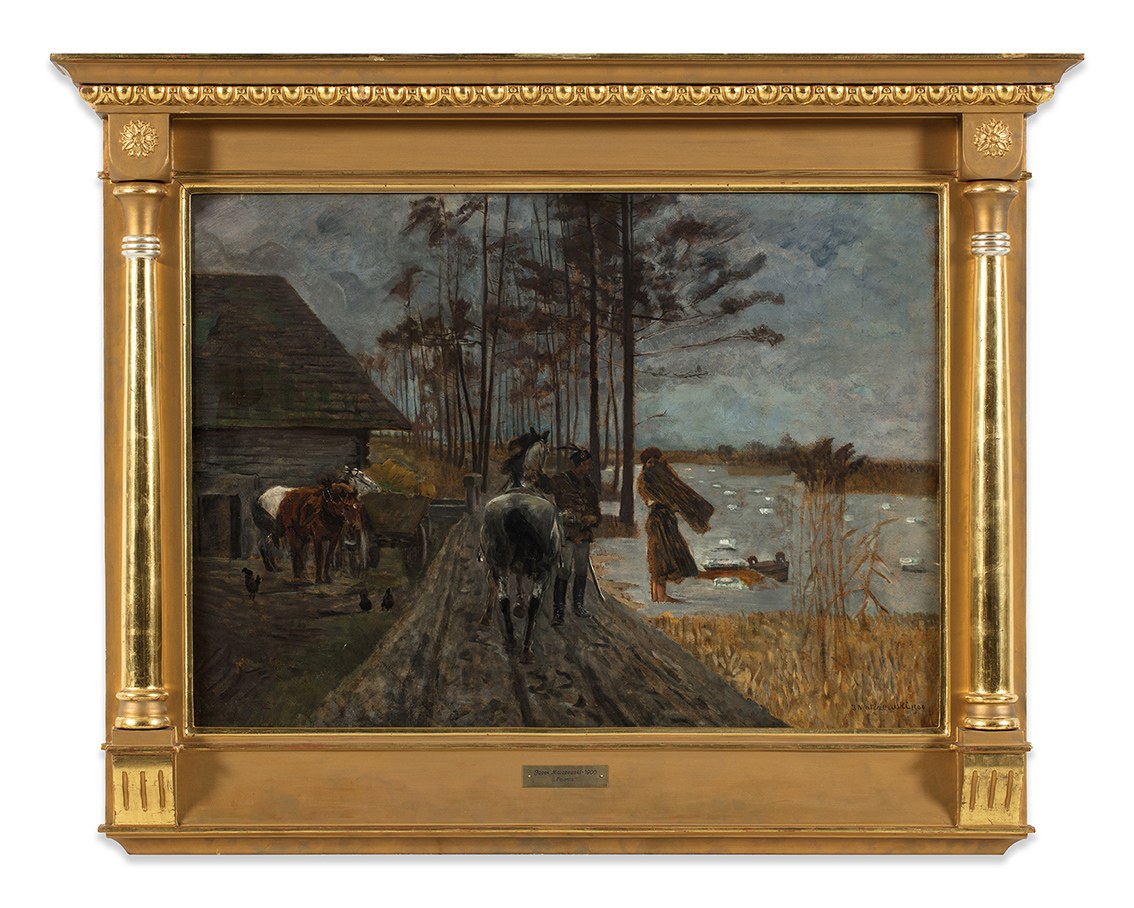
The offered painting "Polonia - where the road goes" from 1900 occupies a special place in the work of Jacek Malczewski. In addition to the intensely explored themes of the role of the artist and art, as well as life and death, the broadly defined patriotic theme is an extremely expressive and emotionally saturated area of interest for the artist.
Malczewski's early childhood fell during a period of fervor of national liberation activities bracketed by two major uprisings - the November (1831) and January (1863), his youth was marked by the drama of the latter's collapse. Memories of the atmosphere of battle and defeat, first-hand accounts heard from insurgents and Siberian exiles, as well as education at the estate in Wielgie received from Adolf Dygasiński - also a former insurgent - had a decisive influence on the way Malczewski perceived the issue of the "Polish cause" in painting. This imagery differed from the vision of history painting imposed by Jan Matejko, which became the cause of the conflict between master and pupil for the rest. Malczewski emerged from this clash convinced of the rightness of his stance. In the area of martyrdom themes, he found a source of inspiration corresponding to his sensitivity in the more modest but emotionally strong works of Artur Grottger and the poetry of Juliusz Słowacki.
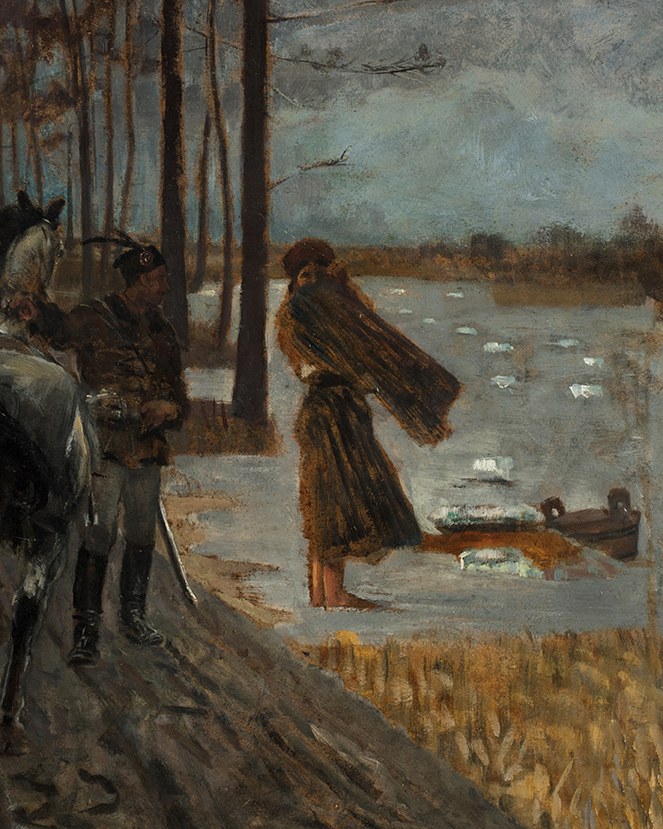
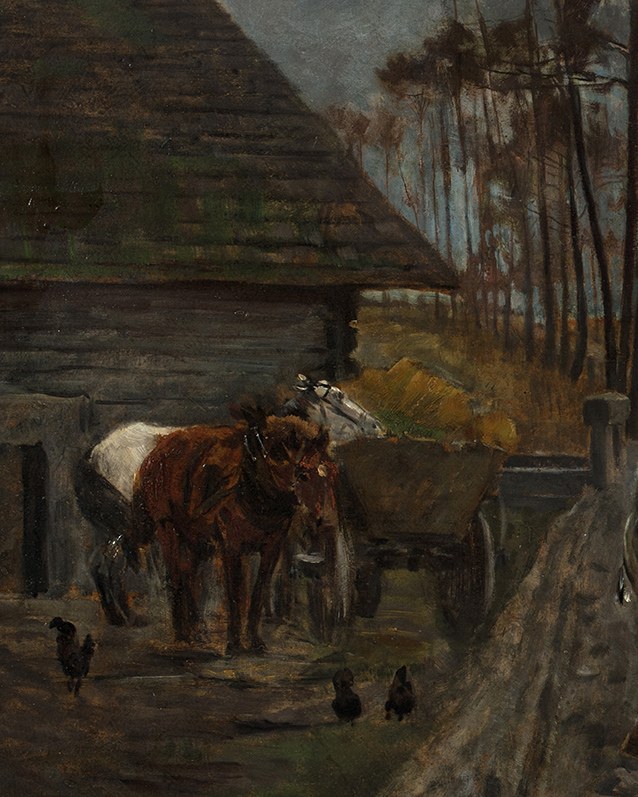
Insurgency-themed paintings painted starting in the 1870s by artists such as Jacek Malczewski, Aleksander Gierymski and Antoni Piotrowski brought an entirely new quality to historical painting. At the same time, they corresponded to the sensitivity of a generation that experienced firsthand the enthusiasm and, immediately after, the bitterness of 1863. Far from the pathos that characterized Matejko, Malczewski spun his own narrative around the January Uprising, the main axis of which became the tragic fate of individual people and families. The eloquent paintings created from the beginning of the 1880s - "Death of an Exile" (1882), "Death on the Stage" (1891), "Christmas Eve in Siberia" (1892), accounting for the pain and lost hope, are testimony to this. Against the background of these compositions, the painting "Polonia - where the road goes", painted nearly 40 years after the defeat of the uprising, speaks a different language. The helm of the nation is being taken over by a generation that already knows the events of 1863 only from stories, the wounds are healed, and the turn of the century seems to open up new possibilities. In the numbness of more than a century of captivity, the nation needed hope like a piece of sunny sky looking out from behind a thick layer of clouds in Malczewski's painting. The heroes of the composition are a young, energetic insurgent, a country girl he asks for directions and a thoroughly Polish winter landscape with a wooden cottage, boundless fields and pine trees lining the road. The image evoked memories of thousands of similar scenes that took place nearly 40 years earlier in every corner of the Polish land. The moving scene has symbolic overtones. The question of the road here is in fact a question about the road to Poland.
In the 1900 painting on offer, the titular Polonia is depicted by the artist in a heart-rending landscape of Polish land shrouded in snow and waiting for rebirth. Over the course of 1905-1918, Malczewski will take up this theme several times and the embodiment of the Homeland will be statuesque beautiful women. Resigned, fighting and finally triumphant. In this context, the offered painting should be seen as opening a great series of paintings, the central motif of which is the road to independence.