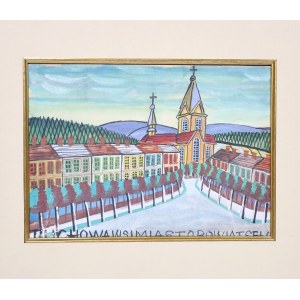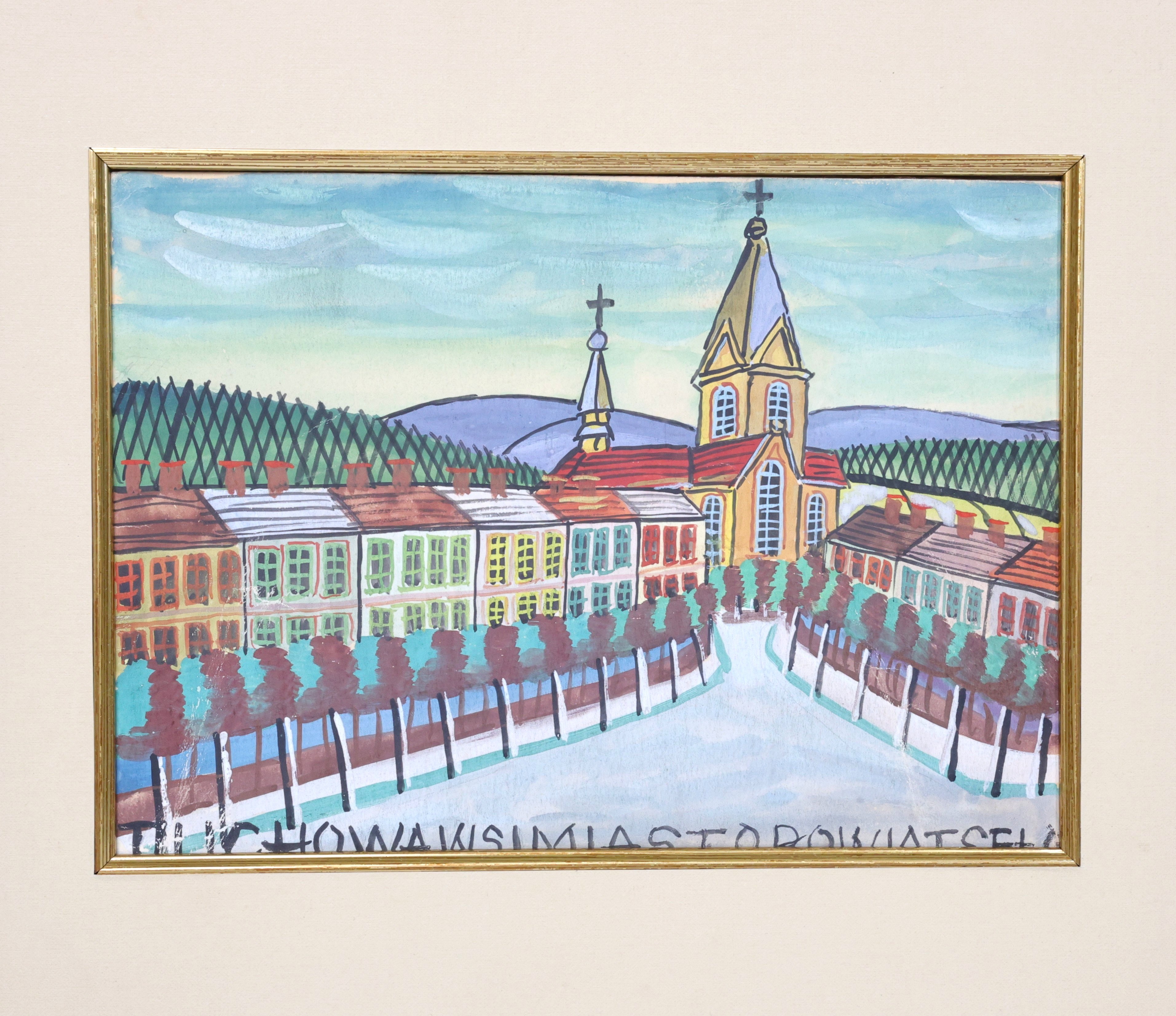

author's inscription along the bottom edge: TUCHOWA VILLAGE TOWN COUNTY SEŁO
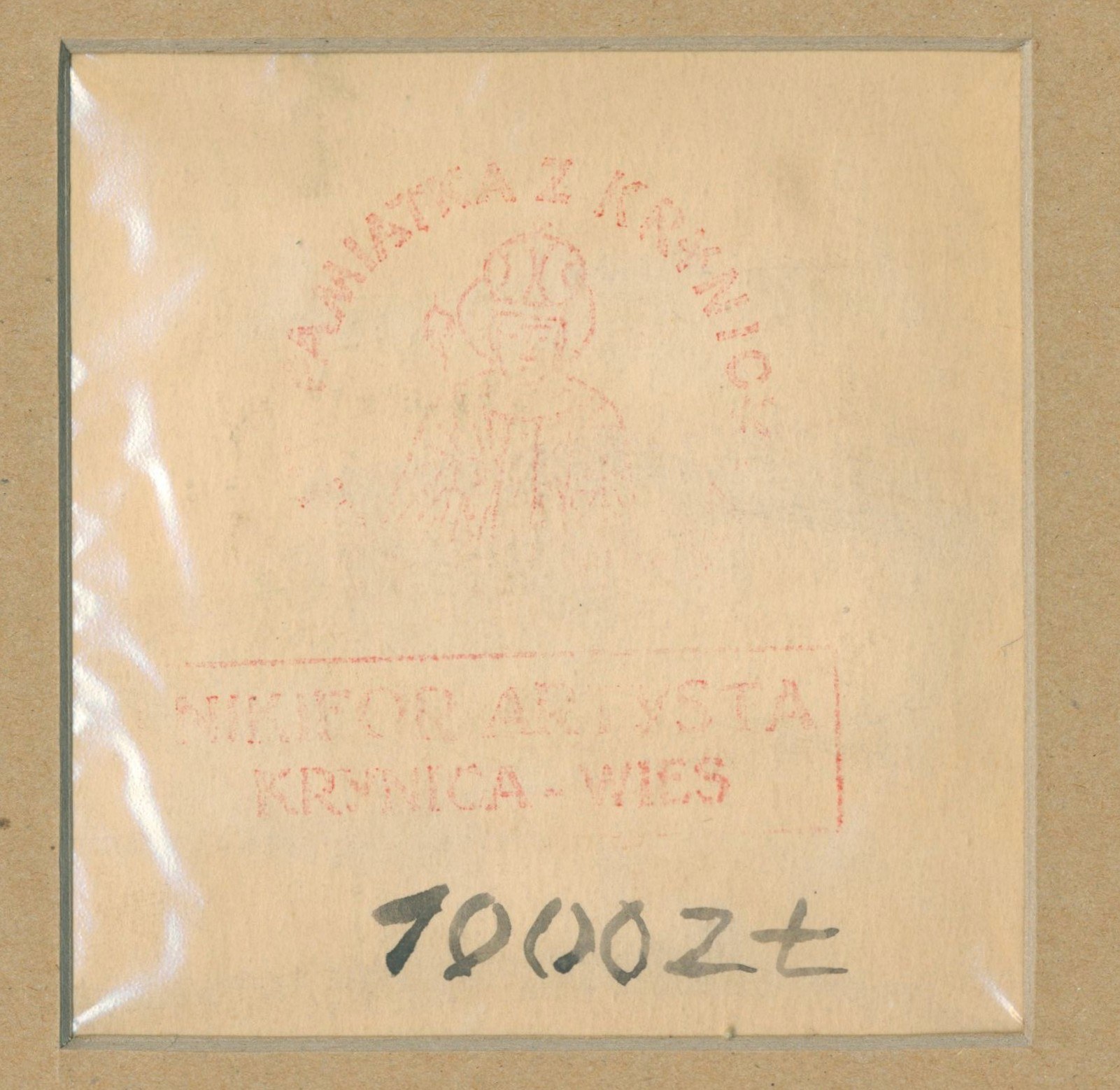
On the back is the artist's personal stamp; below (in paint): 1000 ZŁ.
Nikifor Krynicki, actually Epifaniusz Drowniak (1895-1968), was one of the most prominent representatives of naive and primitivist painting in 20th century European art. He was born in Krynica-Zdrój and remained connected almost all his life with this resort and more broadly with the landscape of Lemkivshchyna, from which his artistic imagination grew. He was self-taught; he created primarily watercolors, gouaches and drawings on paper, often using modest materials, yet he developed a style that was completely recognizable and impossible to imitate.
For a long time he remained a marginalized artist, treated in Krynica as a poor street painter selling his works as "souvenirs from Krynica." It was only with time that his work was recognized and appreciated by critics, collectors and museum institutions, and today he is considered an artist of international stature.
The subject matter of his works mainly includes Orthodox churches and churches, the spa architecture of Krynica, railway stations, offices, landscapes, interiors and self-portrait representations of the artist. In his paintings, reality was processed in an intuitive way, full of simplifications, rhythm and peculiar poetics, thanks to which Nikifor's works are situated on the borderline between document, vision and personal myth.
Nikifor was an artist of Lemko origin, and his experience of peripherality, exclusion and life on the sidelines was strongly reflected in his work. Today, his oeuvre holds a permanent place in the history of Polish art, and there is a museum dedicated to him in Krynica-Zdroj, presenting works from all periods of his career.