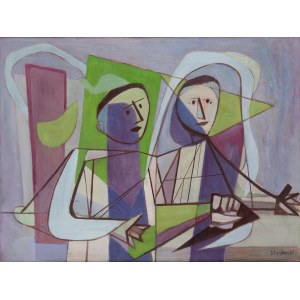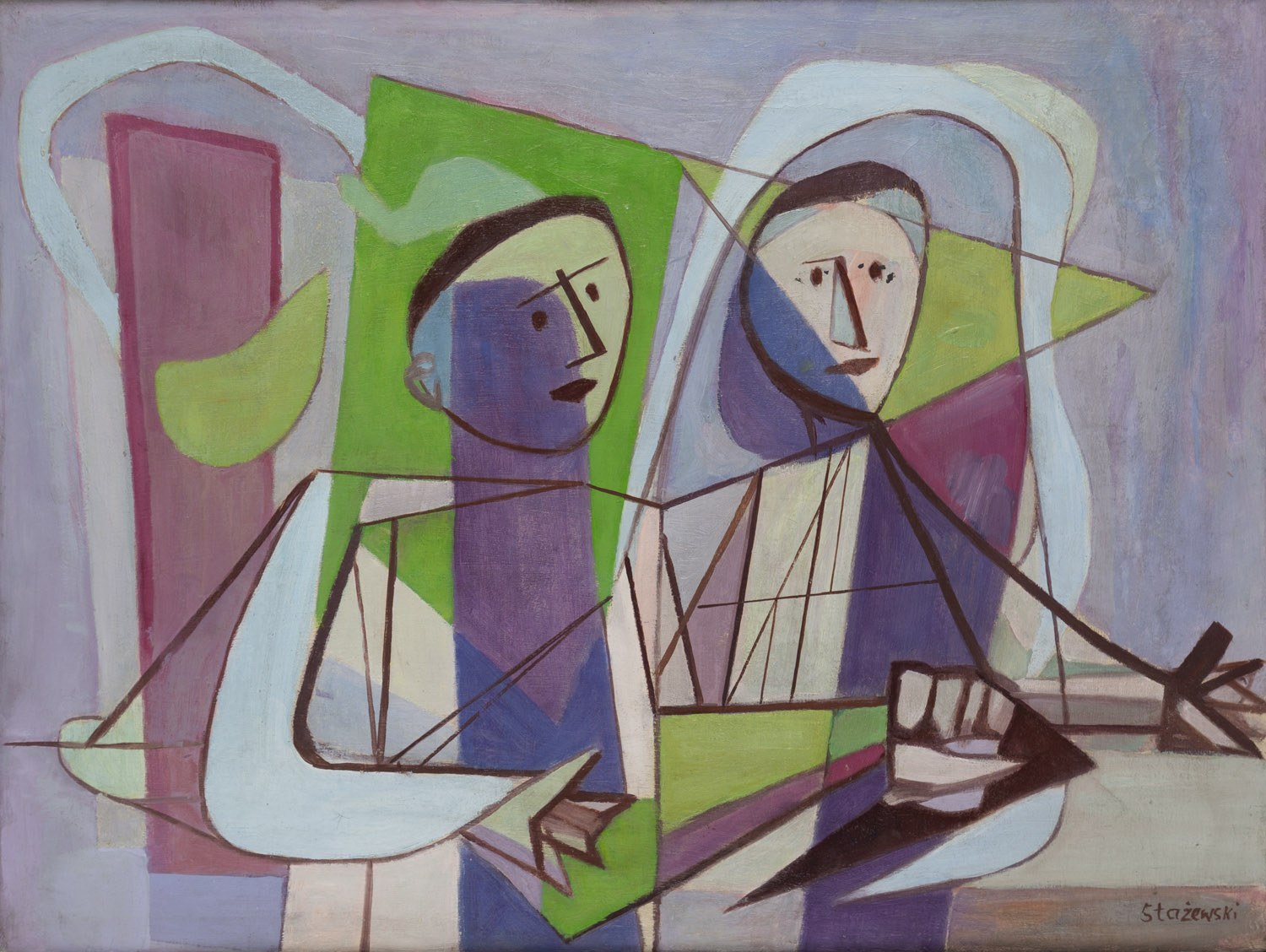
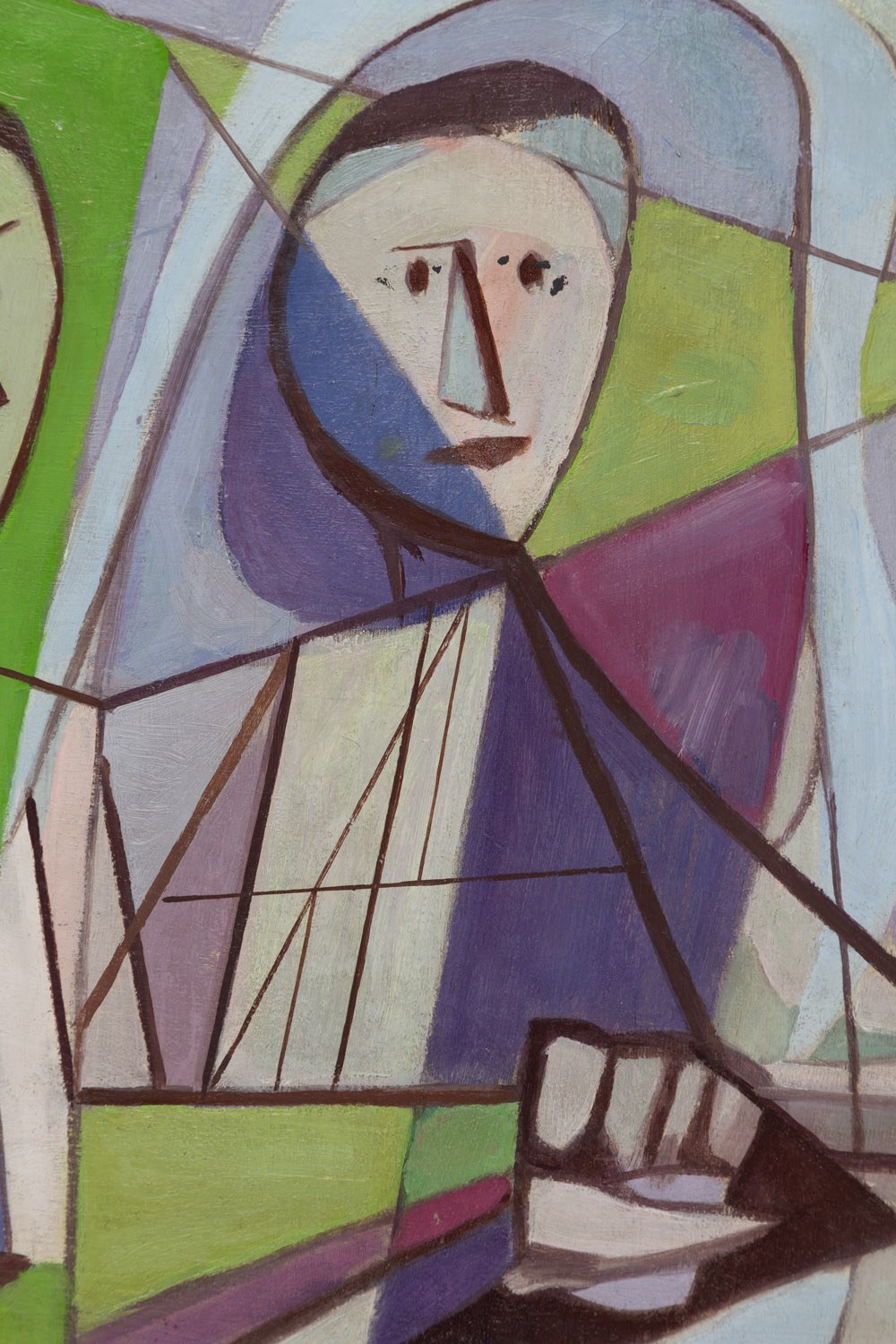
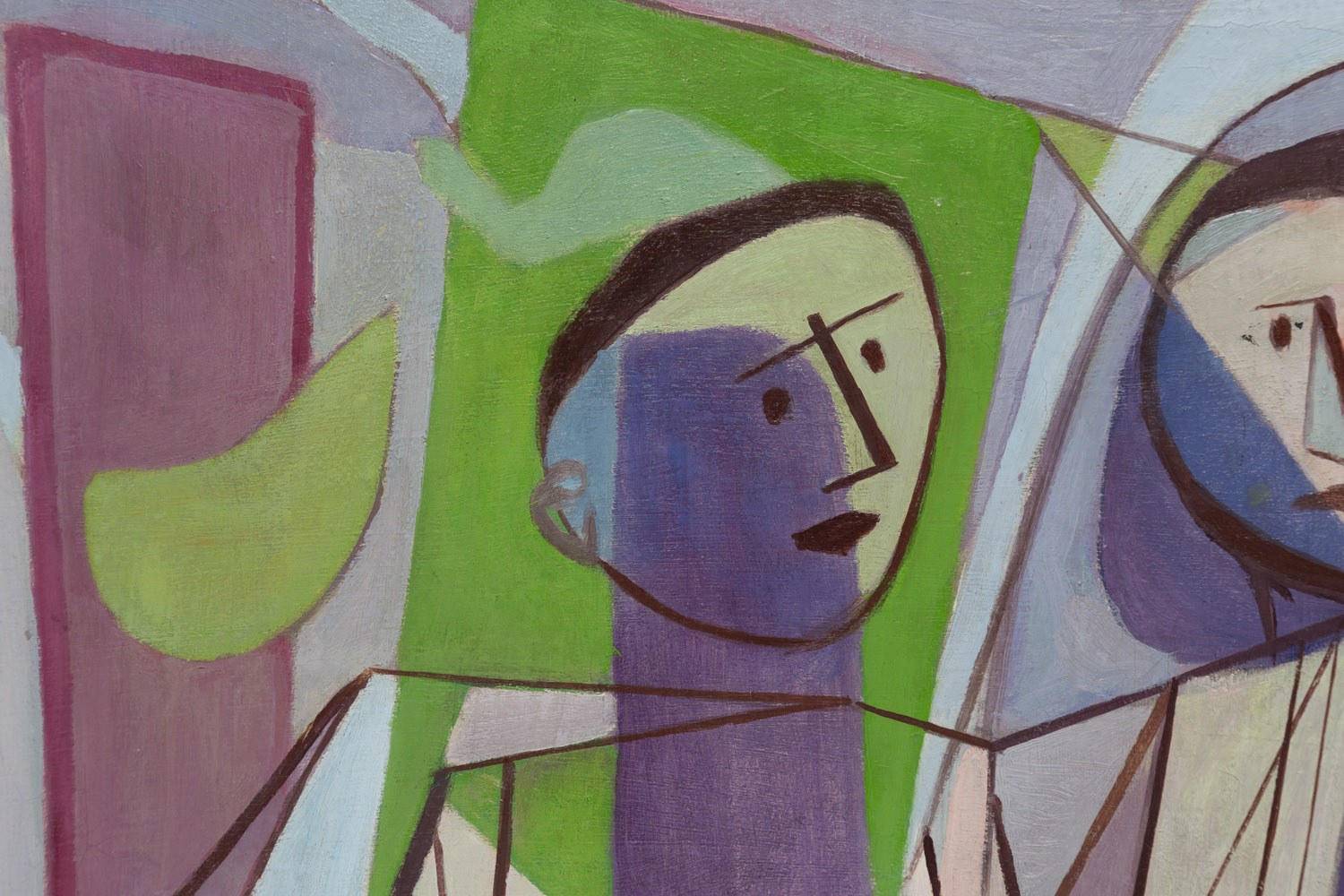
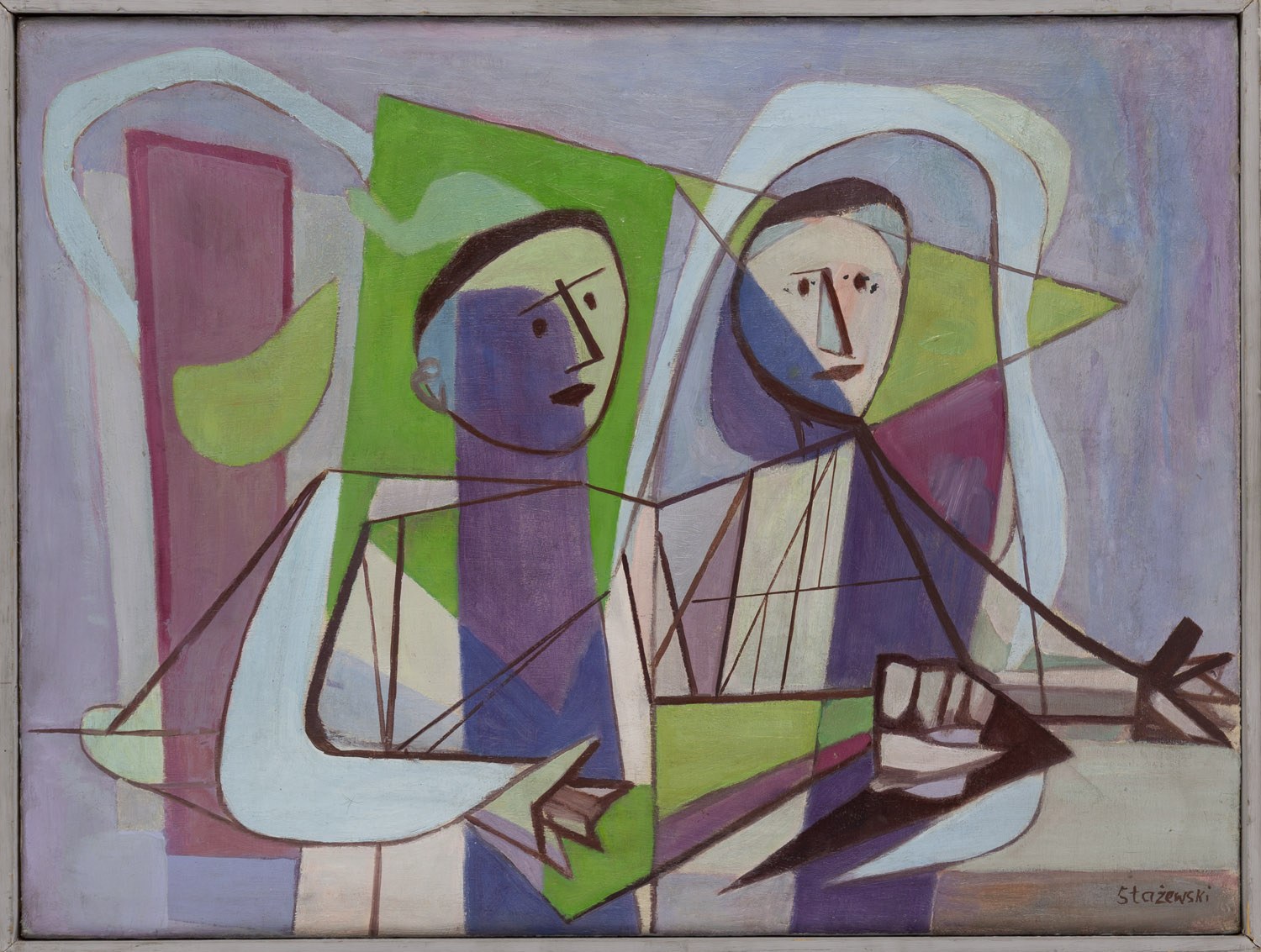
Dimensions: 46 x 61 cm
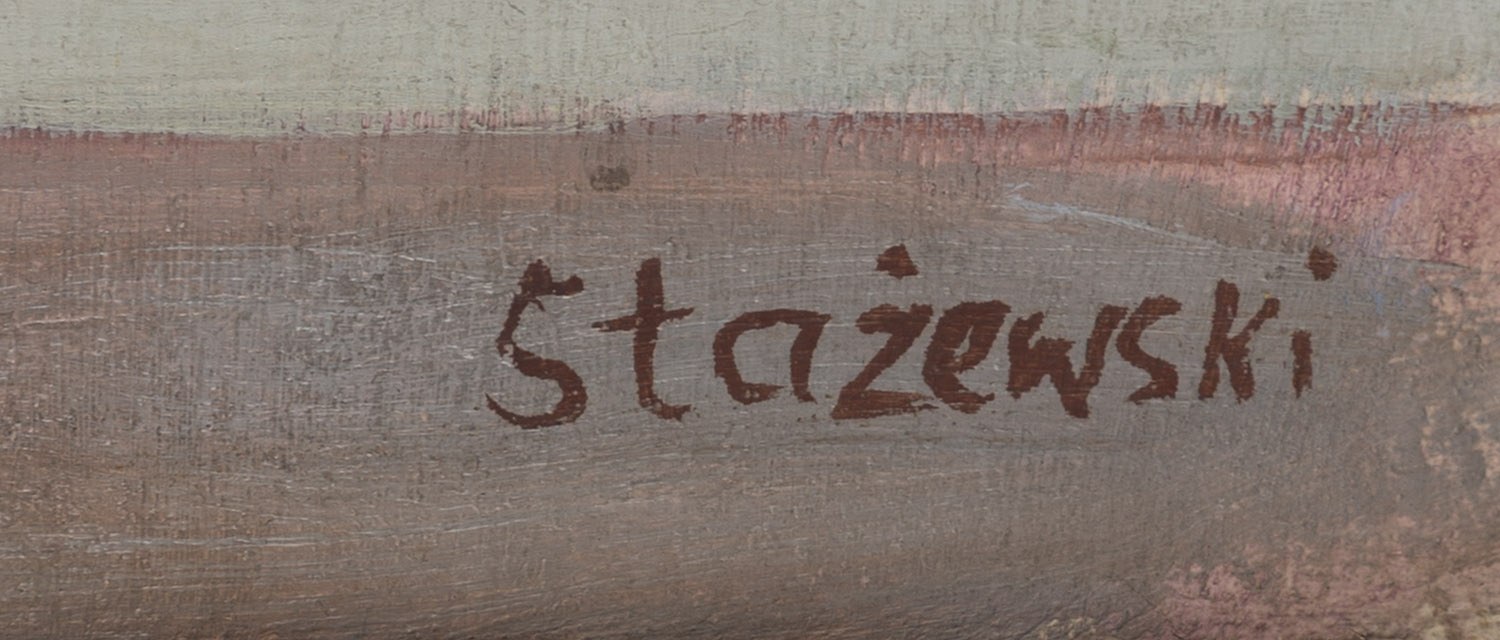
signed lower right: 'Stażewski'
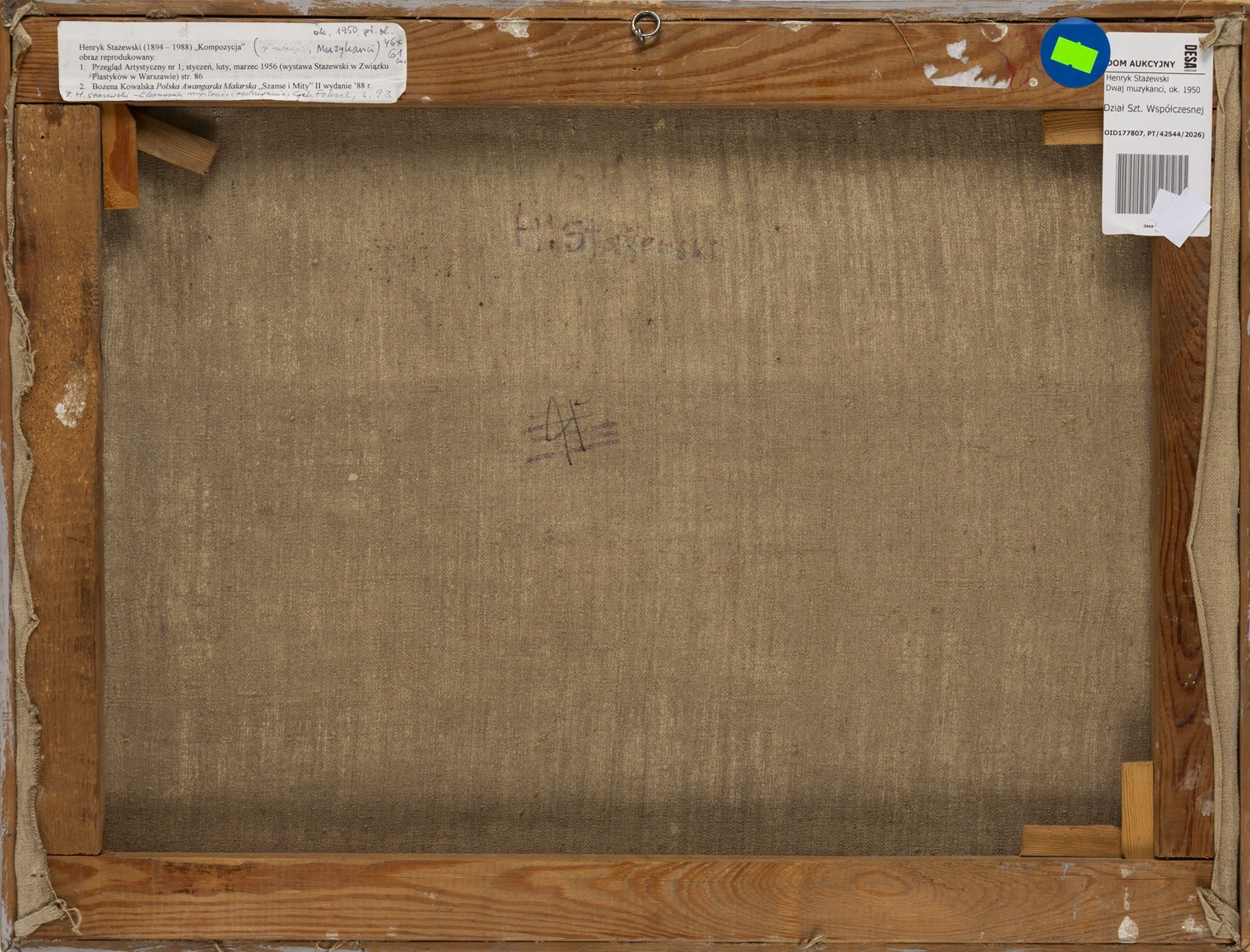
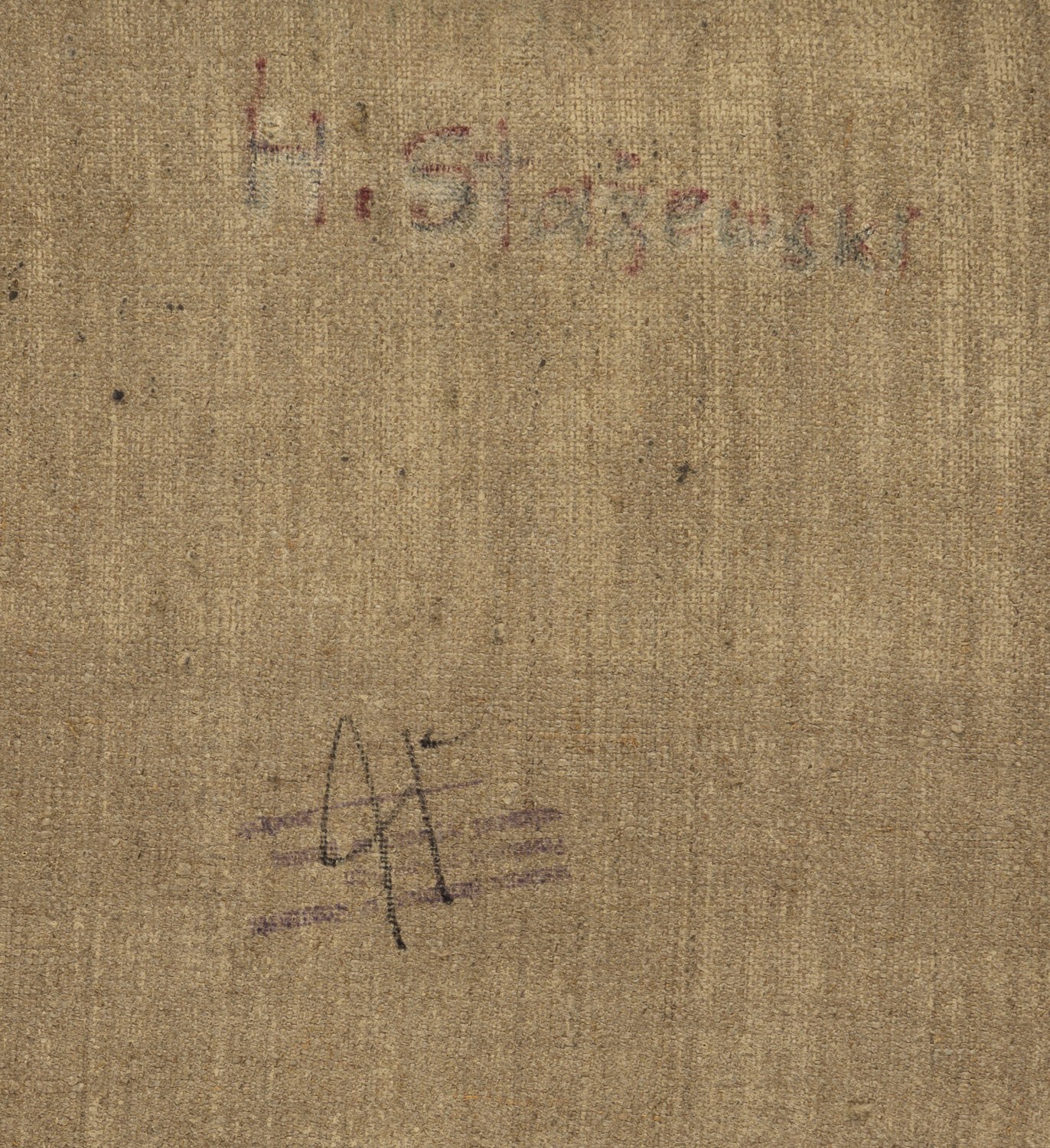
on the reverse [secondary] signature: 'H.Stażewski', with an illegible stamp below
Provenance
private collection, Poland
Exhibited
Exhibition of works by Henryk Stażewski, Polish Writers’ Union Club, Warsaw, October 1955
Bibliography
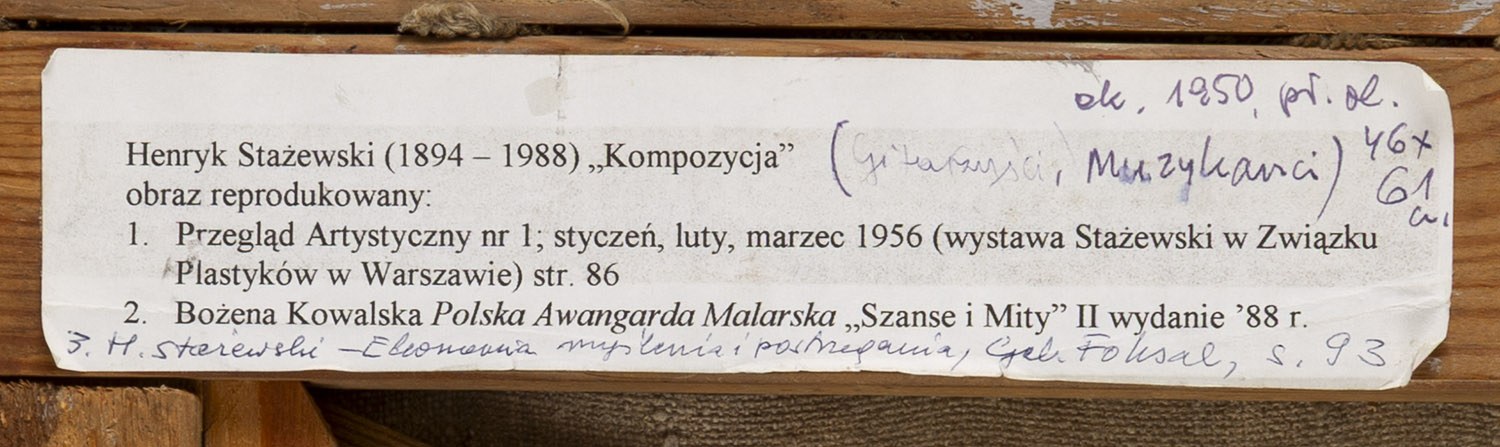
Andrzej Wat, “Exhibition of Works by Henryk Stażewski,” *Przegląd Artystyczny*, no. 1, 1956, p. 86 (ill. as “Composition”), 88 (as “Musicians”)
Bożena Kowalska, Henryk Stażewski, Warsaw 1985, p. 27 (titled “The Musicians”)
Bożena Kowalska, The Polish Avant-Garde in Painting, 1945–1980: Opportunities and Myths, Warsaw 1988, unnumbered (ill. 18 as “Composition”)
Henryk Stażewski. The Economics of Thinking and Perception, ed. Małgorzata Jurkiewicz et al., Warsaw 2005, p. 93 (ill.), 348 (mentioned)
Biography
Henryk Stażewski is a legend of avant-garde art in Poland. He studied at the School of Fine Arts in Warsaw from 1913 to 1920. Early in his career, he painted still lifes. For a time, he exhibited with the “Formists” group (1922). He also took part in the New Art Exhibition in Vilnius in 1923. Around this time, his work was influenced by Constructivism. In addition to his paintings, he worked in book illustration, designed interiors and furnishings, and created stage sets—most of these were theoretical and studio-based works. The Polish and international avant-garde groups with which he exhibited and collaborated as a writer were, in order: “Blok” (1924–26), “Praesens” (1926–30), “Cercle et Carré” (1929–31), “Abstraction-Création” (1931–39), and “a.r.” (1932–39). He was also a member of the Association of Advertising Graphic Artists (1933–39). In 1930, he co-organized a collection of works by international avant-garde artists intended for the Łódź museum (currently housed at the Museum of Art in Łódź). After World War II, he lived and worked in Warsaw. In the 1940s and 1950s, he attempted to adapt to the demands of figurative art. His drawings and paintings from this period depict themes of labor and construction, as well as monumental designs. After 1956, widely recognized as the patron of the Polish avant-garde, he devoted himself exclusively to abstraction with constructivist roots. He created series of works that were studies of planes, lines, and colors in various arrangements relative to one another. Beneath the appearance of cool perfection, he knew how to infuse them with the emotion of direct touch, the trace of the hand. In addition to painting and related media, such as collages, reliefs, and multiples, he created three-dimensional forms and prints (he authorized silkscreen reproductions of his works).