


Dimensions: 17.7 cm x 132 cm
Mixed media, ink, watercolor
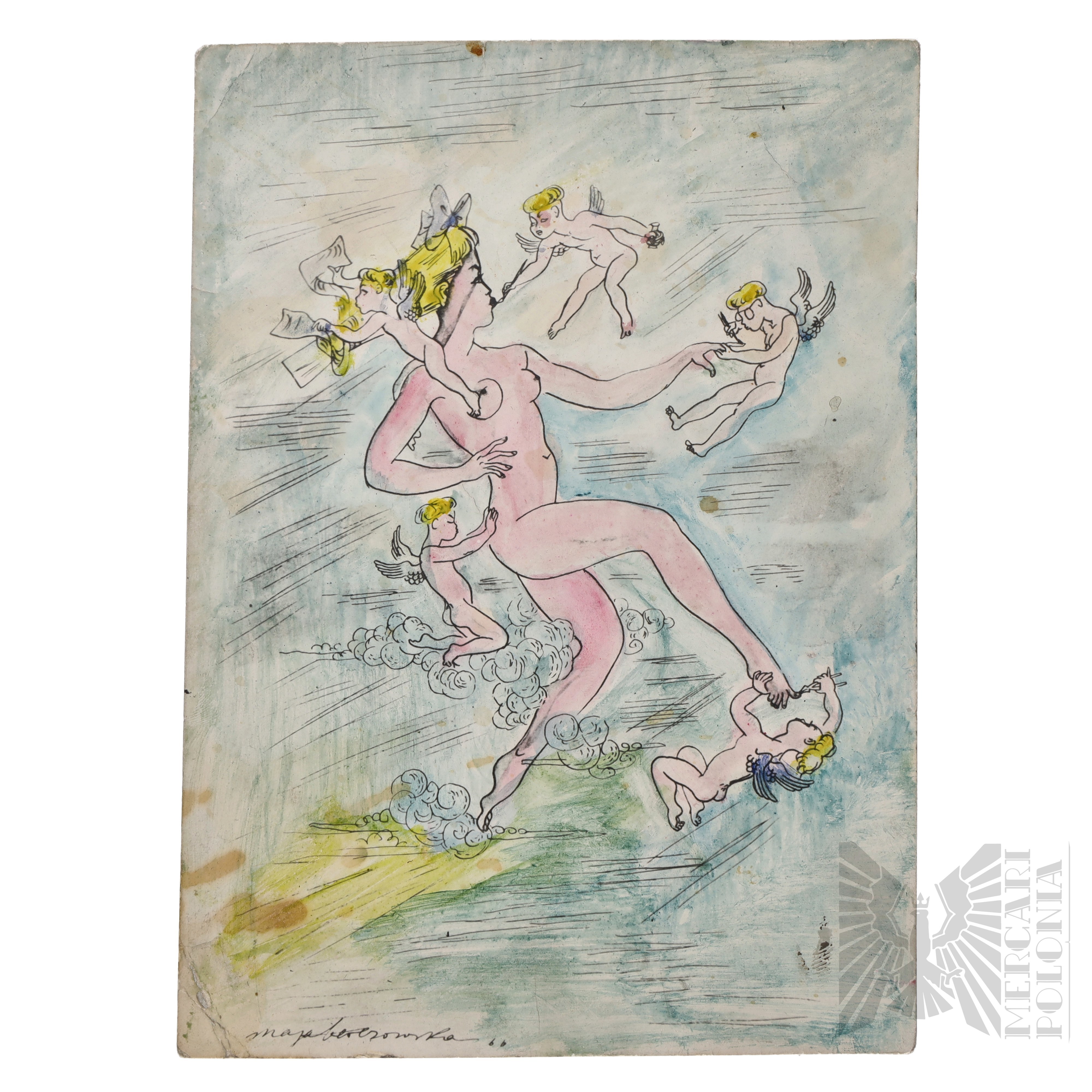
The work depicts a dynamic, light figural scene of a mythological and erotic nature. At the center of the composition is a nude woman with an elongated, slender figure, depicted in motion, as if floating or dancing in space. Her body is outlined with a delicate contour and painted in light pink. The figure’s head is tilted back, her hair indicated by a yellowish patch of color, and her arms and legs arranged in a free, dance-like gesture.
Several small, naked cherubs with wings are arranged around the main figure. One of them is near the woman’s face, another is sitting or floating by her leg, and the remaining figures are floating on the right and upper sides of the composition. The cupids are rendered quickly and sketchily, with the lightness of line and playful approach to the subject characteristic of Berezowska.
The background consists of scattered horizontal and diagonal ink strokes and delicate watercolor washes in shades of blue, green, and yellow. In the lower part, there are swirls of clouds or decorative cloud formations that reinforce the impression of flight and the fantastical nature of the scene. The paper has a light, creamy hue, with visible localized discoloration, traces of moisture, stains, and slight surface distortions. The composition retains the character of a small-scale work, intended more for intimate viewing than for a monumental exhibition.
The work falls within the most recognizable area of Maja Berezowska’s oeuvre: light, sensual, and often humorous figurative art, in which eroticism is presented not as literal depiction but as a play of gesture, line, and color. The artist was known for her ability to combine social freedom with elegant draftsmanship; her erotic compositions never crossed the line of good taste, a fact also emphasized in contemporary studies devoted to her work.
The motif of a woman surrounded by cupids can be interpreted as a variation on the themes of Venus, love, and sensuality. Berezowska frequently drew upon erotic and literary iconography, and her illustrations for Boccaccio’s *Decameron* from 1930 brought her particular acclaim. A similar tone resonates in the work presented here: frivolity, charm, decorative quality, and a light narrative.
From the art market’s perspective, Berezowska’s works on paper—especially her ink drawings, watercolors, and erotic and genre compositions—constitute a recognizable and sought-after segment of her body of work. Similar works appear on the auction market, including the 1954 piece “Amory,” described as a watercolor and ink on paper, which confirms that such themes and techniques fall within the artist’s typical collectible repertoire.
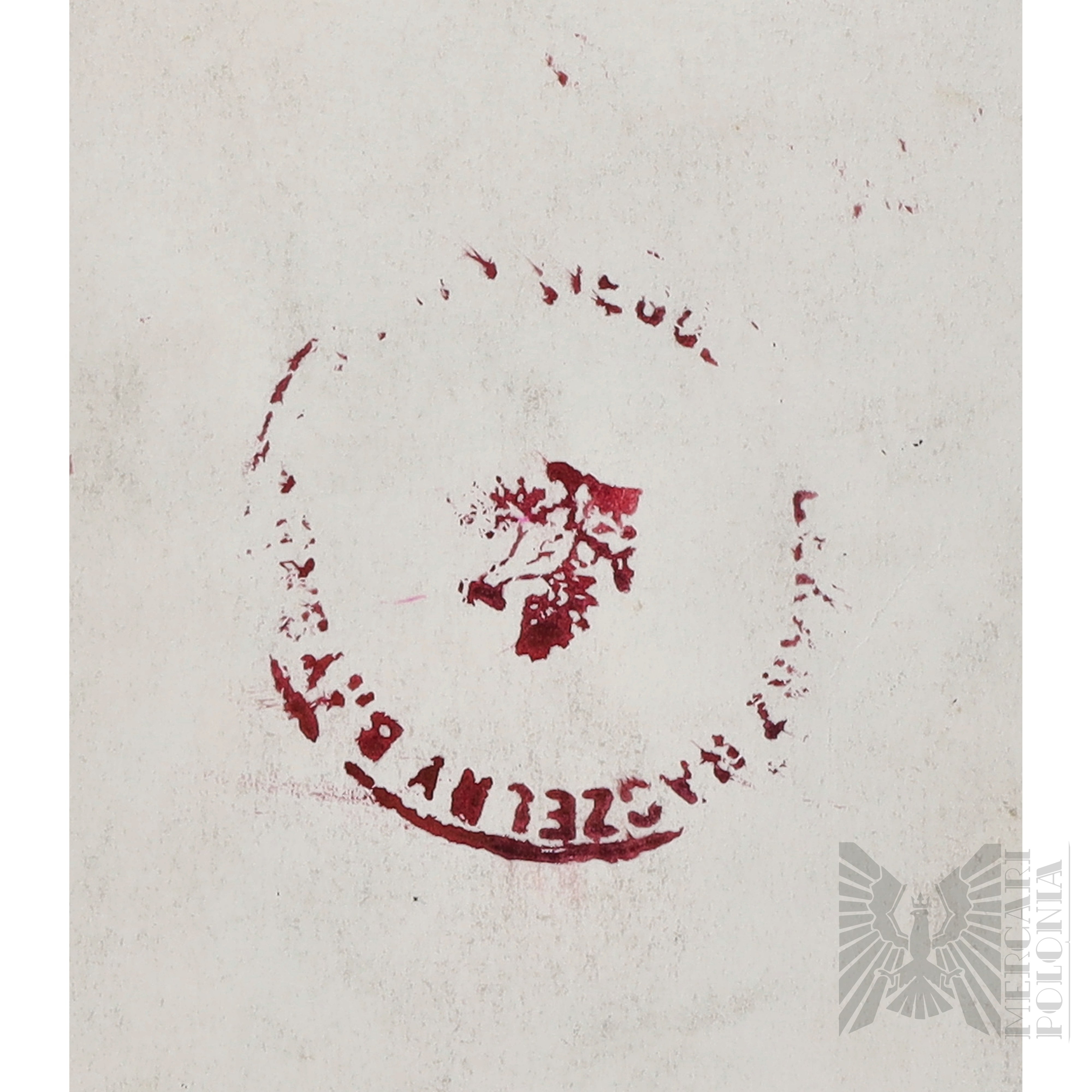
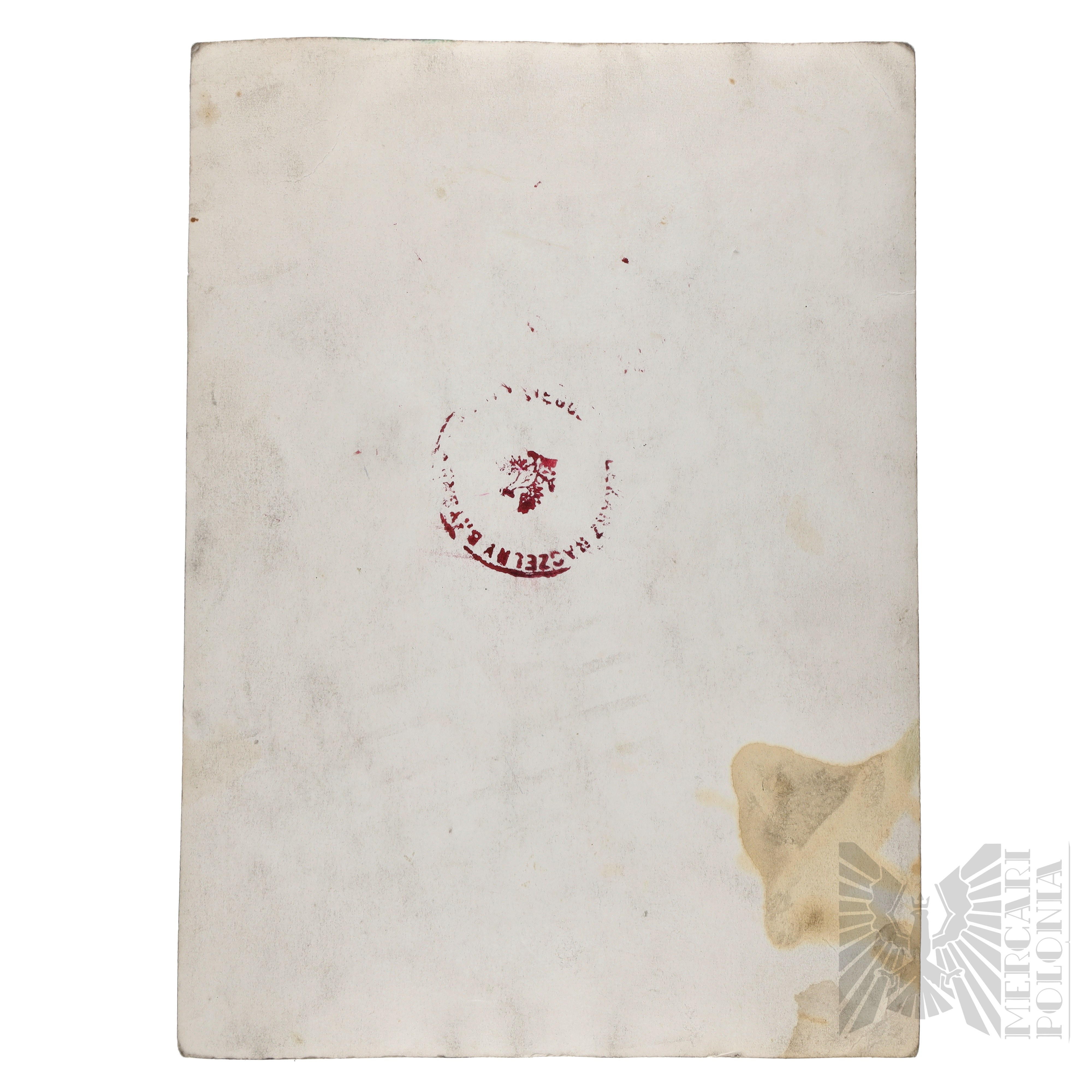
Signed “Maja Berezowska 66” in the lower right corner; on the reverse, a partially worn stamp featuring an eagle and the inscription “Chief Medical Officer […]”—likely “Chief Medical Officer of the Legions Brigade”—from the period of World War I.
Condition as shown in the photos
Maja Berezowska was born on April 13, 1893, in Baranovichi in the former Russian Empire (now Belarus), and died on May 31, 1978, in Warsaw. She was one of the most recognizable Polish artists of the 20th century—a painter, draftswoman, illustrator, set designer, and costume designer, known primarily for her bold satirical drawings and depictions of the female nude.
She came from a family with intellectual and artistic traditions. She studied at the Academy of Fine Arts in Kraków under Józef Pankiewicz, and then continued her artistic education in Paris, where she encountered the European avant-garde and the bohemian artistic atmosphere of the early 20th century. The influences of French art, particularly Linear Art Nouveau and Art Deco, remained evident in her later work.
Her illustrations published in satirical and literary magazines of the interwar period brought her the greatest popularity. Berezowska specialized in a light, elegant line and the subtle eroticism of her depictions. Her works often portrayed women in a free, sensual, and modern way, which set her apart from the conservative social mores of the era. She collaborated with numerous Polish and foreign magazines, and her illustrations were published in France, Germany, and Sweden, among other countries.
In 1933, the artist found herself at the center of an international scandal following the publication of satirical drawings depicting Adolf Hitler. The German authorities deemed them an insult to the leader of the Third Reich, which led to a trial against the artist. The case caused a stir throughout Europe and contributed to her growing recognition.
During World War II, she was arrested by the Germans and imprisoned in the Nazi concentration camp at Ravensbrück. Despite her harrowing experiences, she continued her artistic work, creating drawings that documented the lives of female prisoners. After the war, she returned to her creative work, focusing on book illustration, theater set design, and painting.
Maja Berezowska’s body of work occupies an important place in the history of 20th-century Polish illustration and applied arts. Her works are currently held in museum collections and private collections in Poland and abroad. Her ink drawings and watercolors are particularly highly regarded, as they combine elegant lines with a distinct individual artistic style.











Последно разглеждани позиции
Влезте, за да се запознаете със списъка с артикулите
Любими
Влезте, за да се запознаете със списъка с артикулите