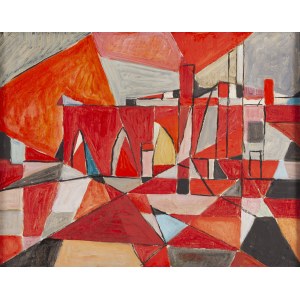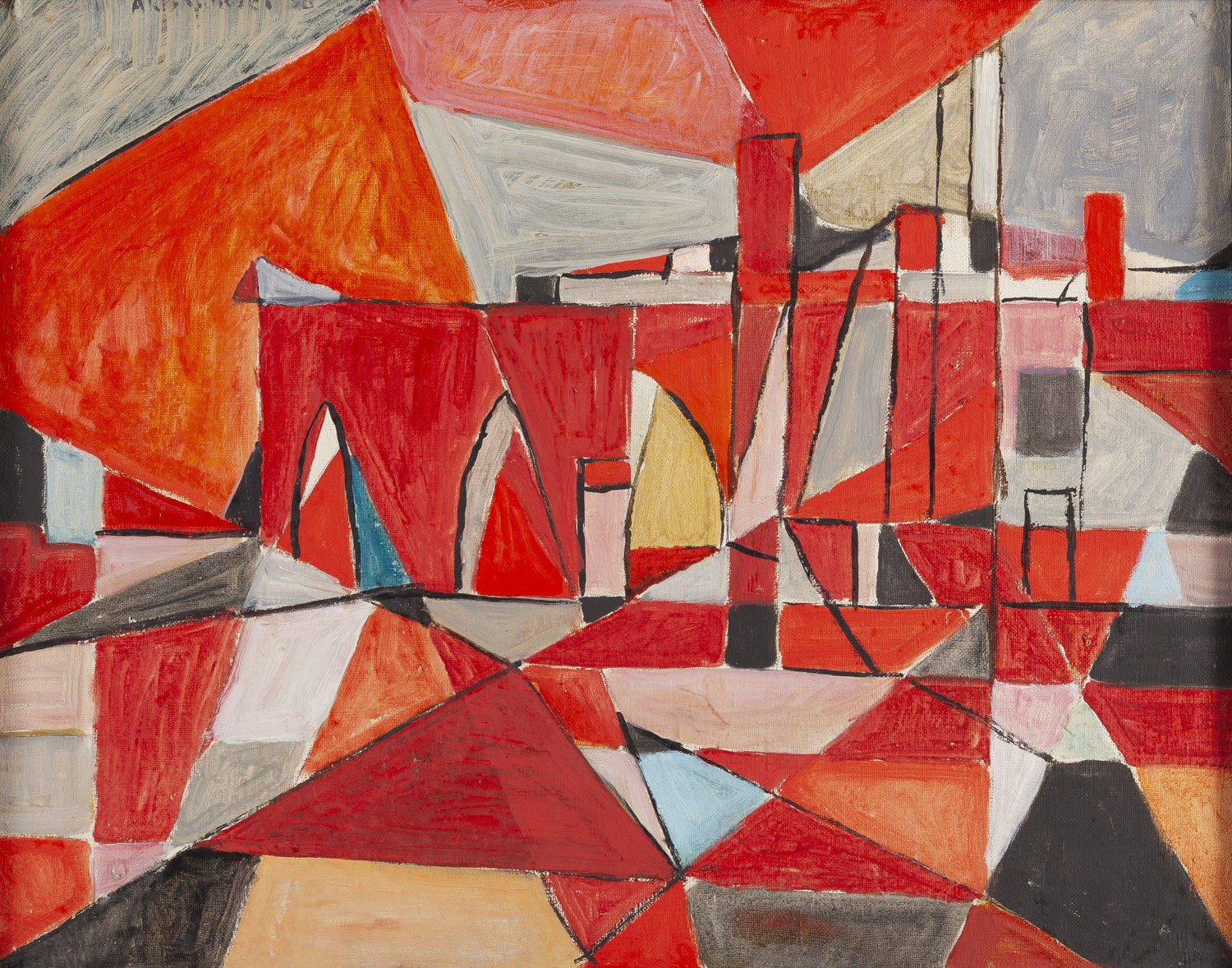
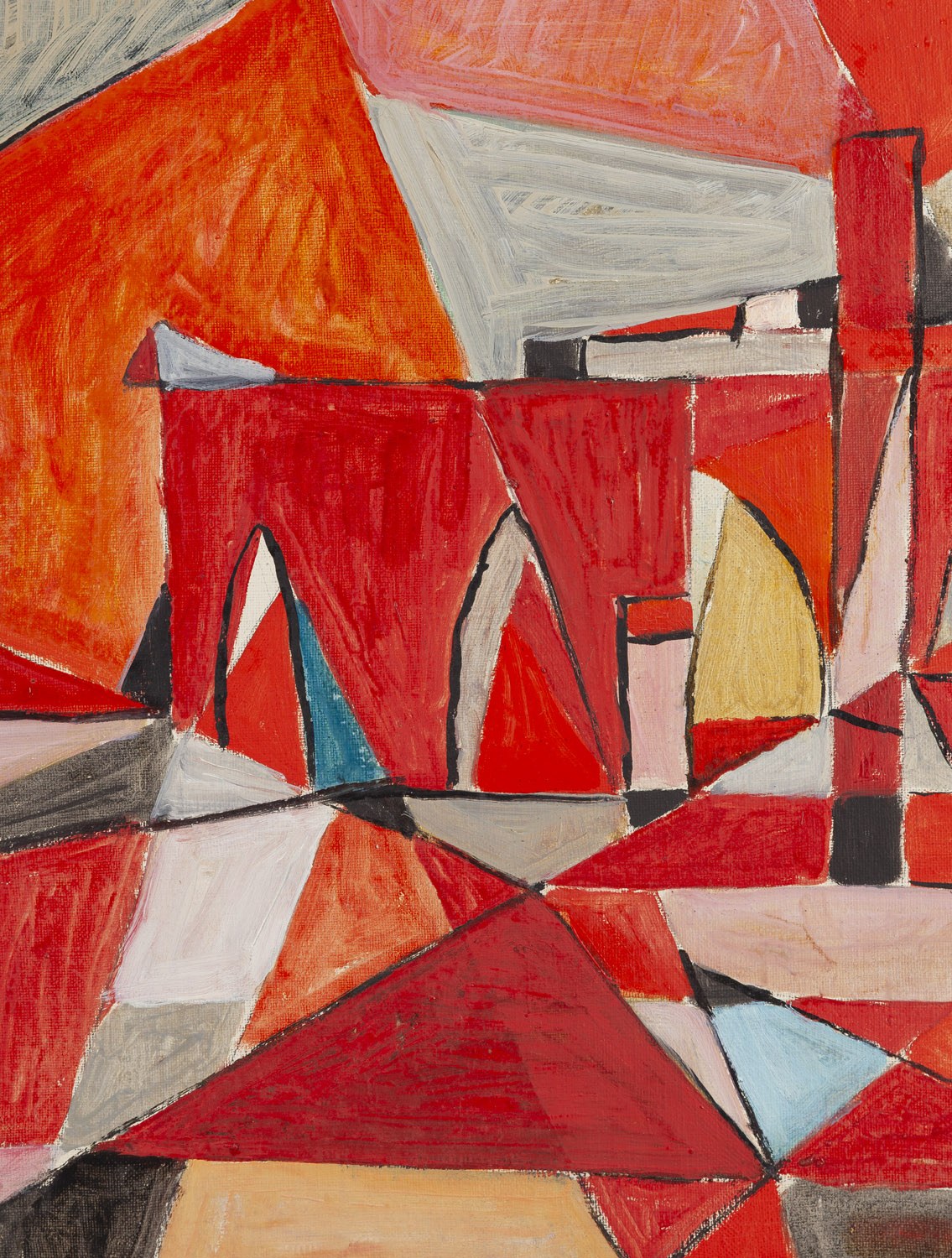
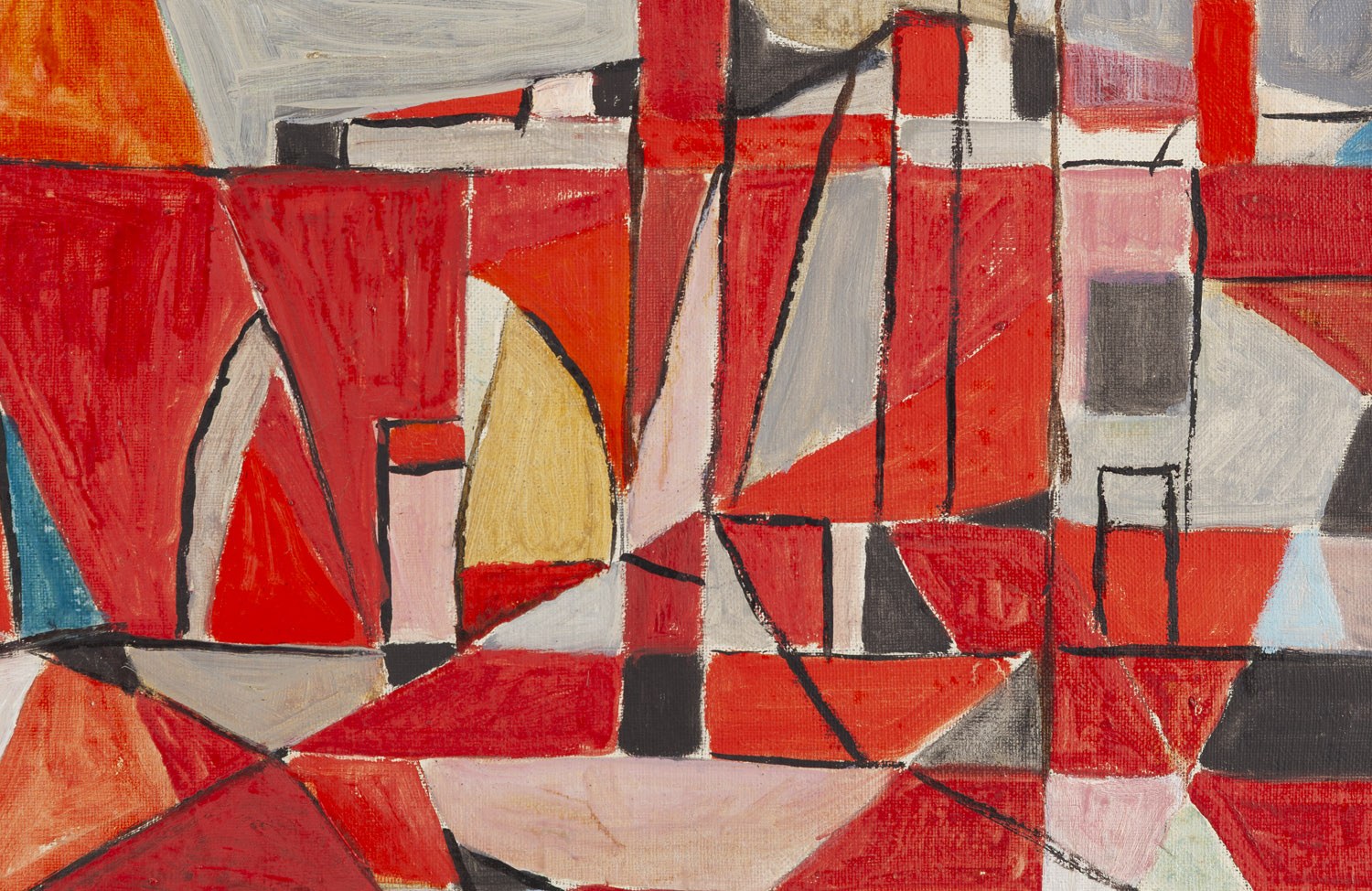
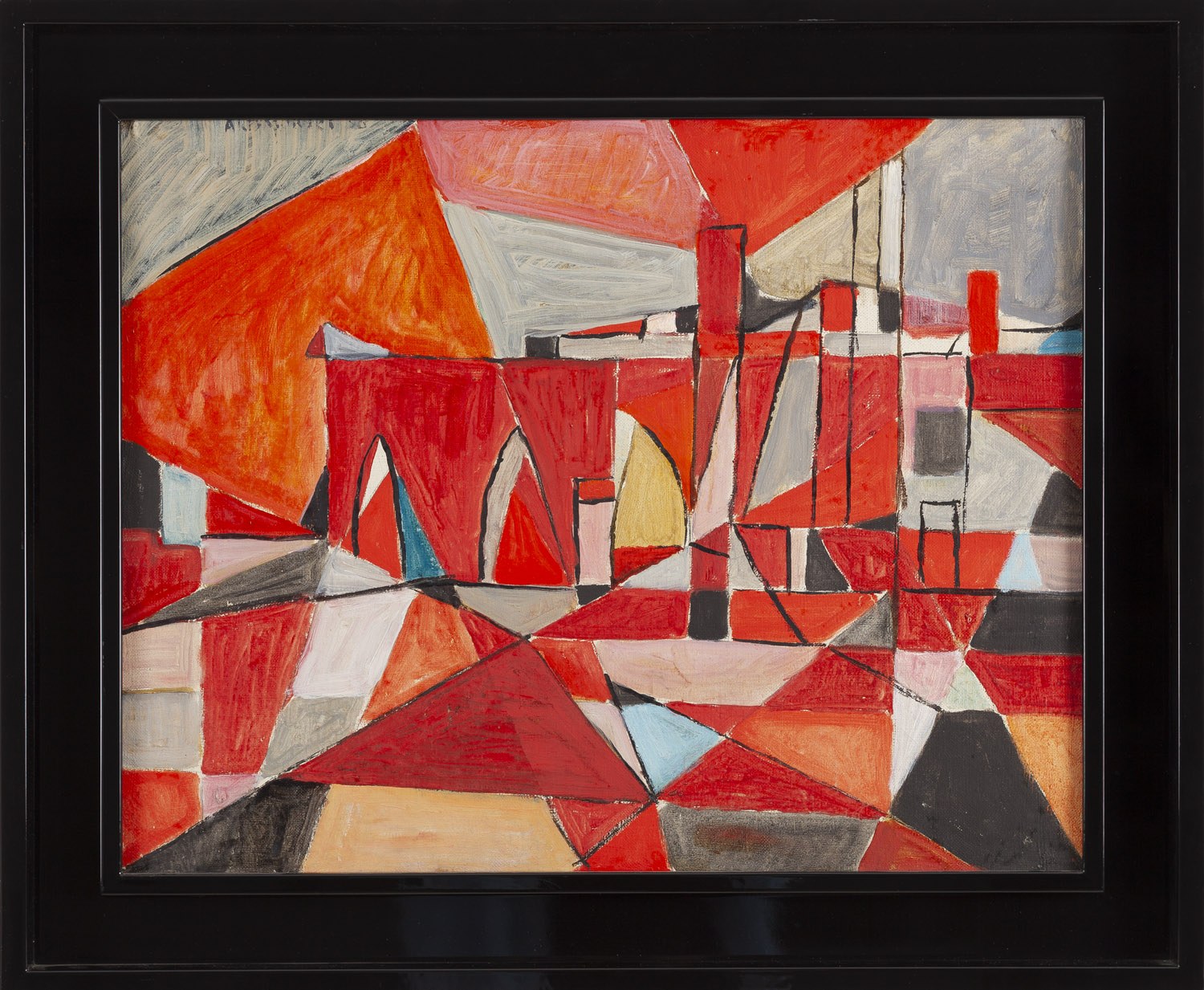


Dimensions: 43 x 54.5 cm
signed and dated lower left: 'ARTYMOWSKI 56'
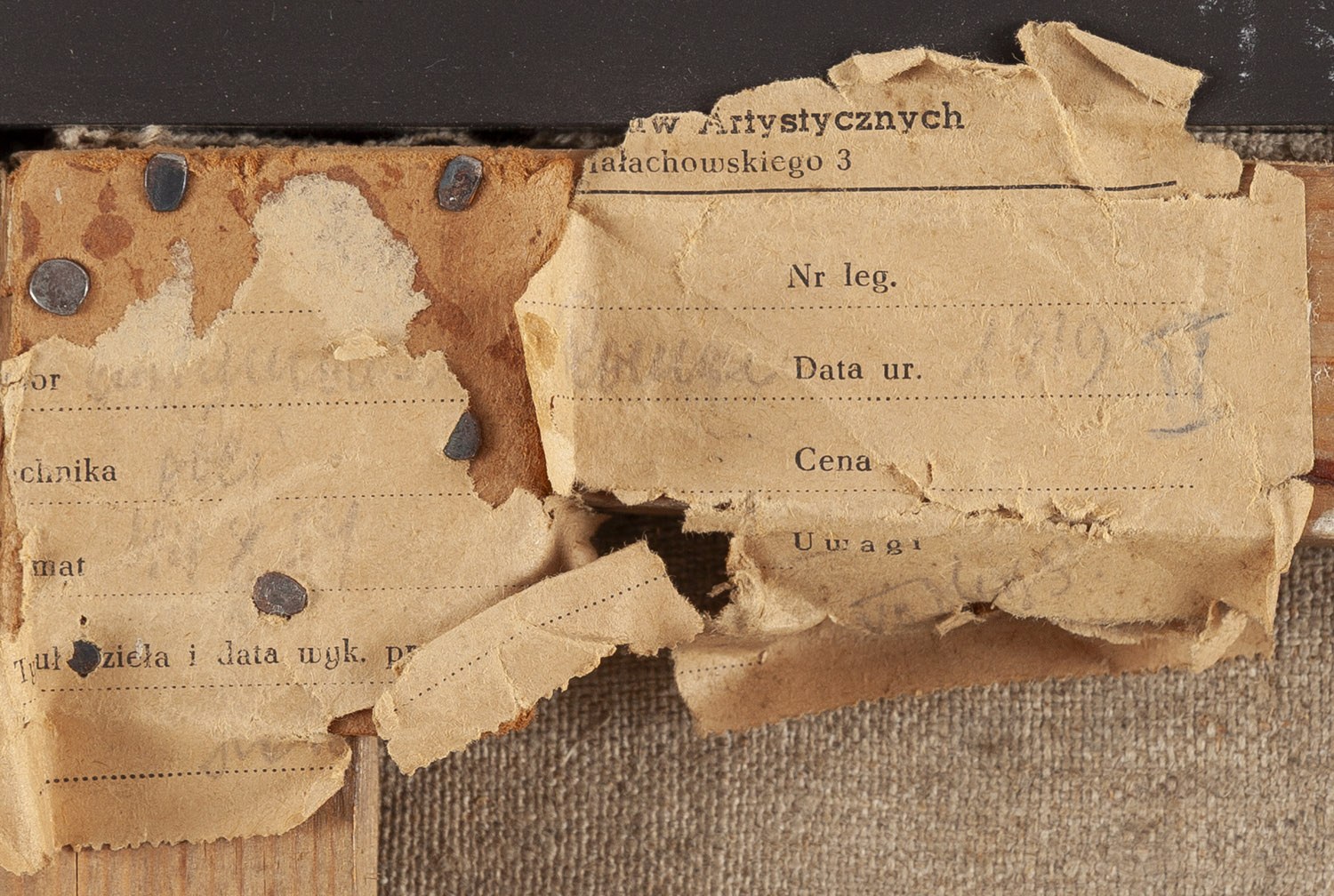
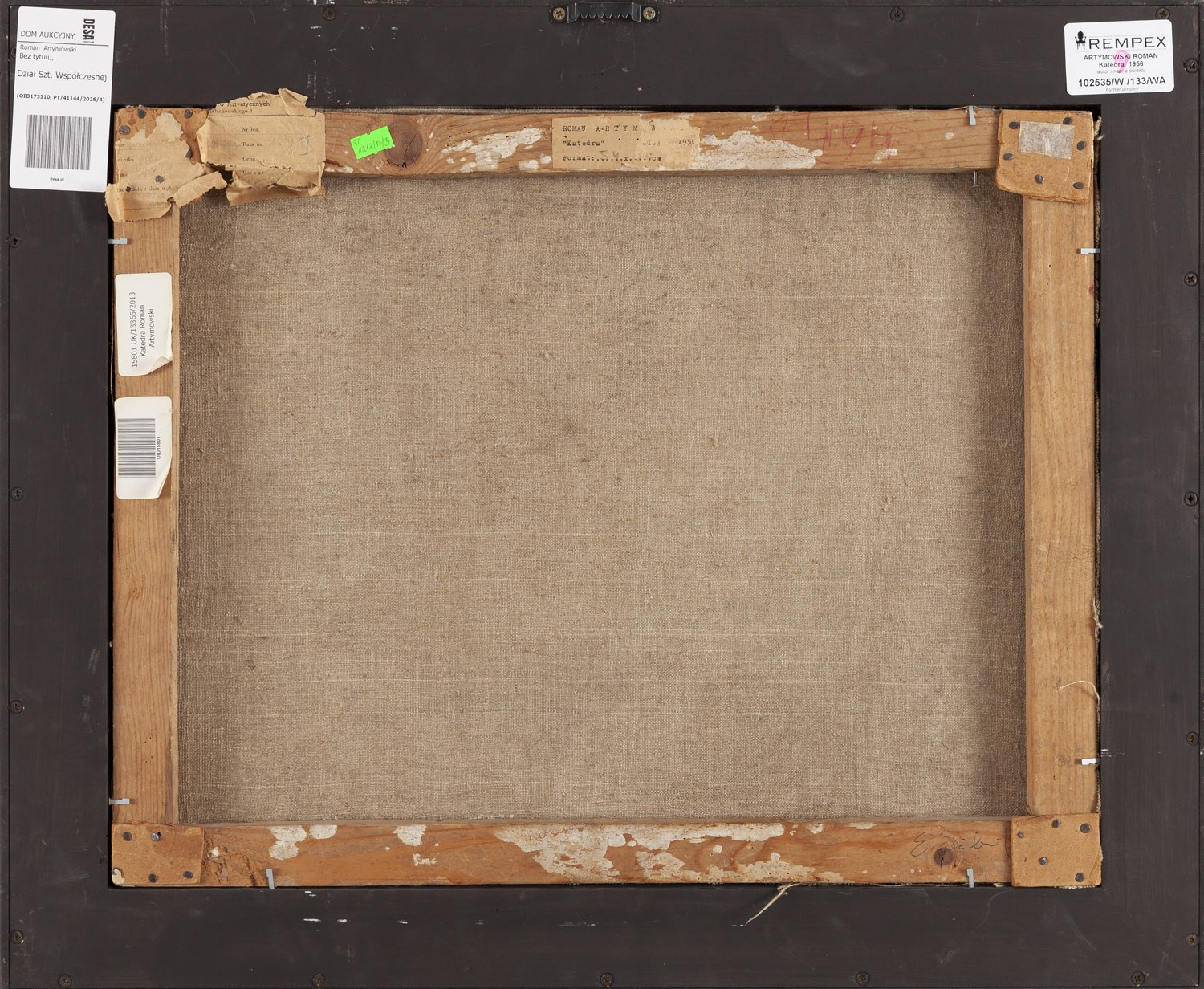
On the reverse, a sticker from the Central Office of Art Exhibitions [Zachęta] in Warsaw and stickers with a description of the work
Provenance
private collection, Poland
DESA Unicum, 2013
private collection, Poland
Exhibited
7th Exhibition of the Warsaw District of the Association of Polish Artists and Designers (ZPAP), Zachęta Gallery, Warsaw, September 5–October 2, 1956
Bibliography
7th Exhibition of the Warsaw District of the ZPAP, exhibition catalog, Zachęta Gallery, Warsaw 1956, cat. no. 5, p. 3 (list)
Roman Artymowski. Selected Works, ed. Elżbieta Żuk, Warsaw 1998, cat. no. 17, p. 32 (list)
Biography
During the occupation, he was associated with Tadeusz Kantor’s underground theater. During this period, he was interested in poetry—he was a member of the Kraków poetry group “Inaczej.” In 1945, he began his studies at the Academy of Fine Arts in Kraków. His teachers included Eugeniusz Eibisch and Andrzej Jurkiewicz. He made his debut in October 1949. From 1953 to 1956, he participated in the creation of polychrome decorations for the reconstructed tenement houses in the Old Town and New Town squares in Warsaw. In 1958, he traveled to the Middle East for the first time. In 1959, he held his first solo exhibition at the Krzywe Koło gallery, where he displayed works inspired by his trip to Italy. That same year, he visited Baghdad, where he organized an exhibition of Polish contemporary art. From 1959 to 1960, he taught graphic arts and printing at art academies in Baghdad. Upon his return to Poland, he headed the Painting and Drawing Studio at the Faculty of Textiles at the State Higher School of Fine Arts (PWSSP) in Łódź. In 1982, he was appointed professor at the Academy of Fine Arts in Warsaw, and from 1983 to 1984 he served as the academy’s rector. The desert landscape of Iraq proved to be the artist’s greatest source of inspiration. His travels to the Middle East resulted in canvases, watercolors, and prints that were sophisticated in color and texture.