


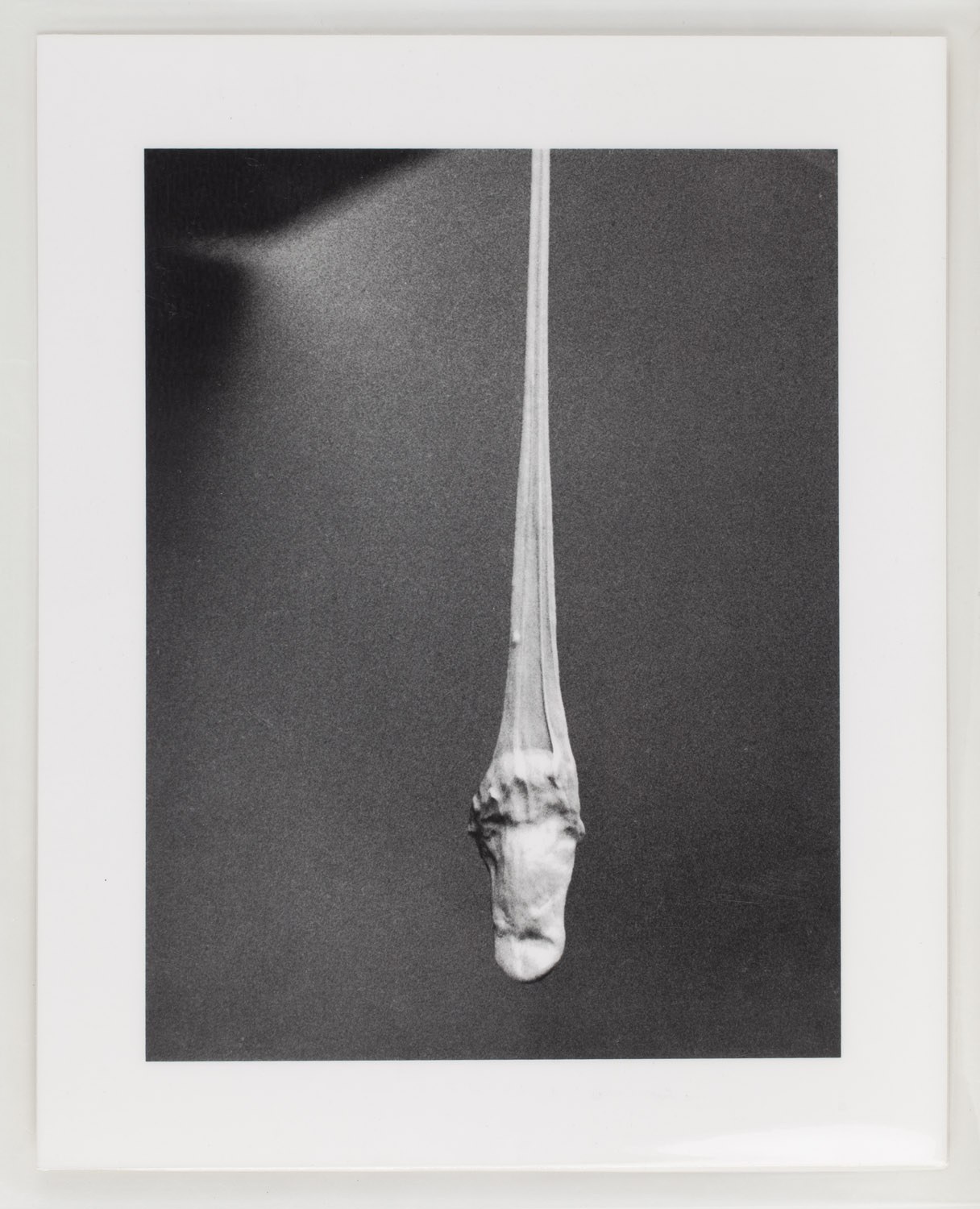

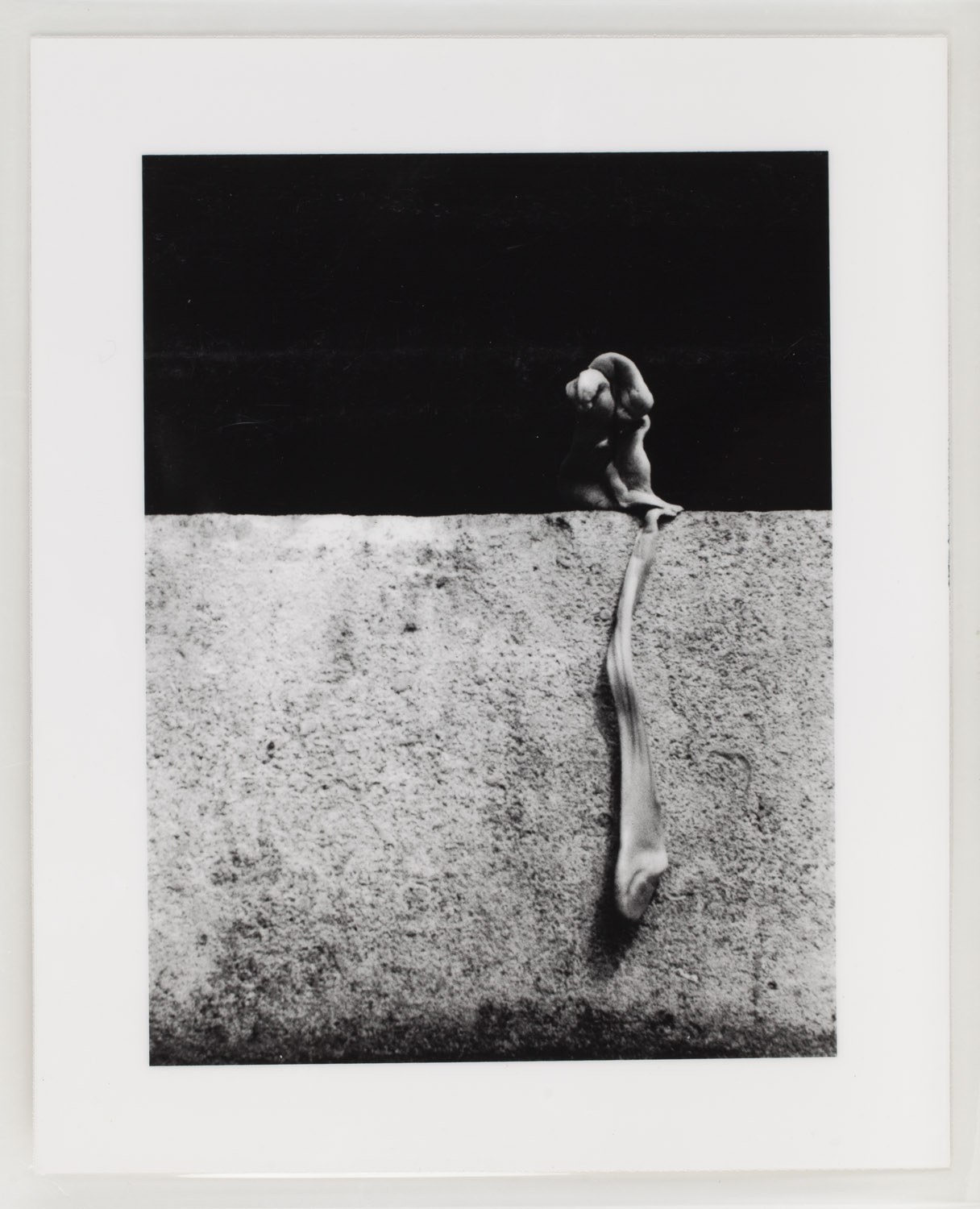

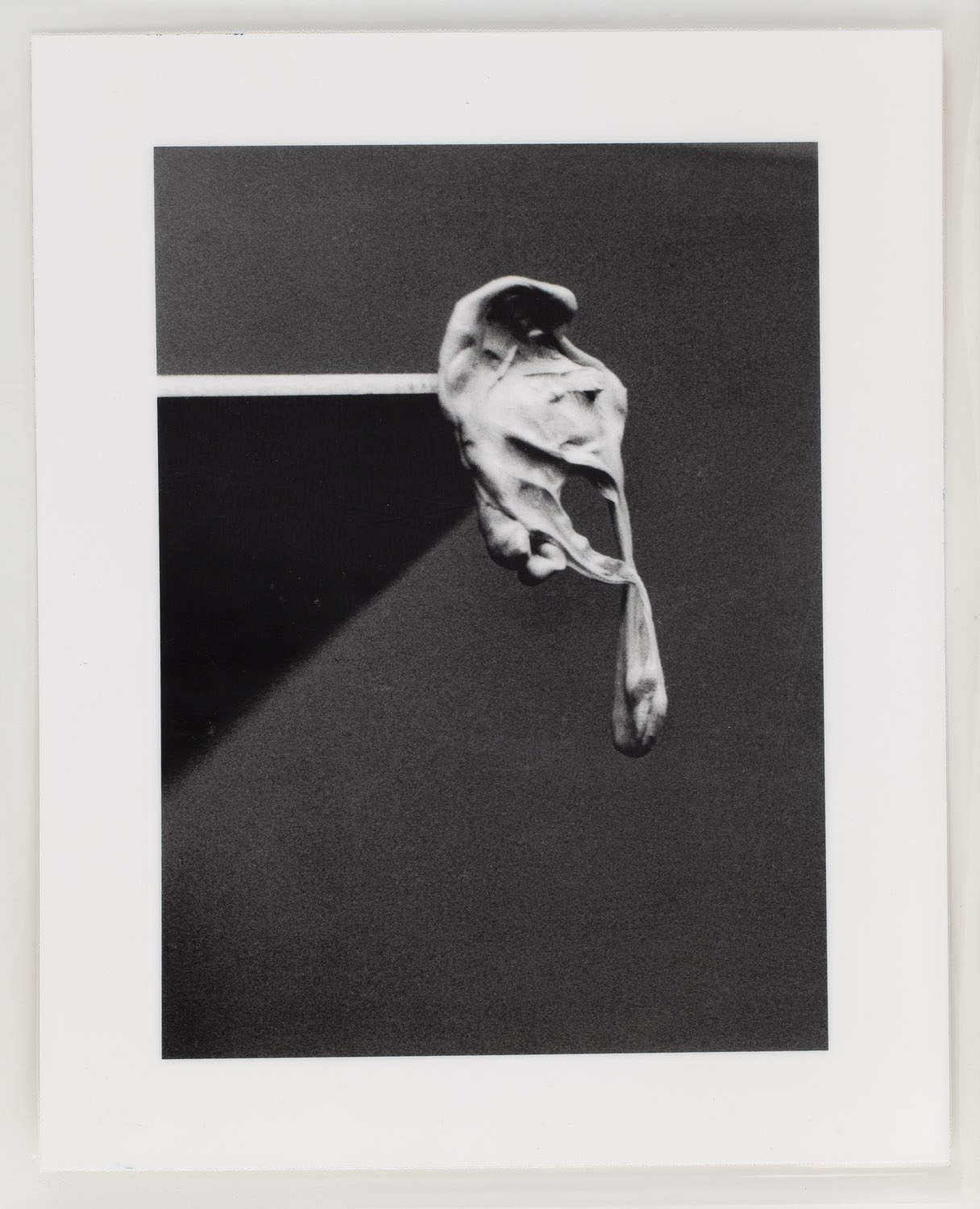
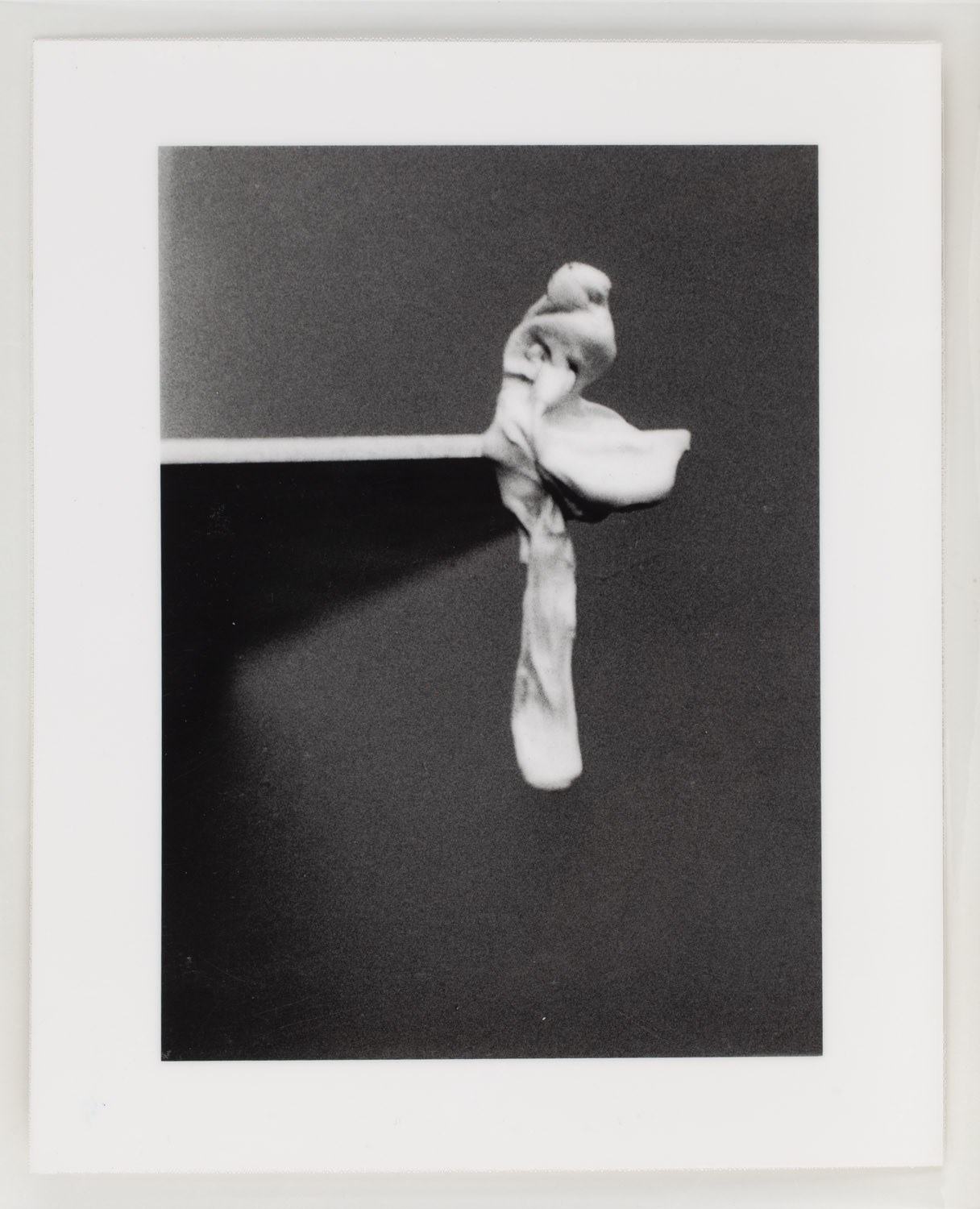


Dimensions: 27.3 x 24 cm (dimensions of each work)
On the reverse of each work, a stamp with a description, handwritten date, and signature: 'ALINA SZAPOCZNIKOW | "Photosculpture" – 1971 | No. 457, p. 188 according to Jola Gola, Catalog of Sculptures | by Alina Szapocznikow, Kraków 2001 | Series of 20 photographs: [No. _/10—crossed out] | Photo No. 01/20 [sequential numbers on the remaining works] | Authenticity of the work confirmed by the sole heir | Piotr STANISŁAWSKI (Paris) | Paris, April 17, 2004 [handwritten] | Proof A [handwritten] | Signature: | Piotr Stanisławski | [signature]'
Exhibited
“Instant et Chose,” Aurora Gallery, Geneva, October 7–30, 1971
“Alina Szapocznikow. Photoscapes 1971,” Foto Medium Art Gallery, Wrocław, June 6–26, 1978
“Alina Szapocznikow. Photo-sculptures 1971,” BWA Critics’ Salon, Lublin, June 1978
Annette Messager, Alina Szapocznikow, Christian Boltański, Jerzy Olek, Zdzisław Jurkiewicz, Foto Medium Art Gallery, Wrocław, April 1979
Alina Szapocznikow 1926–1973, Zachęta Contemporary Art Gallery, Warsaw, May 18–July 5, 1998
Alina Szapocznikow 1926–1973, Museum of Art, Łódź, January 9–February 21, 1999
“Alina Szapocznikow: Capturing Life—Drawings and Sculptures,” IRSA Fine Art Gallery, Warsaw, May 14–July 31, 2004
Documenta 12, Museum Fridericianum, Kassel, June 16–September 23, 2007
“Photographies. New Acquisitions 2003–2007,” Centre Pompidou, Paris, November 7, 2007–January 7, 2008
Alina Szapocznikow, 1602 Broadway, New York, November 18, 2007–January 5, 2008
“On Time. East Wing Collection VIII,” Courtauld Institute of Art, London, January 26, 2008–June 26, 2009
“The Photographic Object,” The Photographers Gallery, London, April 23–June 13, 2009
“elles@centrepompidou. Women Artists in the Collections of the Musée National d’Art Moderne – Centre de Création Industrielle,” Centre Pompidou, Paris, May 27, 2009–February 21, 2011
“Out of My Mouth. The Photosculptures of Alina Szapocznikow,” Henry Moore Institute, Leeds, June 3–August 29, 2010
“The Original Copy. Photography of Sculpture 1839 to Today,” Museum of Modern Art, New York, August 1–November 1, 2010
“FotoSkulptur. Photography of Sculpture 1839 to Today,” Kunsthaus Zürich, Zurich, February 21–May 13, 2011
“Alina Szapocznikow. Sculpture Undone 1955–1972,” WIELS Contemporary Art Center, Brussels, September 10, 2011–January 8, 2012
“Elles. Women Artists in the Collection of the Centre Pompidou,” Seattle Art Museum, Seattle, October 9, 2012–January 13, 2013
“Alina Szapocznikow. Body Traces,” Tel Aviv Museum of Art, Tel Aviv, February 7–May 31, 2014
“Bittersüße Transformation,” Kunsthaus Graz, Graz, May 26–August 28, 2016
“The Pencil of Culture. 10 Years of Photographic Acquisitions at the Centre Pompidou,” Galeries Nationales du Grand Palais, Paris, November 9–13, 2016
“Le Spectre du Surréalisme,” Les Rencontres d’Arles, Arles, July 3–September 24, 2017
Permanent exhibition of the contemporary art collection, Centre Pompidou, Paris, 2018–2019
“Alina Szapocznikow. Human Landscapes,” Staatliche Kunsthalle, Baden-Baden, July 21–October 7, 2018
“Alina Szapocznikow, 1962–1972. To Exalt the Ephemeral,” Hauser & Wirth, London, Feb. 7–Aug. 14, 2020
“Le pli du ventre cosmique,” Bétonsalon – Centre for Art and Research, Paris, September 16–November 27, 2021
“Plastic World,” Schirn Kunsthalle, Frankfurt am Main, June 22–October 1, 2023
“Beauty Is Burning,” Objekt Gallery, Warsaw, October 1–November 28, 2025
Bibliography
Ryszard Łubowicz, “The Two Faces of Photography,” *Wieczór Wrocławia*, no. 106, 1979, p. 3
Andrzej Baranowski, “Reality Created by Photography,” *Gazeta Robotnicza*, no. 115, 1979, p. 5
Ryszard Łubowicz, “Fot-Art” and “Foto-Medium,” *Sigma*, no. 8–9, 1978/1979, p. 28
Iwona Szmelter, “The Phenomenon of Contemporary Art and Conservation,” *Information Bulletin of Art Conservators*, No. 2, 1997, p. 16
Jola Gola, “On the Matter of Sculpture: Several Considerations Devoted to Alina Szapocznikow,” “Information Bulletin of Art Conservators,” No. 2, 1997, p. 130
Jola Gola, “A Side Note on a Certain Exhibition,” *Polish Sculpture*, vol. VI (1992–1993), 1997, pp. 15–16
Urszula Czartoryska, “Transgression: On the Message of Alina Szapocznikow’s Work,” *Twórczość*, no. 10, 1998, p. 78
Alina Szapocznikow. Freezing Life. Drawings and Sculptures, exhibition catalog, IRSA Fine Art Gallery, ed. Józef Grabski, Kraków-Warsaw 2004, pp. 283–291 (ill.), 337
Documenta 12, exhibition catalog, ed. Isabella Marte, Kassel 2007, pp. 90–91 (ill.), 282–283 (index)
Alina Szapocznikow, Photoscultures, “Piktogram,” no. 8, 2007, pp. 96–109 (ill.)
Neue Galerie. Tour, “Kunstforum,” no. 187, 2007, pp. 278–279 (ill.)
Jonathan Griffin, “The Restlessly Experimental Work of Alina Szapocznikow,” “Frieze,” January 22, 2008, online: https://www.frieze.com/article/restlessly-experimental-work-alina-szapocznikow [accessed August 29, 2026]
Dagmara Budzbon, “A Brief History of Szapocznikow’s Presence in the British Isles,” *Obieg*, April 8, 2009 (ill.), online: https://archiwum-obieg.u-jazdowski.pl/prezentacje/10100 [accessed: September 28, 2026]
Jola Gola, “Alina Szapocznikow: A Joyful and Shocking Portrait,” “Sztuka.pl,” no. 5, 2009, p. 10 (ill.)
*elles@centrepompidou. Women Artists in the Collection of the Musée National d'Art Moderne Centre de Création Industrielle*, exhibition catalog, Centre Pompidou, eds. Camille Morineau, Annalisa Rimmaudo, Paris 2009, p. 145 (ill.)
100 Masterpieces of the 20th Century in the Collections of the Centre Pompidou, Paris 2010, p. 64 (ill.)
*The Original Copy. Photography of Sculpture, 1839 to Today*, exhibition catalog, Museum of Modern Art, ed. David Frankel, New York 2010, cat. nos. 166–171, p. 166 (ill.), 168 (mentioned)
“Henri Moore Institute Newsletter,” no. 90, 2010, n.p.
Jan Verwoert, “Mouth to Mouth,” *Frieze*, no. 129, 2010, p. 113 (ill.)
Alina Szapocznikow. Awkward Objects, ed. Agata Jakubowska, Warsaw 2011, pp. 35, 121, 152 (ill.), 283 (bibliography)
Elena Filipovic, Joanna Mytkowska, Alina Szapocznikow. *Sculpture Undone 1955–1972*, exhibition catalog, WIELS Contemporary Art Center, Hammer Museum, Wexner Center for the Arts, Museum of Modern Art, New York 2011, pp. 61–63, 65, 199 (ill.), 60, 64, 76, 130, 197 (mentioned), 210 (index)
Adam Szymczyk, “Touching from a Distance. The Art of Alina Szapocznikow,” *Artforum*, no. 3, 2011, pp. 228–229 (ill.)
Alina Szapocznikow. Body Traces, exhibition catalog, Tel Aviv Museum of Art, ed. Ahuva Israel, Tel Aviv 2014, pp. 86–91, cover (ill.) 117, 136, 141–142, 144 (mentioned), 110 (index)
Marek Beylin, Ferwor: The Life of Alina Szapocznikow, Kraków-Warsaw 2015, pp. 229–231 (ill.)
*The Pencil of Culture: 10 Years of Photographic Acquisitions at the Centre Pompidou*, exhibition catalog, Grand Palais, Paris 2016, pp. 28–31 (ill.)
Bittersüße Transformation. Alina Szapocznikow, Kateřina Vincourová, and Camille Henrot, exhibition catalog, Kunsthaus Graz, ed. Katrin Bucher, Graz 2016, pp. 12–13, 21, 24–25 (ill.), 18, 30, 40, 54, 62 (mentioned), 69 (index)
Agata Jakubowska, Alina Szapocznikow—Touch, “Sensuality in Polish Culture,” April 15, 2024, online: https://sensualnosc.bn.org.pl/alina-szapocznikow-dotyk-685/ [accessed: September 28, 2026]
Dagmara Budzbon-Szymańska, Alina Szapocznikow and Roman Cieślewicz: Photo-sculptures, “Quarterly of Polish Sculpture Orońsko,” no. 1, 2026, pp. 76–85 (ill.)
Piotr Policht, “Alina Szapocznikow’s 10 Most Important Works,” “Culture.pl,” May 8, 2026 (ill.), online: https://culture.pl/pl/artykul/10-najwazniejszych-dziel-aliny-szapocznikow [accessed: September 28, 2026]
Biography
Alina Szapocznikow was born on May 16, 1926, in Kalisz. She came from a family of Jewish doctors. During the war, she lived in the Pabianice ghetto and was subsequently imprisoned in the German concentration camps Auschwitz-Birkenau, Bergen-Belsen, and Theresienstadt. After liberation, although her mother returned to Łódź, Szapocznikow decided to settle in Prague. There, she began her artistic training in the studio of sculptor Otokar Velimský and subsequently enrolled at the Academy of Fine Arts and Design. Thanks to a scholarship, Szapocznikow studied for four years at the École nationale supérieure des beaux-arts in Paris. However, a serious illness forced her to interrupt her studies. In 1951, the artist returned to Poland and settled permanently in Warsaw, where she had a studio. Initially, she created sculptures in the prevailing Socialist Realist style; these were mainly designs and installations for monuments. After the so-called “thaw” in the mid-1950s, she was finally able to express what fascinated her: form and material. It was then that she created sculptures marking successive stages in her artistic development. Figures of women: *First Love*, *A Difficult Age*; organic forms: *Climbing*, *Bellissima*; masses of material stretched across steel scaffolding that seem to defy the laws of gravity: *Mary Magdalene*, *The Jester*. In 1963, she left the country and settled permanently in Paris. In her studio in Malakoff, she experimented with new materials: polyester and polyurethane. She primarily created spatial compositions using casts of her own body as well as those of her loved ones. Toward the end of her life, some of her projects took on a conceptual character. She died ten years later at the Praz-Coutant sanatorium in Passy, after a long battle with cancer. A key aspect of interpreting Szapocznikow’s art is the emphasis on the tensions and contrasts between beauty and ugliness, joy and sadness, inner energy and decay, vitality and the body’s frailties. This starting point stems from viewing her works through the prism of a biography that has undergone a sort of mythologization. Based on texts written from the perspective of memoirs, a coherent image of Szapocznikow has emerged—that of a beautiful woman full of life, sorely tested by fate, and who died young. Her cheerfulness, beauty, and energy—evident in her demeanor and creative work—when juxtaposed with her harrowing experiences: her time in the ghetto and concentration camps, her battle with tuberculosis, her inability to have children, and her battle with cancer—seem to cast a shadow over her entire artistic legacy and constitute one of the main keys to its interpretation.










