
Dimensions: 73.5 x 91.5 cm
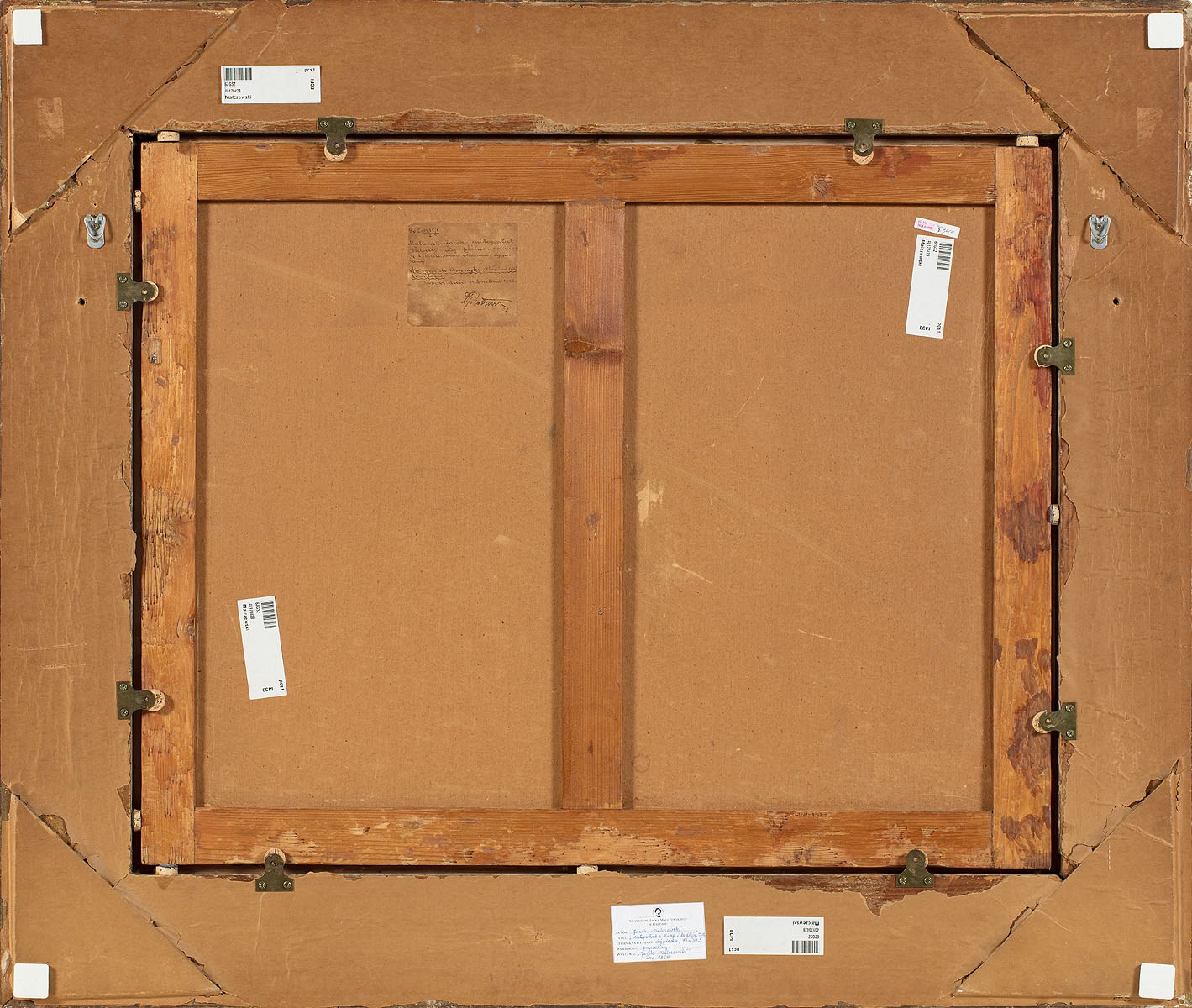
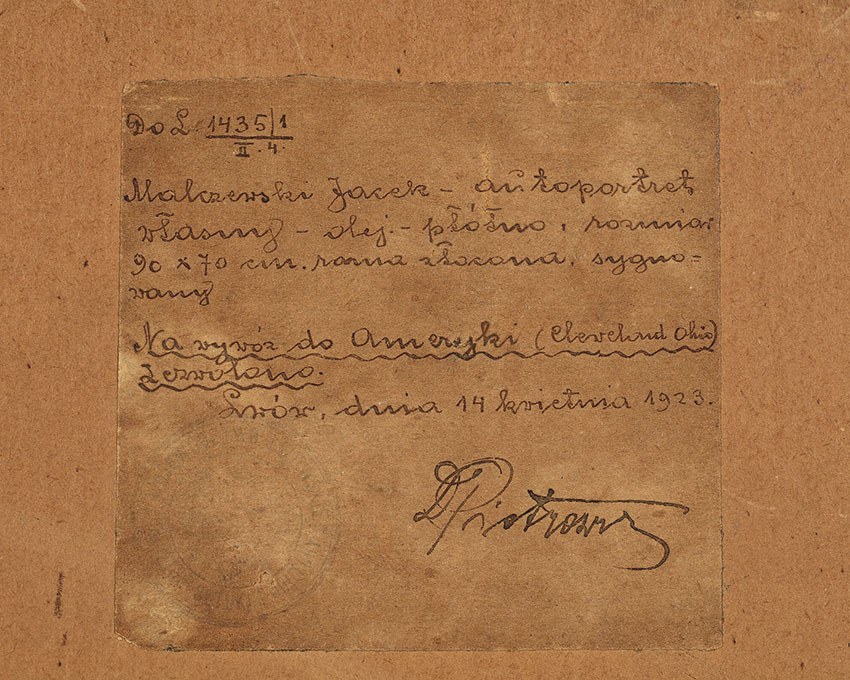
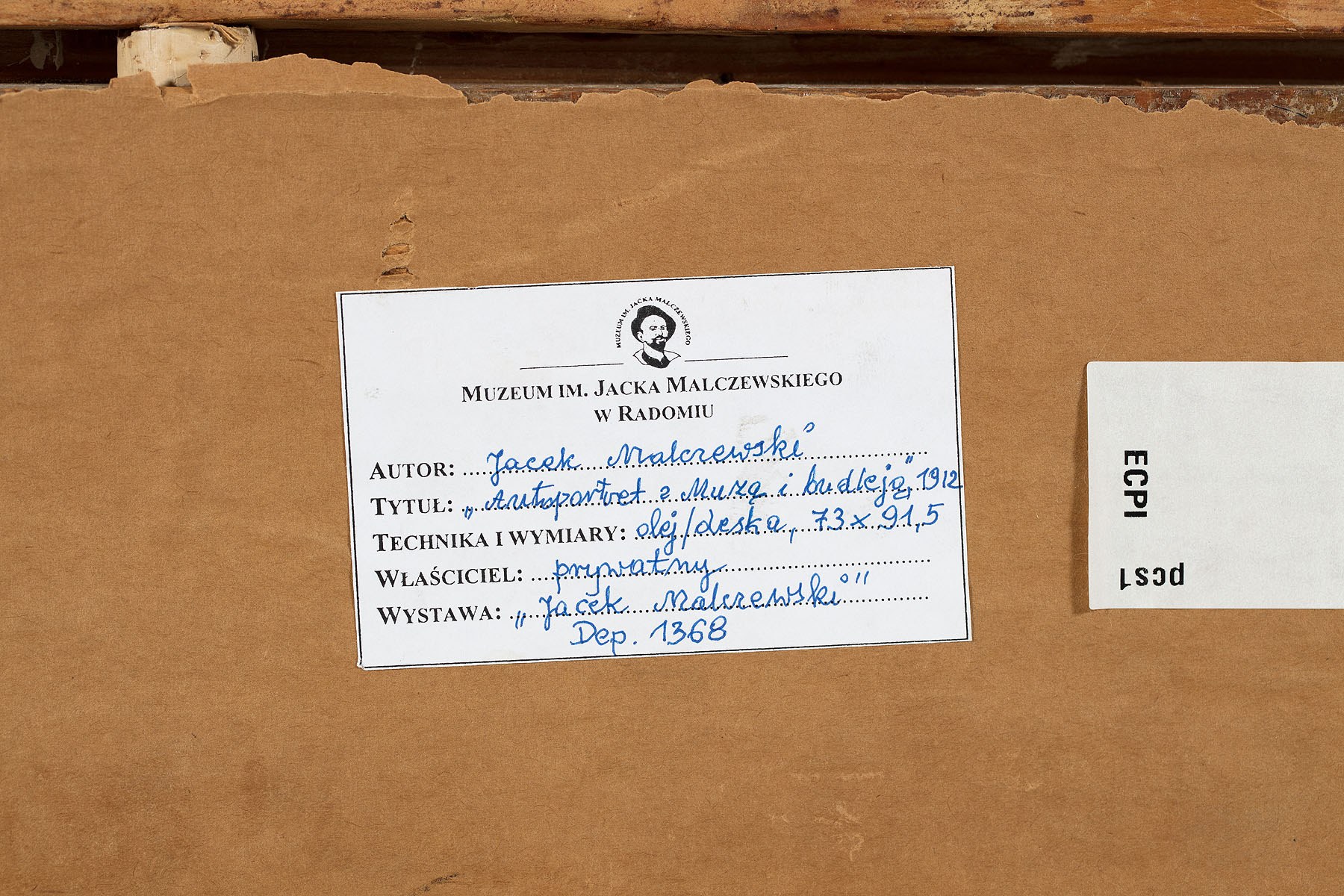
Signed: signed p.d.: Jmalczewski / 1912 May, on the reverse an export sticker dated 1923, on the frame a sticker from the Jacek Malczewski Museum in Radom
Provenance
Warsaw, private collection Radom, deposit in Jacek Malczewski Museum in Radom Poland, private collection London, Sotheby's, auction 20.11.2013, item 27 private collection (from 1923)
Exhibited
Detroit, Institute of Art, Polish Paintings: A Loan Exhibition, 1945; Cleveland, Museum of Art, 1926-29.
Reproduced
Szymalak-Bugajska P., Malczewski. Approaches, Arkady Publishing House, Warsaw 2023, pp. 206-207. Mastai B., Polish Paintings: A Loan Exhibition [exhibition catalog], The Detroit Institute of Art, Detroit 1945, item 49, p. 38.
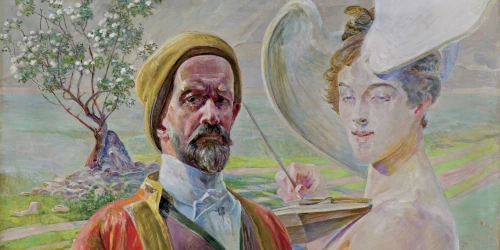
The theme of death appeared in Jacek Malczewski's work with the passing of his mother in 1898. At that time, the artist drew on ancient beliefs for the motif of the god Thanatos, but for the purposes of his own mythology he used it in a very individual, even poetic way. He clothed his dark messenger of death in the body of a beautiful, alluring woman. He most often likened her face to that of his beloved Mary Ball, marking her characteristic eagle nose and upturned chin. Sometimes with wings, sometimes with a scythe in her hand, she appears as a subject in her own right, accompanying the artist in his self-portraits or symbolically complementing various, more elaborate scenes. In Malczewski's depiction, however, Thanathos is not meant to inspire horror, like the typical depiction of the mortal in the Gothic "memento mori" tradition. He never foreshadows a terrible end, but offers hope for a new beginning and rebirth.
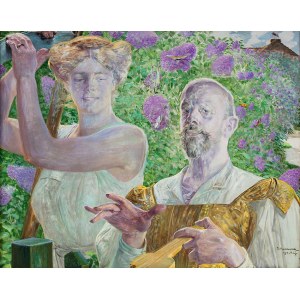
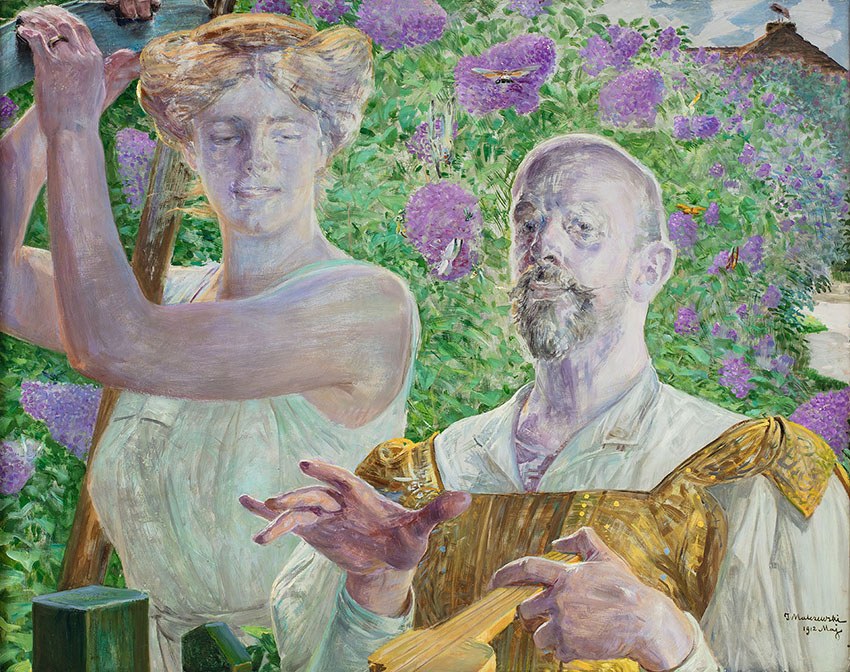
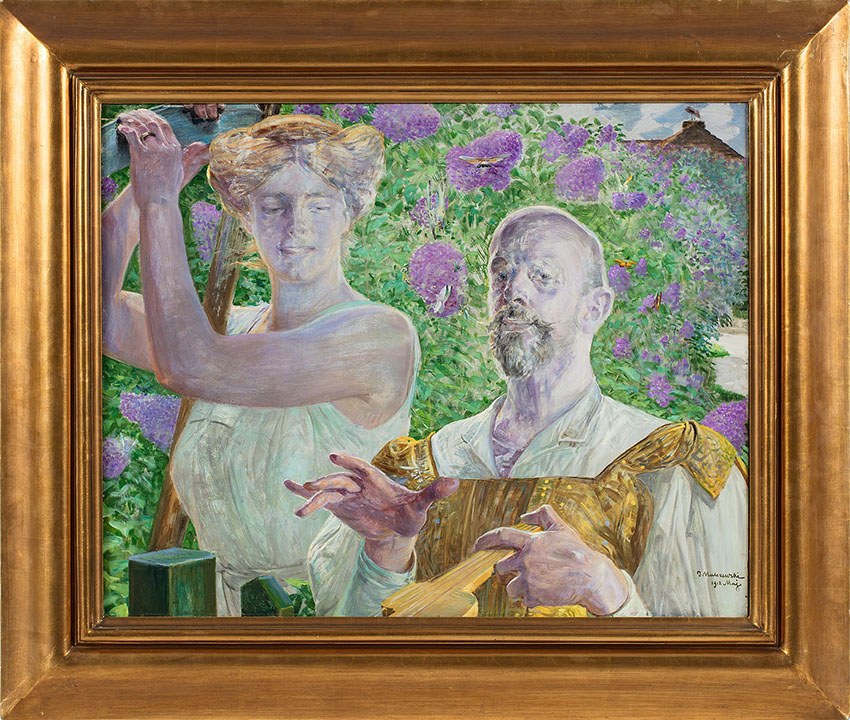
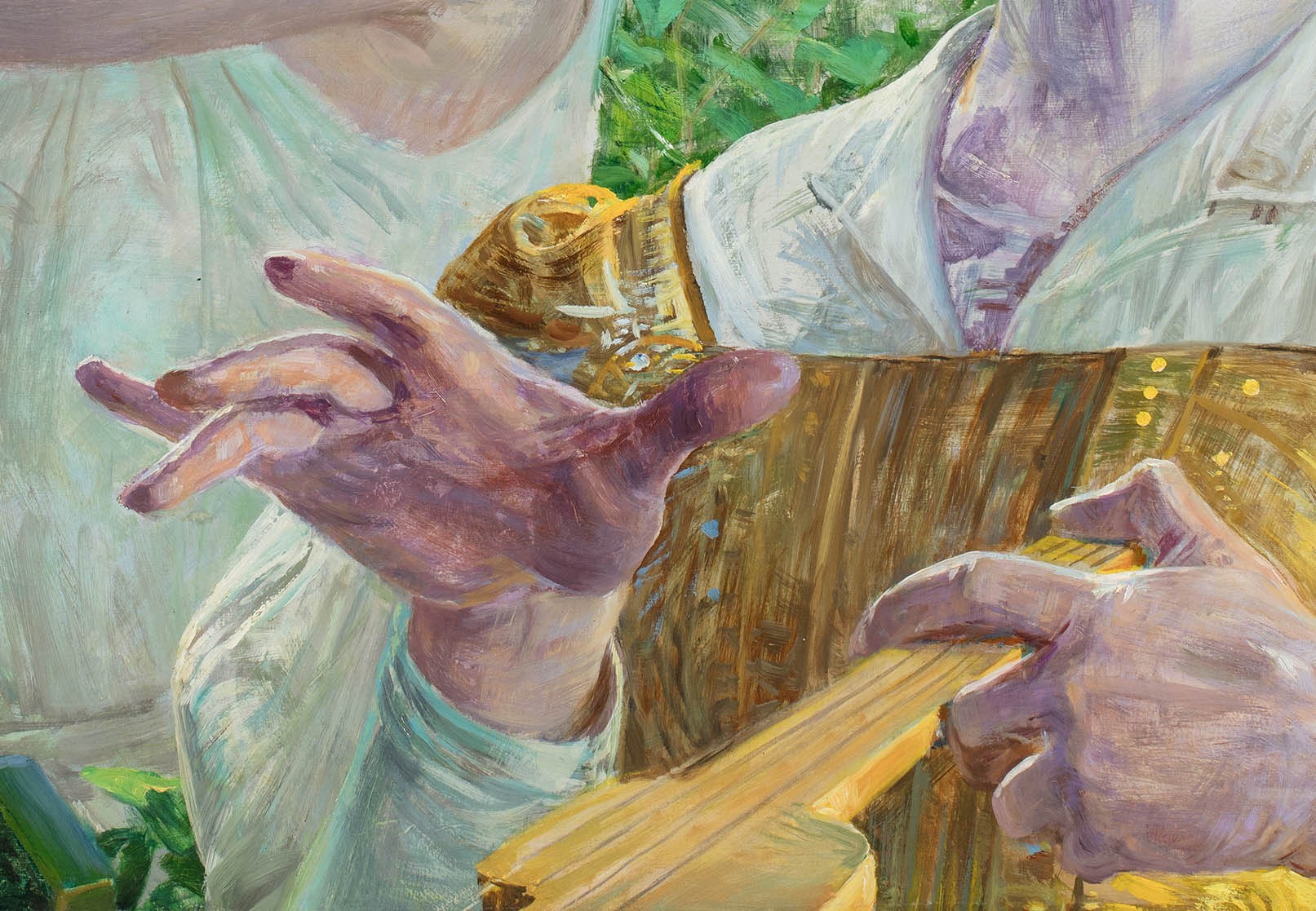
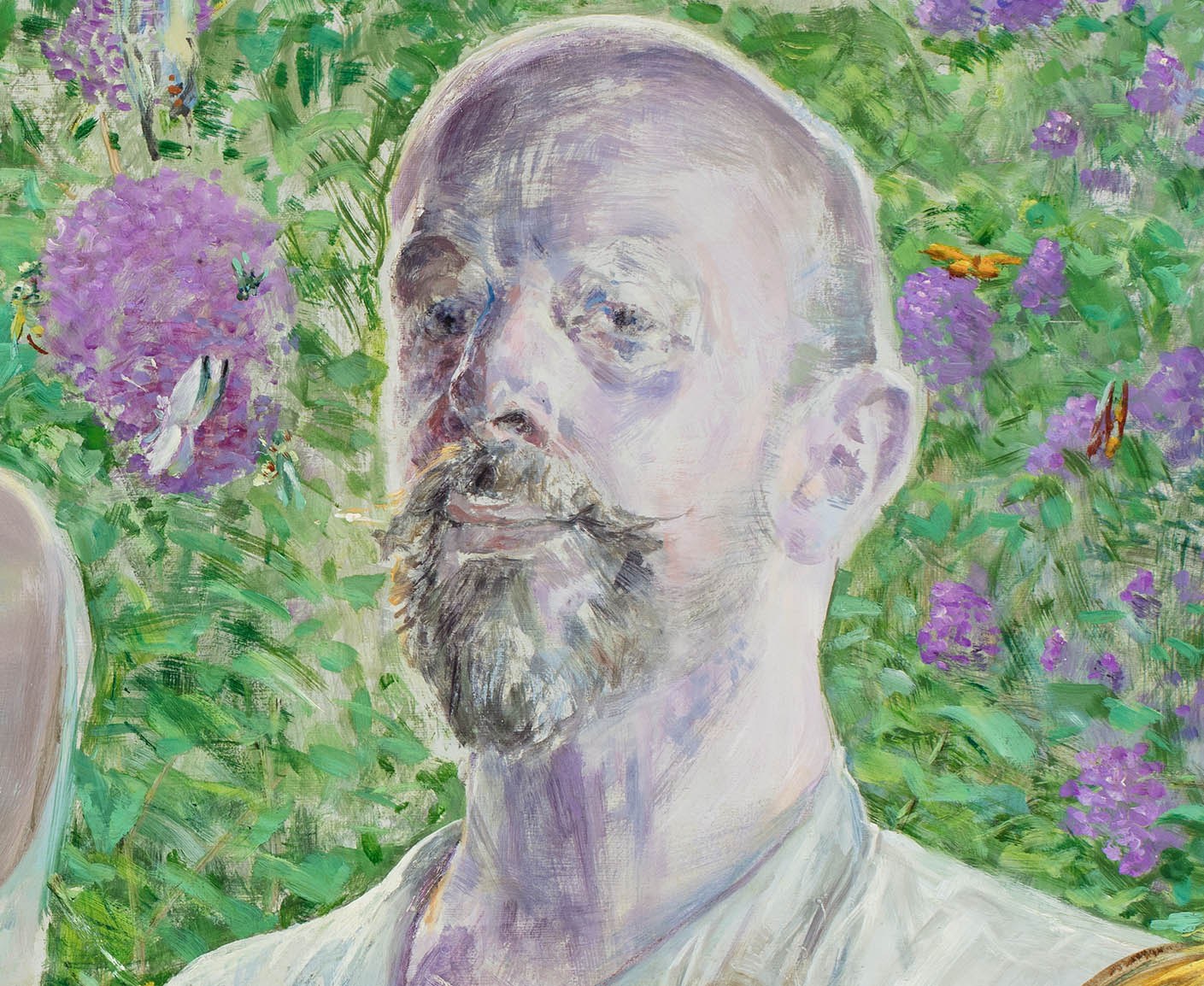
In the 1912 self-portrait on display, the motifs of life and death are intertwined in a highly evocative way. Malczewski has depicted himself next to a muse against the backdrop of a luxuriantly blooming buddleia bush. In his hand he holds a goosebumps - a small Podhale fiddle, a symbol of art and creative expression. The composition pulsates with the energy of a sunny day, the air seems saturated with the spring scent of flowers. Butterflies - allegories of the soul and immortality - circle around the twigs, and a stork, the harbinger of birth and new beginnings, can be seen on the roof in the distance.
However, the harmony of this vibrant scene is broken by the color tone. The ubiquitous purple - the color of mystery, magic, but also mourning - casts a shadow over the faces and silhouettes of the figures, giving them a cool, almost truculent pale expression. Dressed in a ragged undershirt, the woman supports herself on a scythe - an attribute of death, directly linking her to the Thanatos figure. Together with the artist, she stands by a green fence, which, like the door in Malczewski's iconography, represents a special place, a boundary between two worlds: the real and the metaphysical, the earthly and the otherworldly. The painting thus becomes a symbolic tale of transition - the return of the soul to paradise, the promise of rebirth. Malczewski creates a vision of endless spring, eternal life and happiness, in which death is not the end, but the gate to eternity.