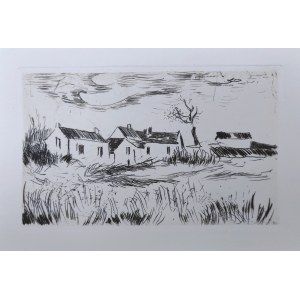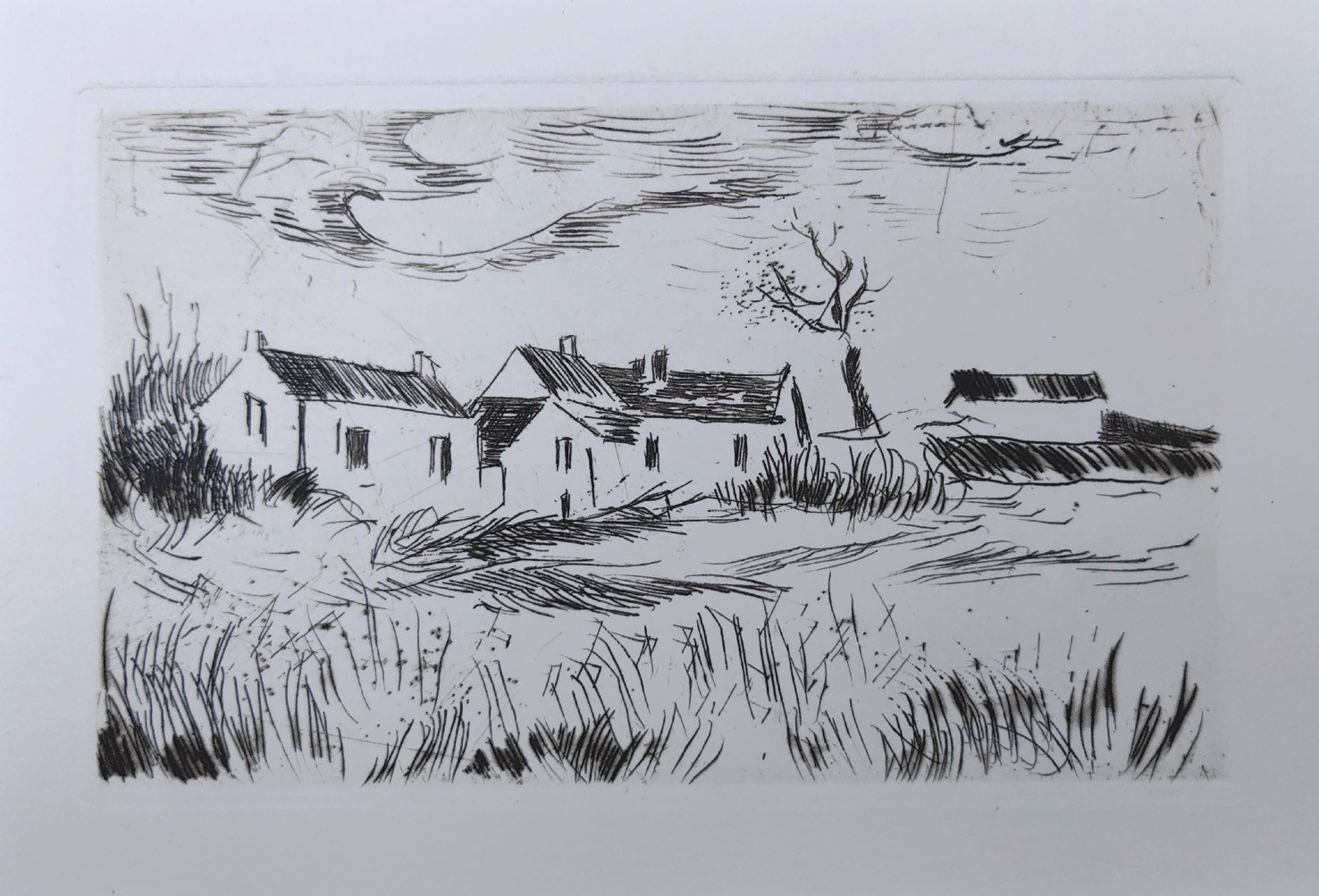
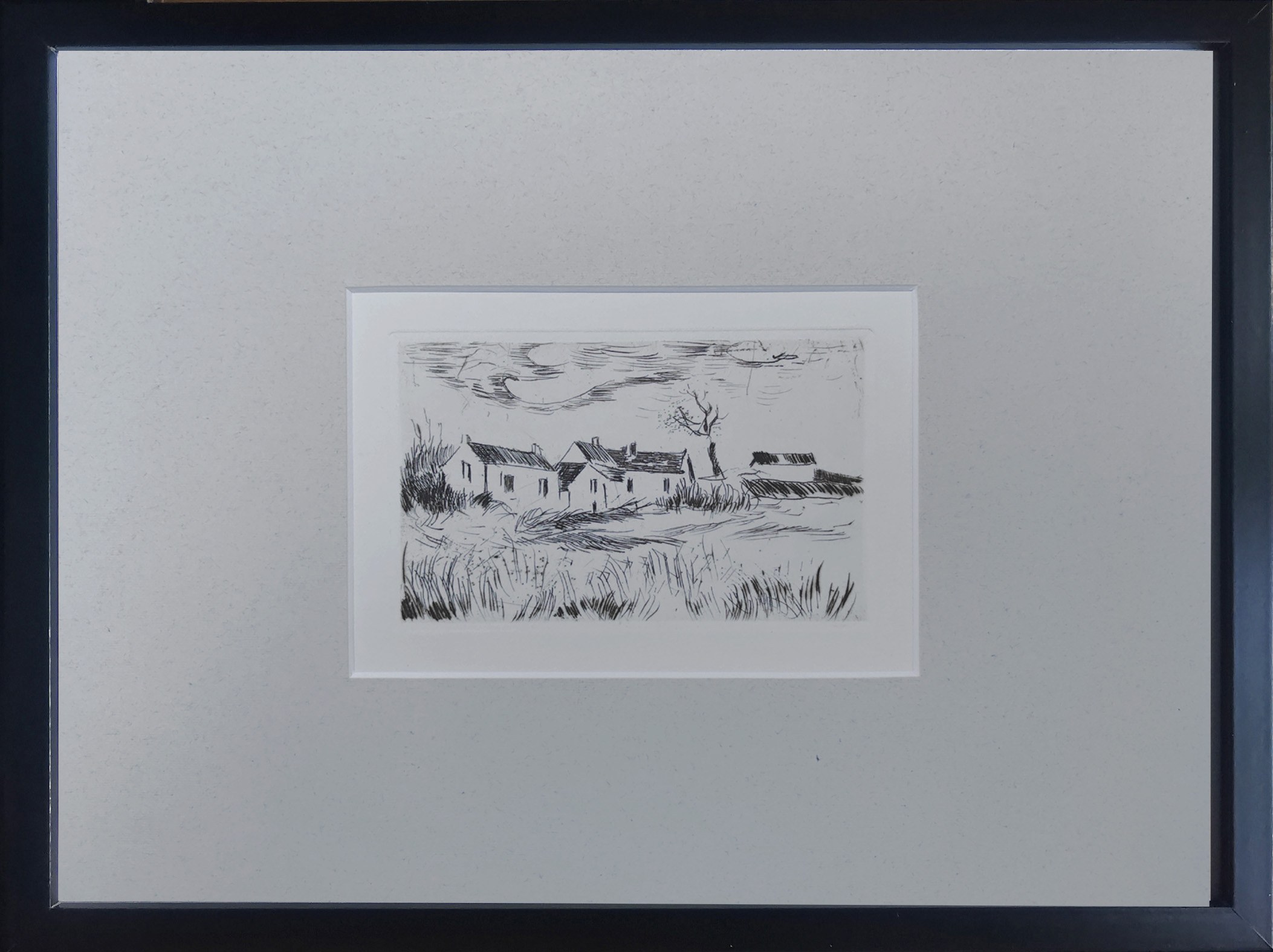
Etching,
Dimensions: w św p-p: 13 x 19 cm, with frame 32 x 42 cm
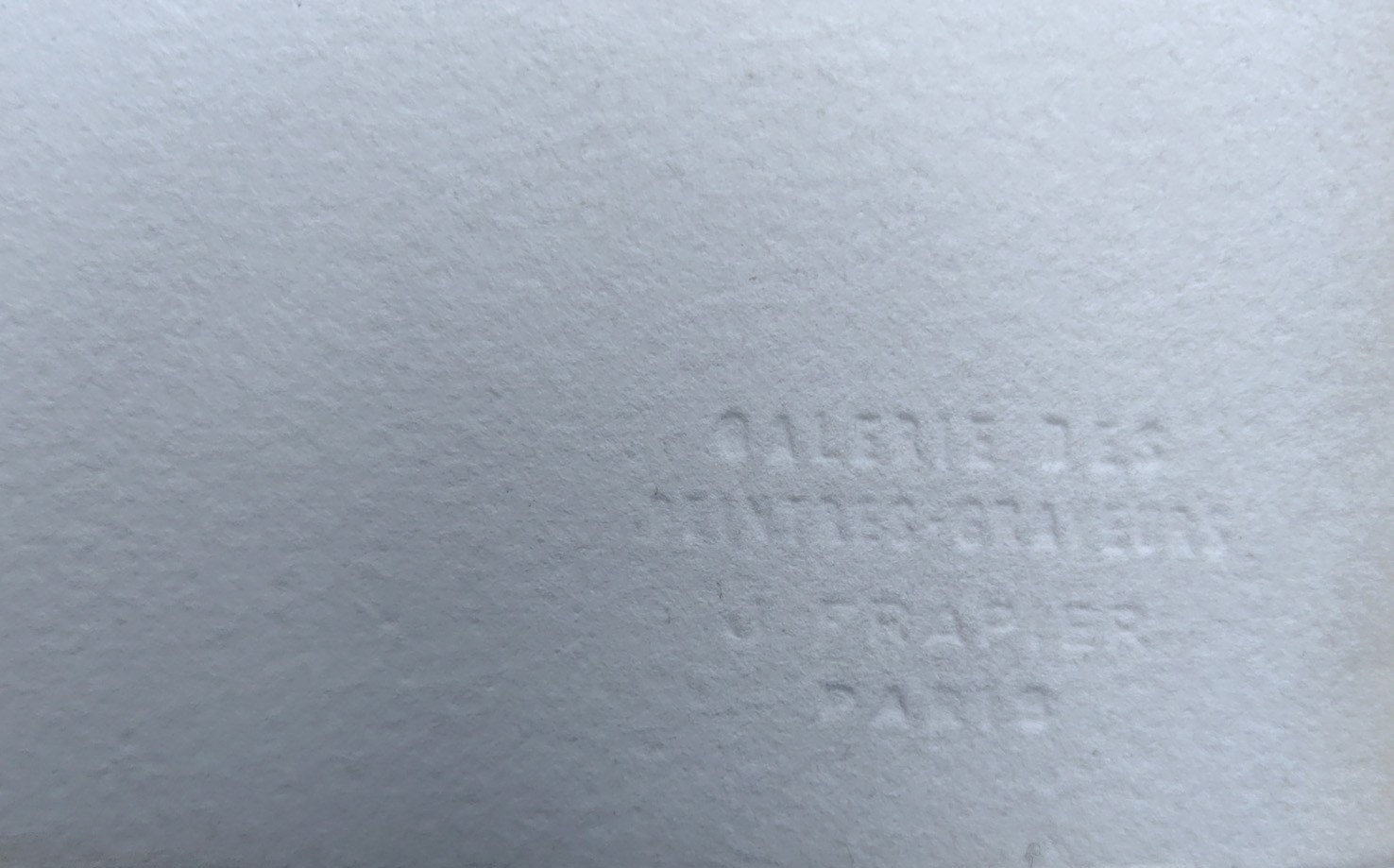
Publisher's dry stamp at bottom: Galerie des peintres Graveurs. J.FRAPIER Paris.
Maurice de Vlaminck (1876-1958) was a French painter associated with the Fauvist movement that developed in the early 20th century. He was born in Paris to a family of musicians, but in time devoted himself to painting. In 1900 he met André Derain, with whom he shared a studio. He also soon developed a close relationship with Henri Matiss, which contributed to the formation of the Fauvist style.
The Fauvists, known for their use of intense, saturated colors and simplified forms, were inspired by subjective artistic impressions. Vlaminck often painted landscapes, still lifes and urban scenes. His works from the Fauvist period were characterized by his expressive use of colors, which gave them a wild, almost violent character.
Over the years, his style evolved and his palette became more subdued, approaching darker tones and Cubist-inspired forms. In addition to painting, he also wrote poetry and novels. Maurice de Vlaminck died in Rueil-la-Gadelière in 1958, leaving behind a significant body of work in modernist art.
In addition to painting, Maurice de Vlaminck also worked in printmaking, and his works in this technique reflect similar characteristics to his paintings - simplicity of forms and emotional intensity. Vlaminck's prints, such as the one in the accompanying image, are characterized by spontaneity of line and austerity in depicting landscapes.
In this particular print, one can see a landscape with houses, where the artist used dynamic, expressive lines to convey the movement of grasses and sky. The simple but precise line emphasizes the natural, almost rustic nature of the scene, reflecting Vlaminck's interest in rural landscapes and an atmosphere of tranquility. His prints, like his paintings, often depict scenes from everyday life, appealing to the raw beauty of simplicity and natural shapes.
Although known primarily as a Fauvist, Vlaminck also leaned toward expressionism in his prints, as evident in the strong, emotional expression of his lines.