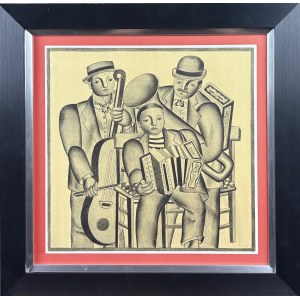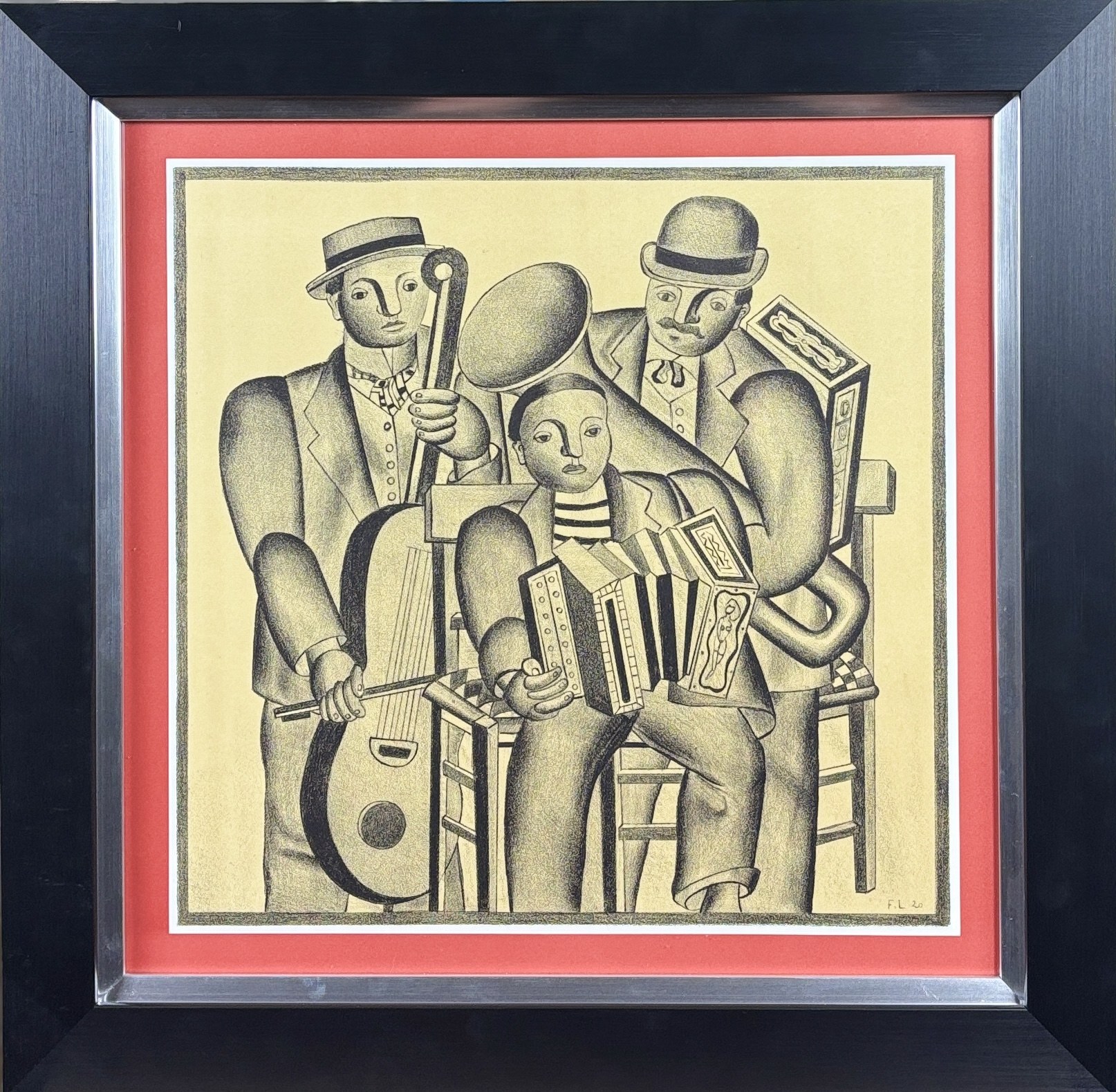
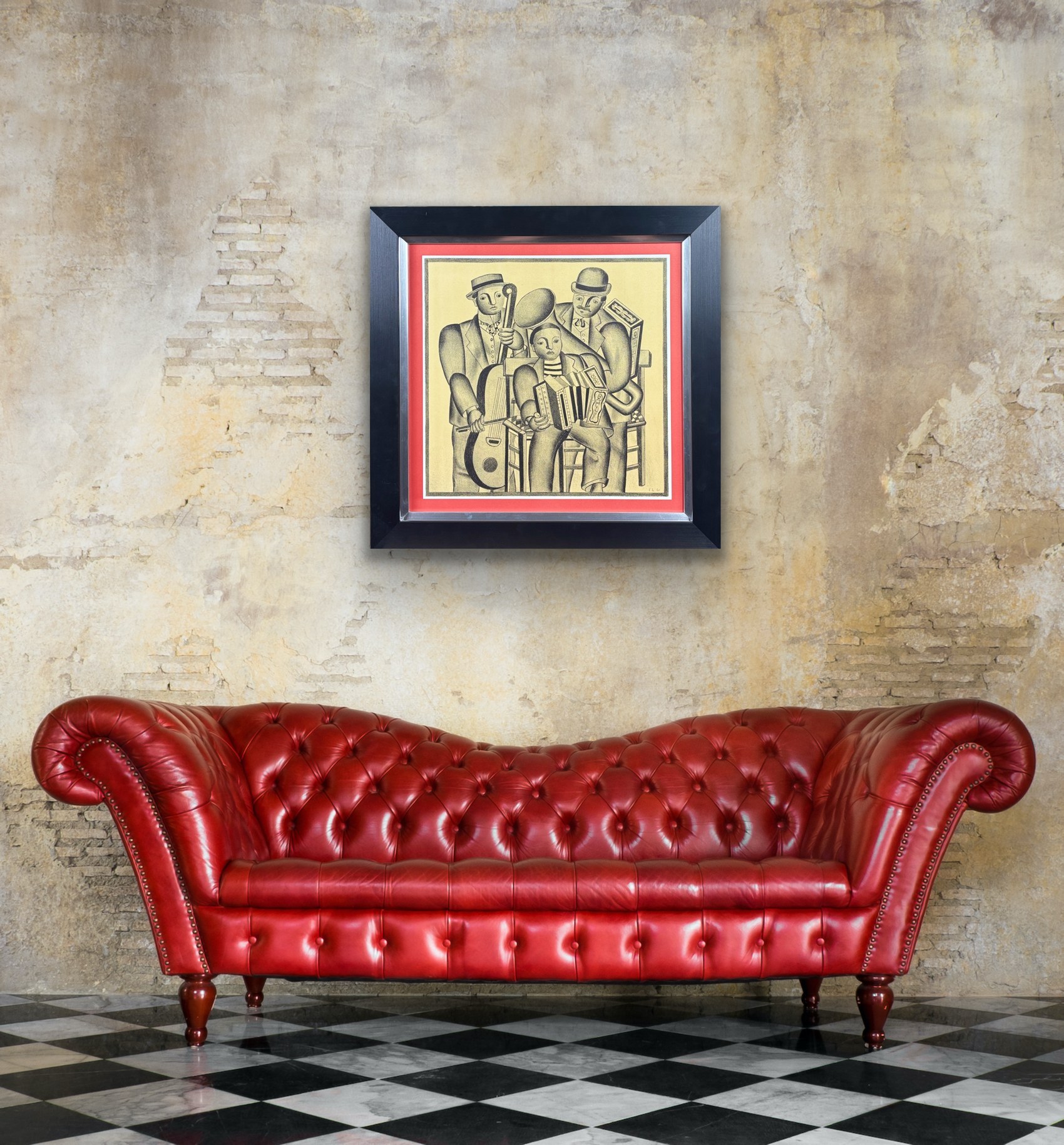
Color lithograph according to a drawing from 1920; paper 35 x 35 cm in light passe-partout, framed 49 x 49 cm; signed on plate " F.L. 20" p.d;
Publisher: Galerie Berggruen in collaboration with Nadia Leger ( née Wanda Chodasiewicz-Grabowska) lithographed at the Desjobert workshop in Paris (in existence since the 19th century, which was a favorite of the greatest: from Picasso to Dali) . Gallery certificate of authenticity included.
Presented in an exhibition titled "Light oils, watercolors and drawings" at Berggruen gallery in 1975.
Joseph Fernand Henri Léger (born February 4, 1881 in Argentan, died August 17, 1955 in Gif-sur-Yvette) - French painter associated with Cubism, printmaker, sculptor, ceramic artist and film director.
Léger was not a "haunted" artist. He loved the city, machines, factories and ordinary people. He was called a "tubist" (from the French tubisme) because instead of painting realistic figures, he built them from forms resembling pipes, cylinders and machine parts. Léger was so fascinated by machinery that he once said that "the composition of a locomotive is more beautiful than a naked woman in a museum." From around 1910, he created in a distinctive style, composing abstract and semi-abstract works with cylindrical forms. He reduced the human figure to a pure shape. Mechanical forms are constant elements in his works, such as in designs for the Swedish Ballet (1921-1922), frescoes (such as the polychrome of the Brussels stadium, 1935), and the abstract film Ballet mécanique 1924 with music by George Antheil.
The Musicians (Les Musiciens) is one of his beloved subjects; for him, music is about mathematics and order, the things he valued most in art. The accordionist and double bass player are characters taken straight out of Parisian streets or working-class bars.
His student, assistant from 1948 and wife from 1952 was Nadia Léger (1904-1982, formerly under the name Wanda Chodasiewicz-Grabowska)