


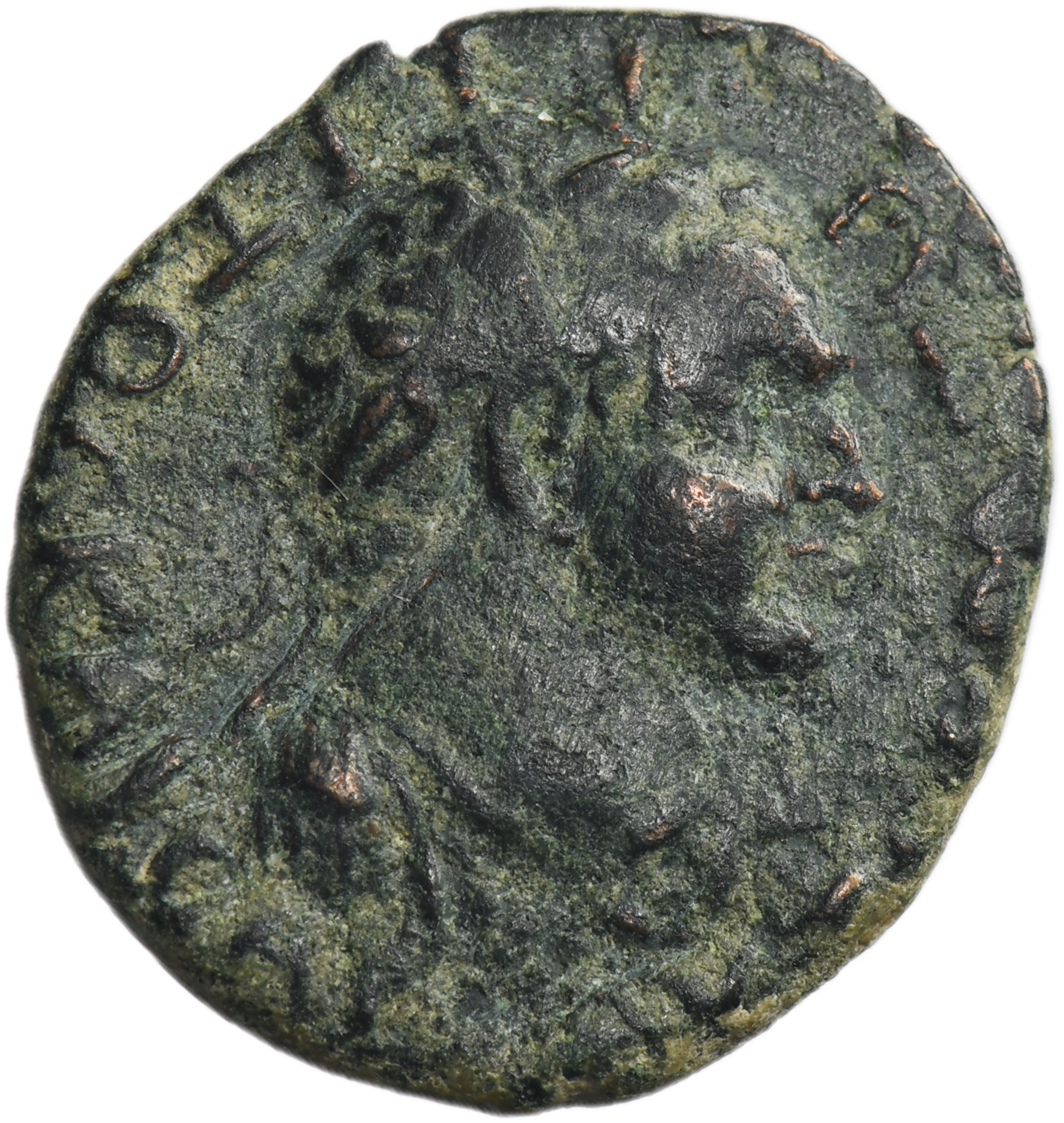
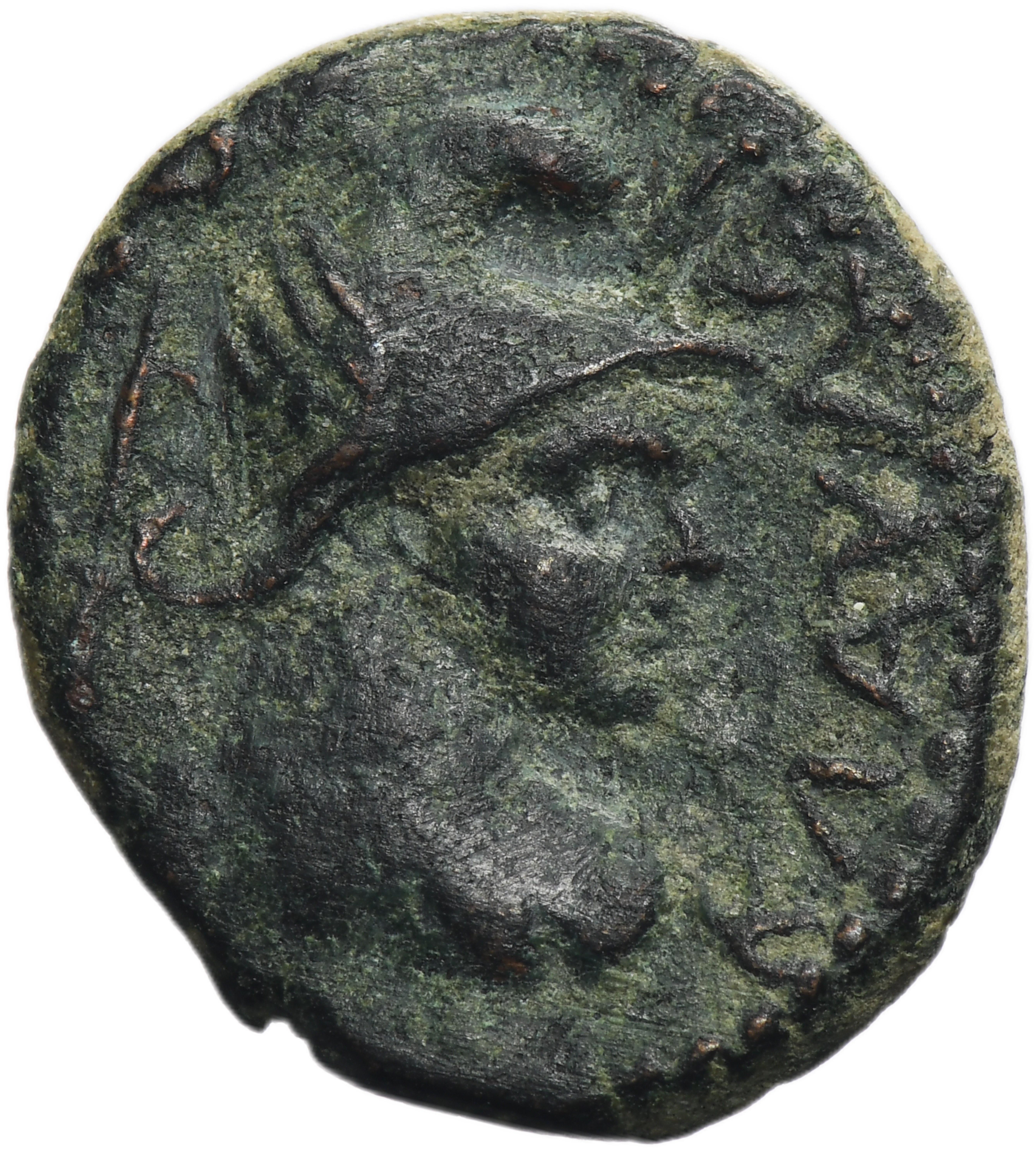


Provincial bronze issue struck at Iconium in Lycaonia, dated to the reign of Vespasian (AD 69–79) and dedicated to Titus as Caesar, belongs to the civic coinage of Asia Minor produced within the structures of the Roman Empire. Iconium, as an administrative and colonial center, issued coins combining portraits of the Flavian dynasty with elements drawn from local iconographic traditions.
The obverse shows a bust of Titus facing right, laureate and cuirassed, with the Greek legend ΑΥΤΟΚΡΑΤωΡ ΤΙΤΟϹ ΚΑΙϹΑΡ, identifying him as imperator and Caesar. Such issues, struck for the designated heir during the lifetime of the reigning emperor, form a well-documented component of Flavian dynastic policy, emphasizing Titus’ role as the official successor to Vespasian.
The reverse depicts Perseus standing right, wearing a Phrygian cap (pileus), with the harpa (sickle-shaped sword) shown to the left, and the legend ΚΛΑΥΔΕΙΚΟΝΙΕωΝ, referring to the community of the city. The figure of Perseus belongs to the classical repertoire of Greek mythology and appears in provincial coinage as an expression of local cultural identity.
The selection of this type reflects the broader practice of eastern cities integrating imperial representation with Hellenistic mythological imagery. Perseus, as a heroic figure associated with victory and divine favor, aligns with the ideological language of power and legitimacy, while simultaneously preserving the regional cultural framework characteristic of provincial minting traditions.
Roman Provincial
Lycaonia, Iconium, Vespasian (69-79) for Titus ceasar, AE
Obverse: laureate, cuiarssed bust right
ΑΥΤΟΚΡΑΤωΡ ΤΙΤΟϹ ΚΑΙϹΑΡ
Reverse: bust of Perseus with Phrygian cap right, harpa behind
ΚΛΑΥΔΕΙΚΟΝΙΕωΝ
Diameter 21 mm, weight 4.73 g











