


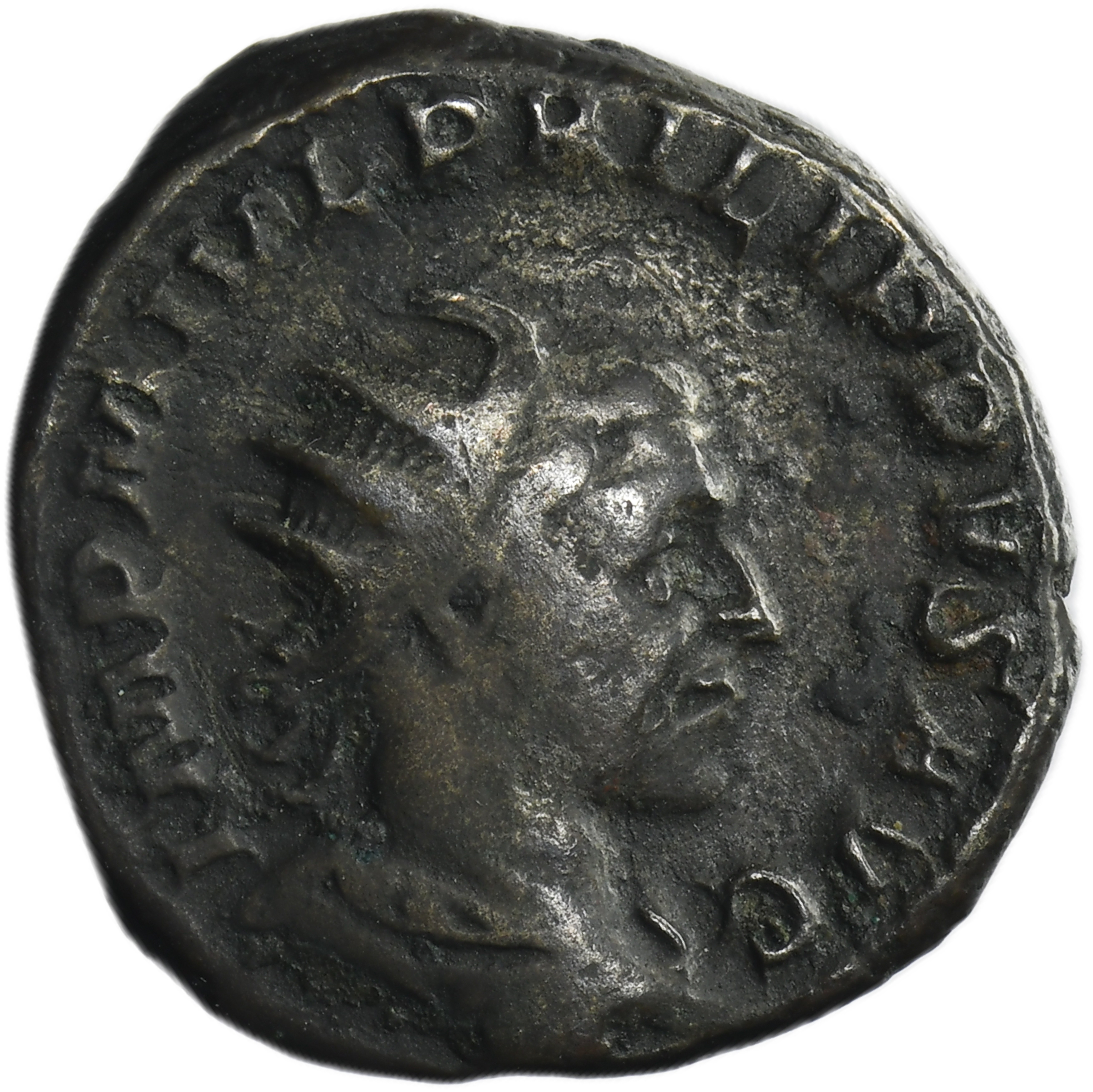
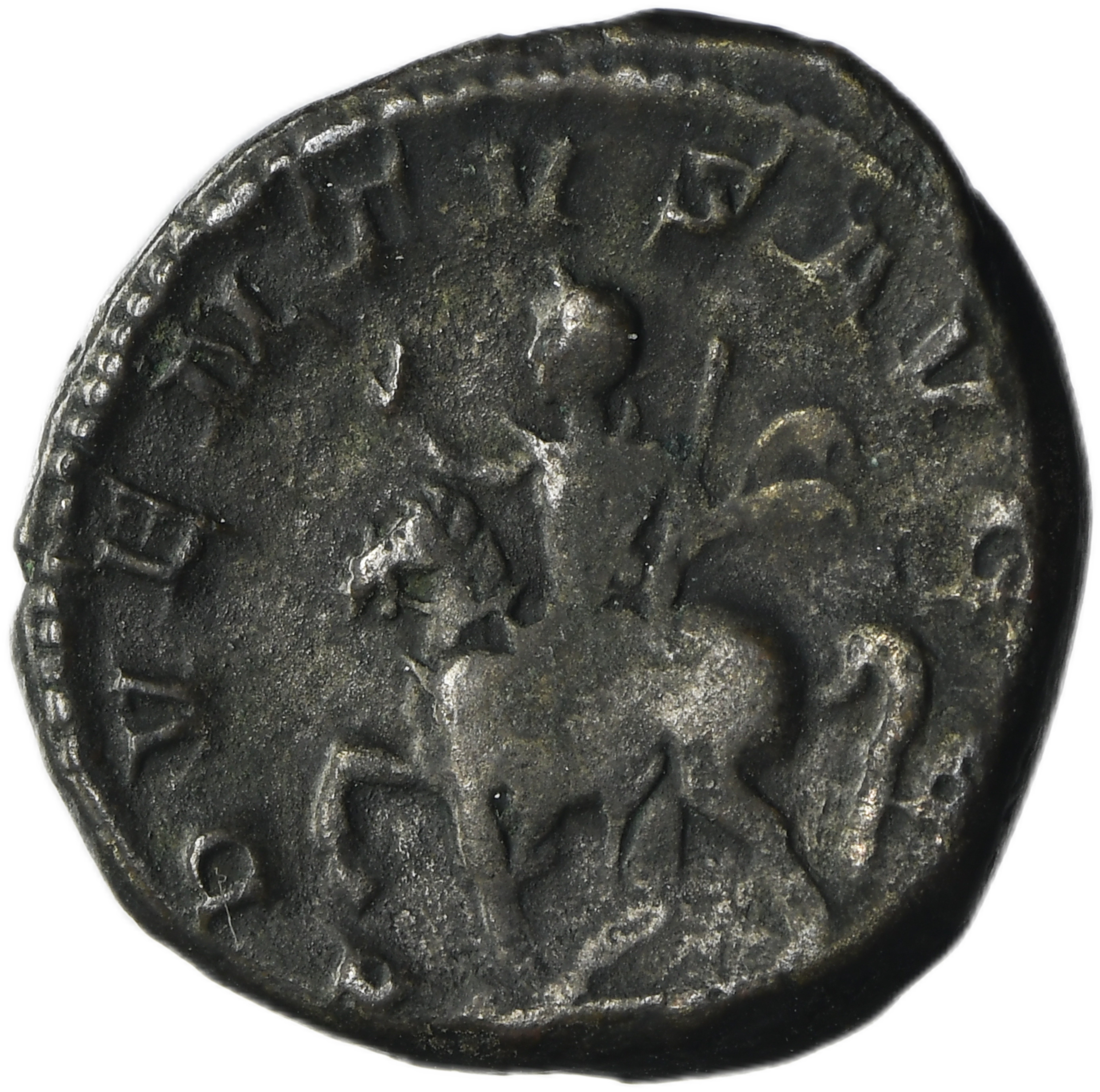


Rare dupondius of Philip I “the Arab” (AD 244–249), struck at the Rome mint, belonging to a poorly documented group of bronze issues of this emperor. This particular type is unlisted in the standard reference Roman Imperial Coinage (RIC), significantly enhancing its importance from both a collector’s and scholarly perspective.
The obverse features a radiate, draped and cuirassed bust of the emperor facing right, with the legend IMP M IVL PHILIPPVS AVG. The use of the radiate crown (corona radiata) denotes the denomination of the dupondius, in accordance with established Roman minting practice since the time of Nero. The portrait conforms to official iconographic standards of Philip’s early reign, presenting him in a dual civil and military capacity.
The reverse shows the emperor on horseback advancing left, raising his right hand in a gesture of greeting (adventus), while holding a spear in the other, with the legend ADVENTVS AVGG. This imagery belongs to a well-defined iconographic type referring to the ceremonial arrival of the emperor in a city or province. The adventus motif is well attested in literary and epigraphic sources as part of imperial ceremonial, emphasizing the relationship between the ruler and his subjects.
The use of the plural form AVGG is characteristic of issues reflecting collegial rule or its ideological expression, in this case connected with the elevation of Philip II to co-emperor (from AD 247). Such nuances in titulature provide important chronological indicators within the coinage of the period.
Roman Imperial
Philip I (244-249), Dupondius 244-249, Rome mint
Obverse: radiate, draped and cuirassed bust right
IMP M IVL PHILIPPVS AVG
Reverse: emperor on horse, pacing left, raising right hand and holding spear in left hand
ADVENTVS AVGG
Diameter 21 mm, weight 6.38 g











