


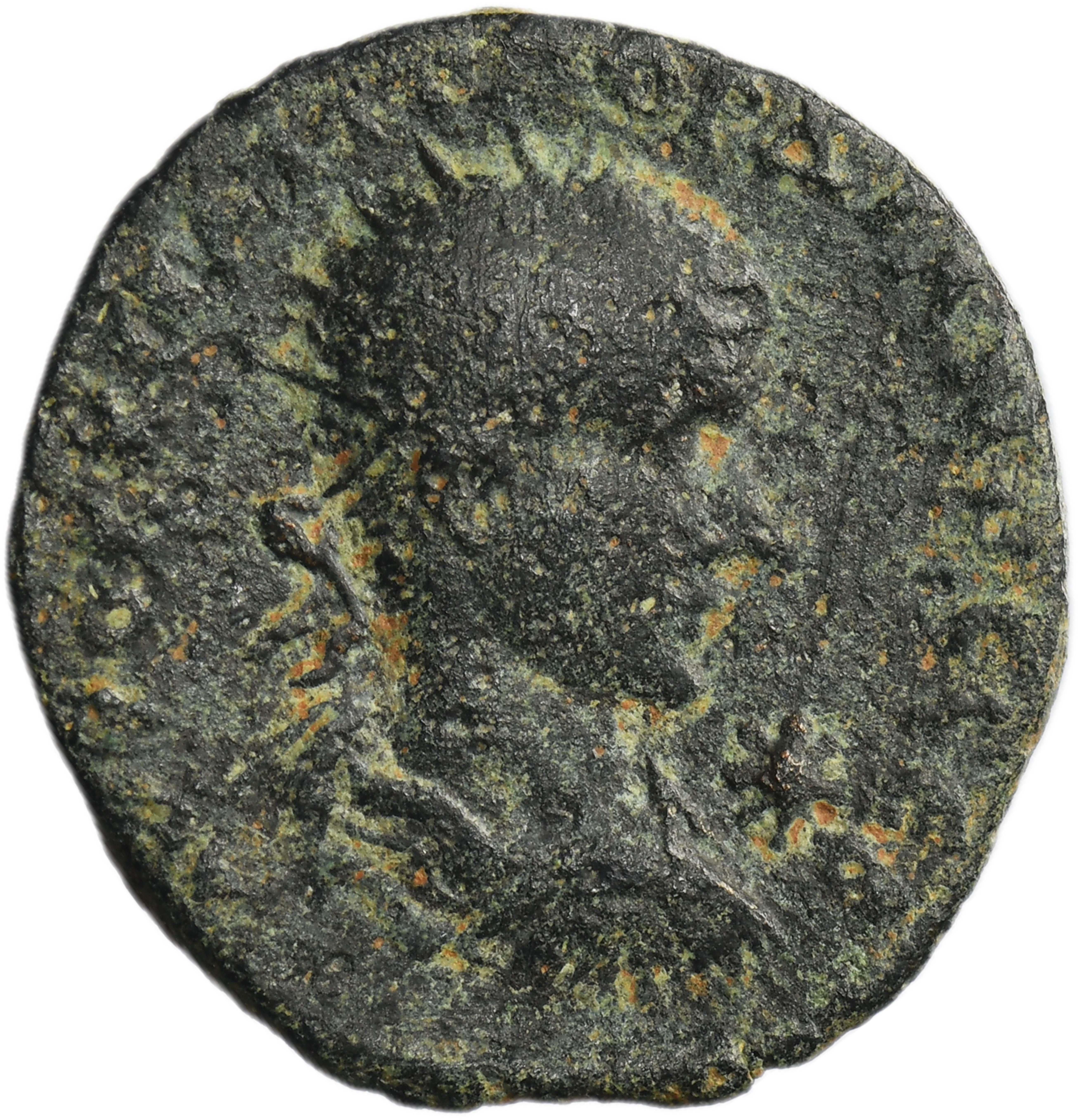
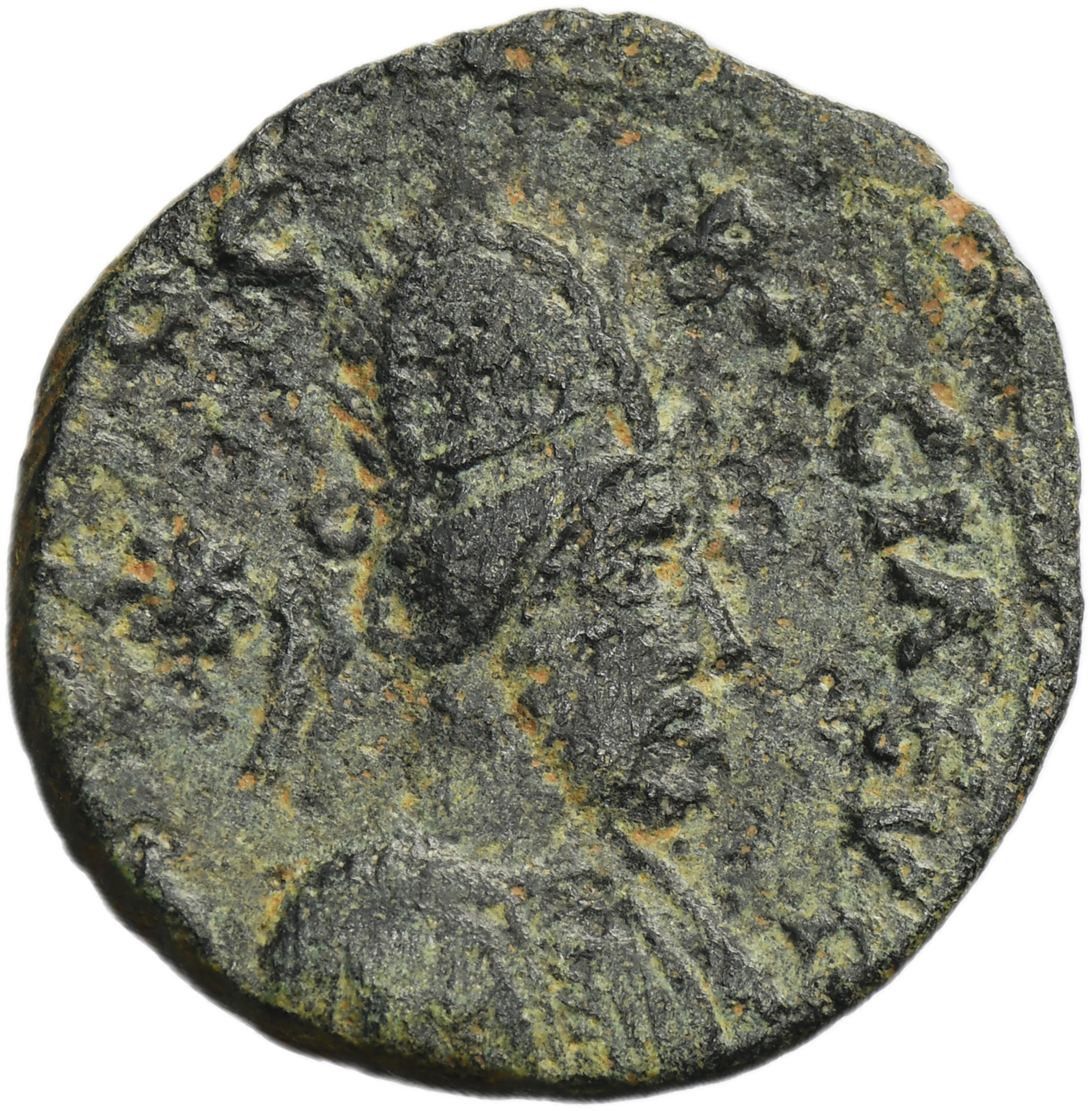


Provincial bronze issue of Gordian III (AD 238–244), struck at Edessa in Mesopotamia between AD 239–242, belongs to a distinctive group of civic coinage in which the Roman emperor is paired with a local ruler, Abgar X of Osroene. This type represents one of the clearest numismatic testimonies to the political relationship between Rome and its eastern client kingdoms.
The obverse features a radiate bust of the emperor facing right, with the Greek legend ΑΥΤΟΚ Κ Μ ΑΝΤ ΓΟΡΔΙΑΝΟϹ ϹΕΒ, identifying Gordian as autokrator and augustus. A star in the field is a recurring element in the coinage of Edessa and is commonly interpreted as an astral symbol, reflecting local religious traditions of the region.
The reverse depicts a bust of Abgar X wearing a tiara, facing right, with the legend ΑΒΓΑΡΟϹ ΒΑϹΙΛΕΥϹ, explicitly naming him as king. The appearance of a local monarch alongside the emperor is a relatively rare feature in provincial coinage and directly illustrates the client status of Osroene under Roman authority. A star in the field is also present here, reinforcing both the compositional balance and the symbolic framework of the issue.
Coins of this type reflect the particular political structure of Mesopotamia in the 3rd century AD, where local dynasties coexisted with Roman imperial control. Issues from Edessa bearing the name of Abgar are especially significant for the study of the region’s history, providing direct evidence of the relationship between the emperor and a subordinate eastern king.
Roman Provincial
Mesopotamia, Edessa, Gordian III (238-244), AE
Obverse: radiate, draped and cuirassed bust right, star in right field
ΑΥΤΟΚ Κ Μ ΑΝΤ ΓΟΡΔΙΑΝΟϹ ϹΕΒ
Reverse: draped bust of Abgar X right, wearing tiara, star in left field
ΑΒΓΑΡΟϹ ΒΑϹΙΛΕΥϹ
Diameter 25 mm, weight 7.02 g











