


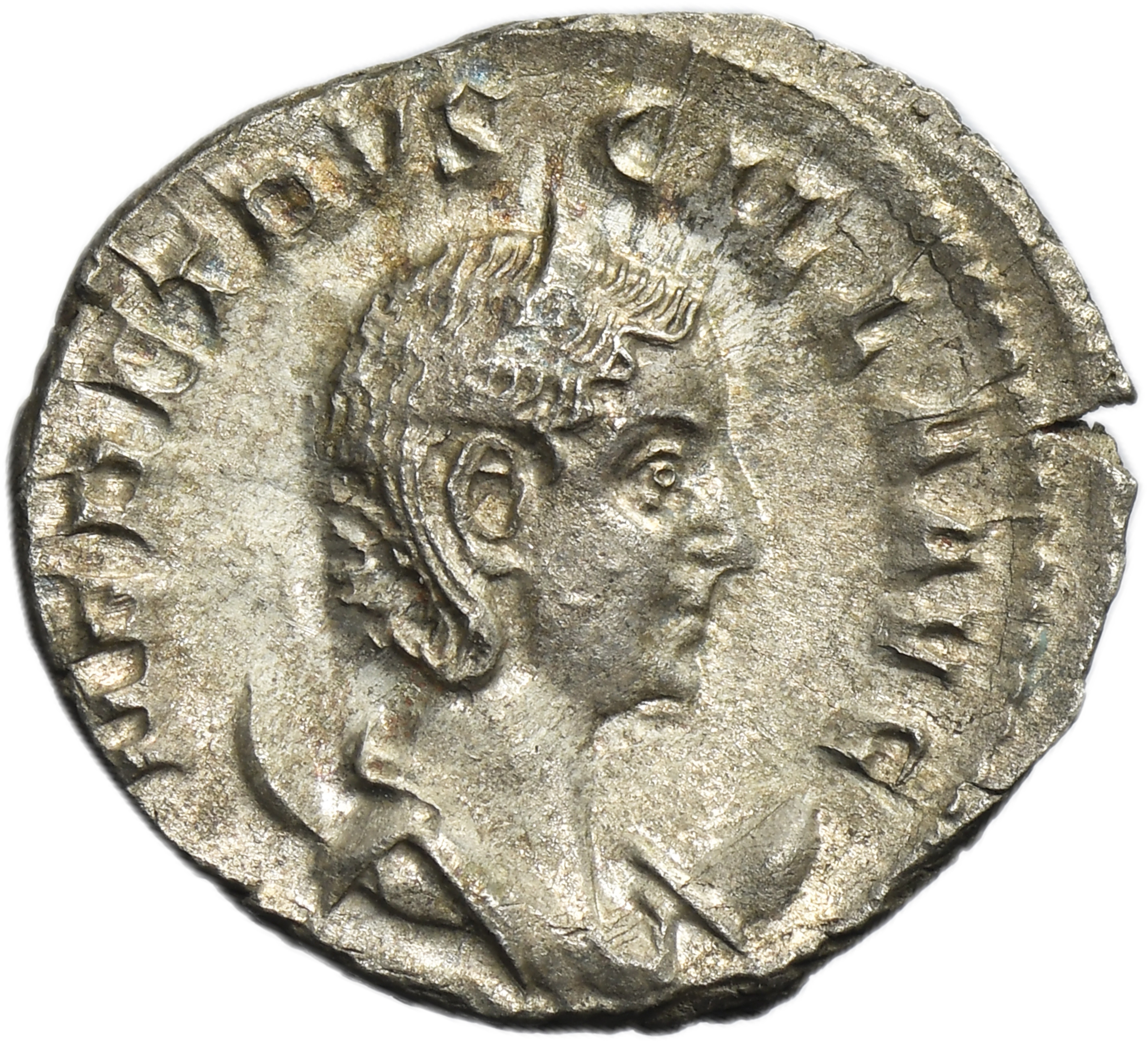
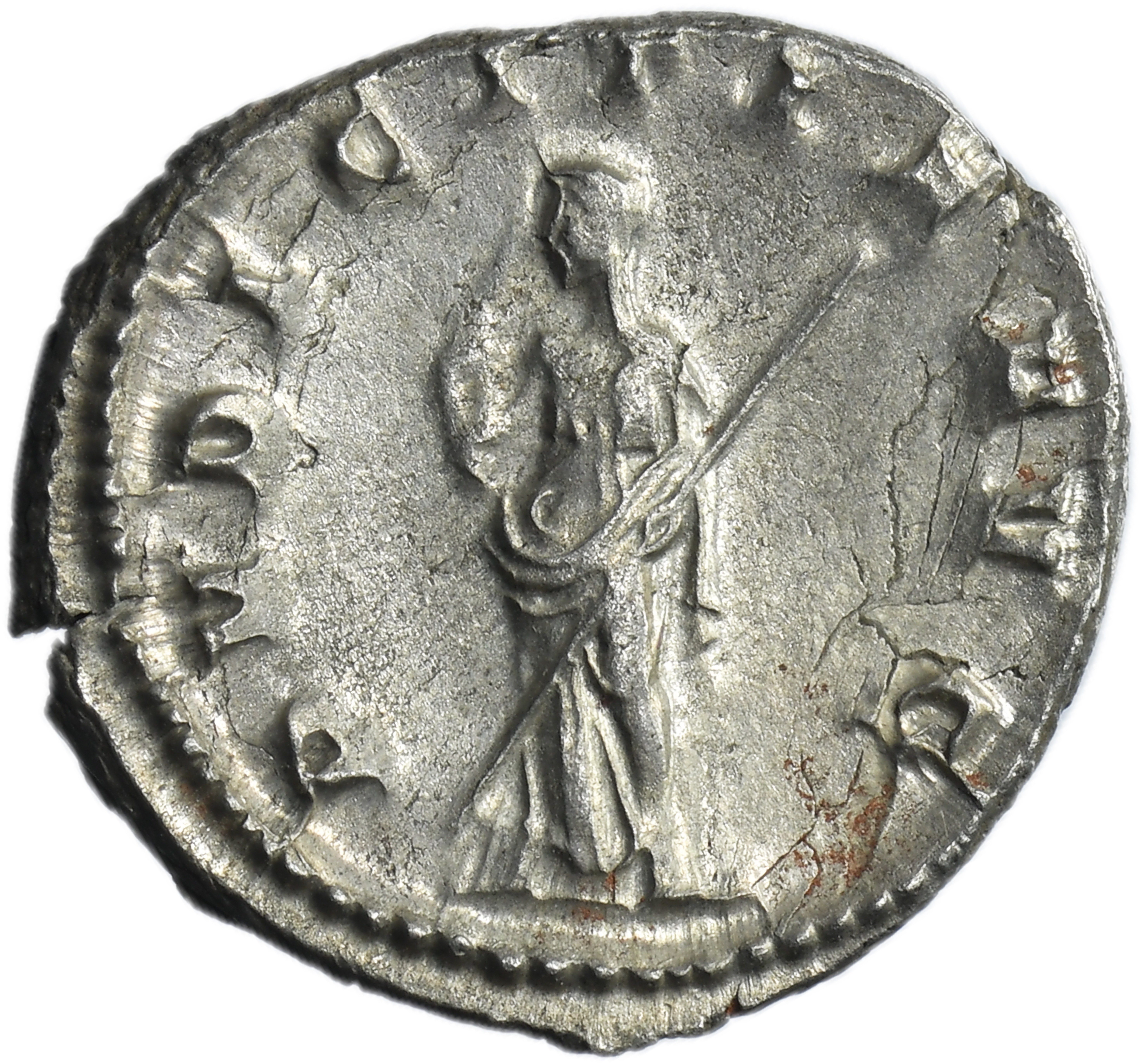


Antoninian of Herennia Etruscilla (AD 249–251), wife of Trajan Decius, struck at the Rome mint, belongs to issues of his reign in which the empress is prominently presented as the embodiment of traditional Roman virtues and a stabilizing figure within the imperial image during a period of increasing external pressures.
The obverse shows a diademed bust of the empress set on a crescent, facing right, with the legend HER ETRVSCILLA AVG, identifying her as Augusta. The crescent motif is a characteristic feature of 3rd-century imperial female portraiture and is associated in scholarship with lunar symbolism and the sacral dimension of the empress’s status.
The reverse depicts Pudicitia standing left, holding a sceptre, with the legend PVDICITIA AVG. Pudicitia, as the personification of modesty and moral restraint, was a central theme in imperial propaganda concerning empresses, presenting them as exemplars of Roman virtue and reinforcing the legitimacy of the ruling house through adherence to traditional values.
The combination of the diadem—emphasizing imperial rank with the figure of Pudicitia creates a coherent iconographic message well attested in Roman coinage of the 2nd and 3rd centuries, where the moral dimension of authority is explicitly highlighted.
Issues of Herennia Etruscilla are closely tied to the short reign of Decius and his sons, as reflected in numismatic evidence and historical sources, including Aurelius Victor, which underscore the importance of dynastic representation in this period.
Well-preserved specimen with clear detail.
Roman Imperial
Herennia Etruscilla (wife of Trajan Decius), Antoninianus 249-251, Rome mint
Obverse: diademed, draped bust on crescent right
HER ETRVSCILLA AVG
Reverse: Pudicitia standing left, holding sceptre
PVDICITIA AVG
Diameter 21 mm, weight 3.73 g











