


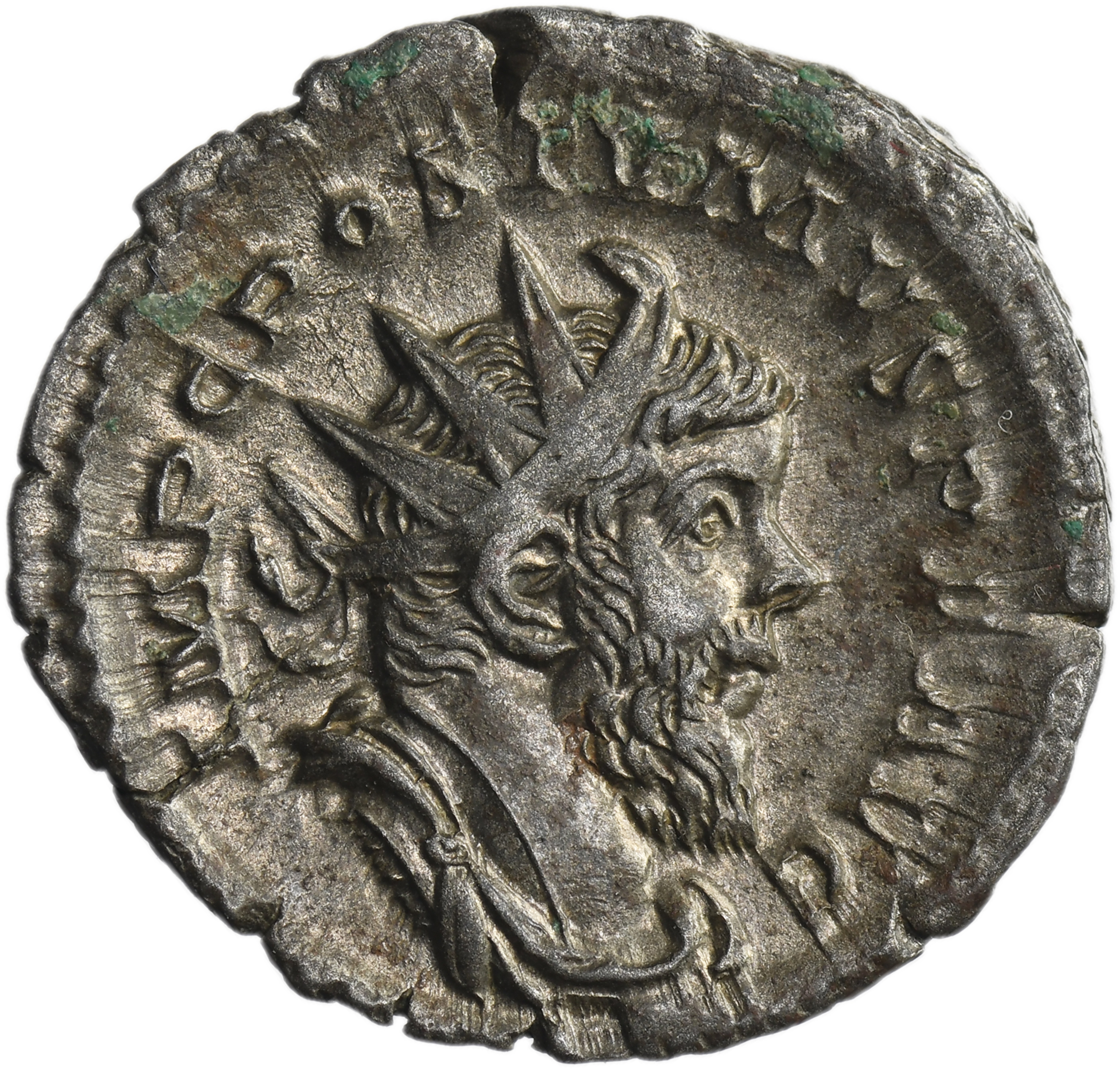
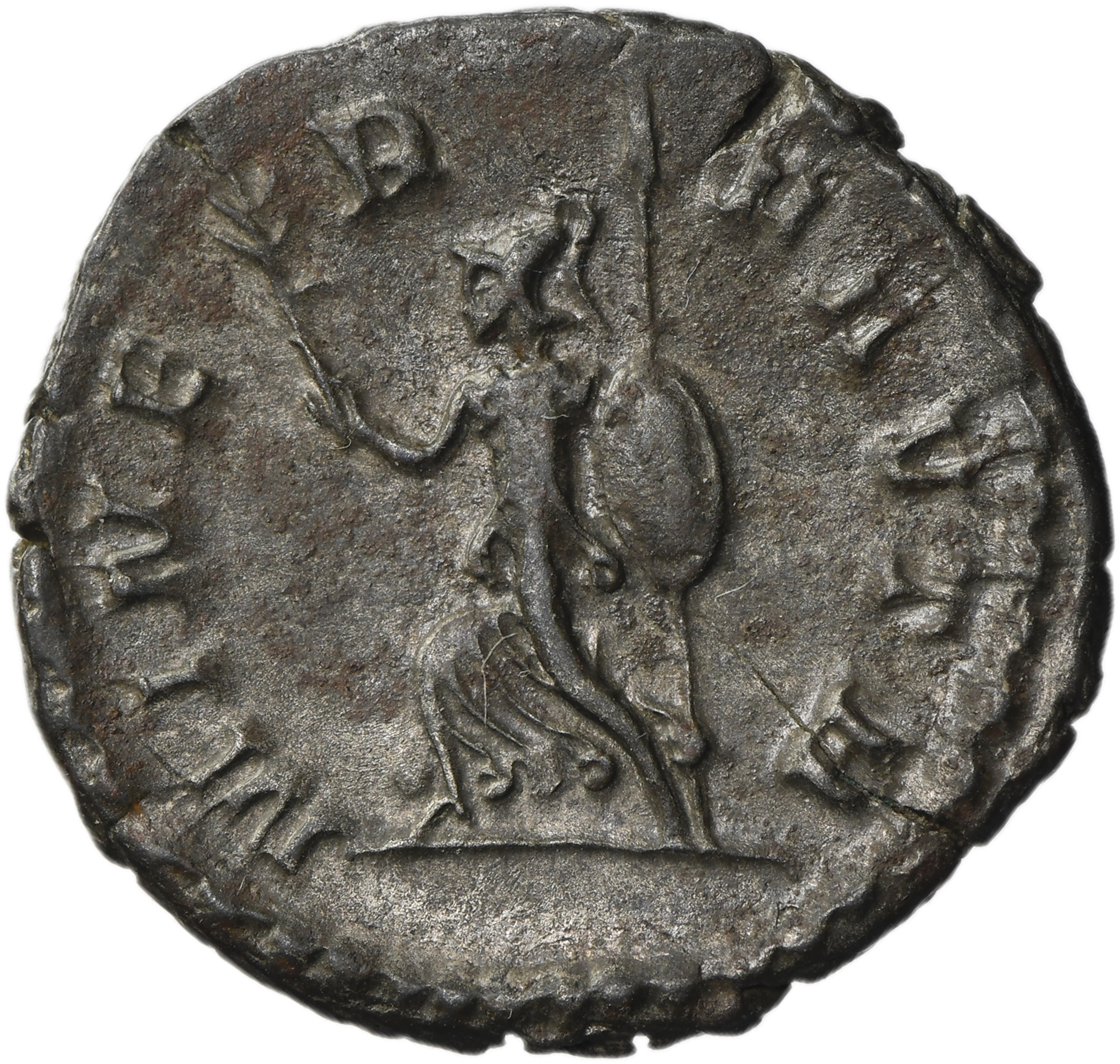


Antoninian of Postumus (AD 260–269), struck at the mint of Lugdunum, belongs to the coinage of the Gallic Empire, which functioned as a separate political entity in the western provinces during the mid-3rd century.
The obverse presents a radiate, draped and cuirassed bust of the emperor facing right, with the legend IMP C POSTVMVS P F AVG, giving his full titulature as Pius Felix Augustus. Portraits of Postumus from the Lugdunum mint are distinguished by their careful execution and a stylistic character distinct from contemporary Roman issues, as confirmed by comparative numismatic studies.
The reverse depicts Minerva advancing left, holding an olive branch, shield, and spear, with the legend MINER FAVTR (Minerva Favtrix). This type belongs to a well-documented iconographic group in the coinage of Postumus, in which Minerva appears as a protective deity and patroness of the ruler. The combination of attributes the olive branch (peace) alongside spear and shield (war) reflects her dual function as guardian of order and bringer of victory.
The legend MINER FAVTR refers to Minerva as “the supporter” or “the favorable one,” constituting a direct reference to divine protection over the emperor. This motif is widely attested within the issues of the Gallic Empire and forms part of a consistent ideological program emphasizing the ruler’s capacity to secure and defend the western provinces.
Attractive coin that exhibits plenty of mint luster.
Roman Imperial
Postumus (260-269), Antoninianus 260-269, Lugdunum mint
Obverse: radiate, draped and cuirassed bust of Postumus right
IMP C POSTVMVS P F AVG
Obverse: Minerva walking left, holding olive branch, shield and spear
MINER FAVTR
Diameter 22 mm, weight 3.67 g











