


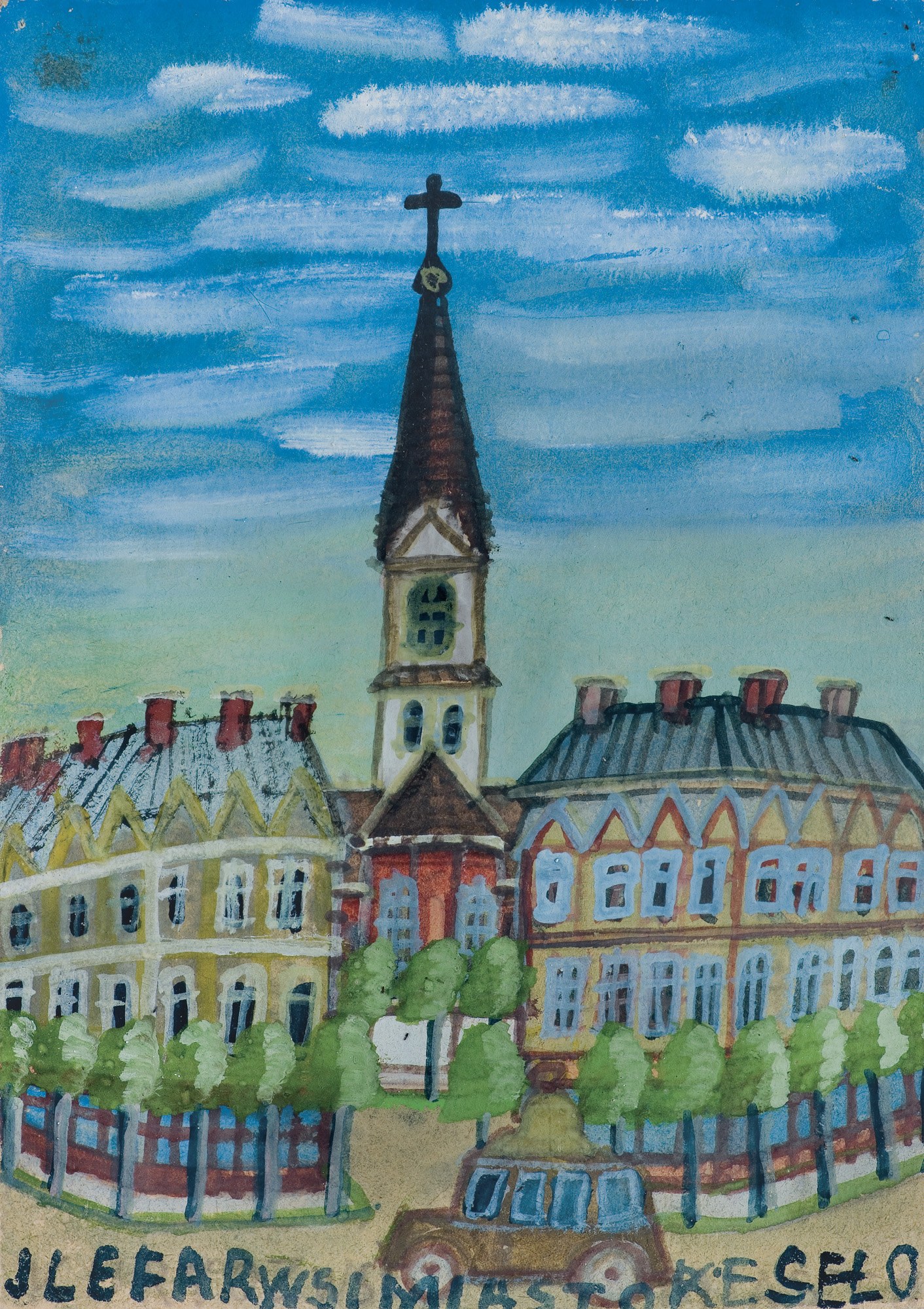
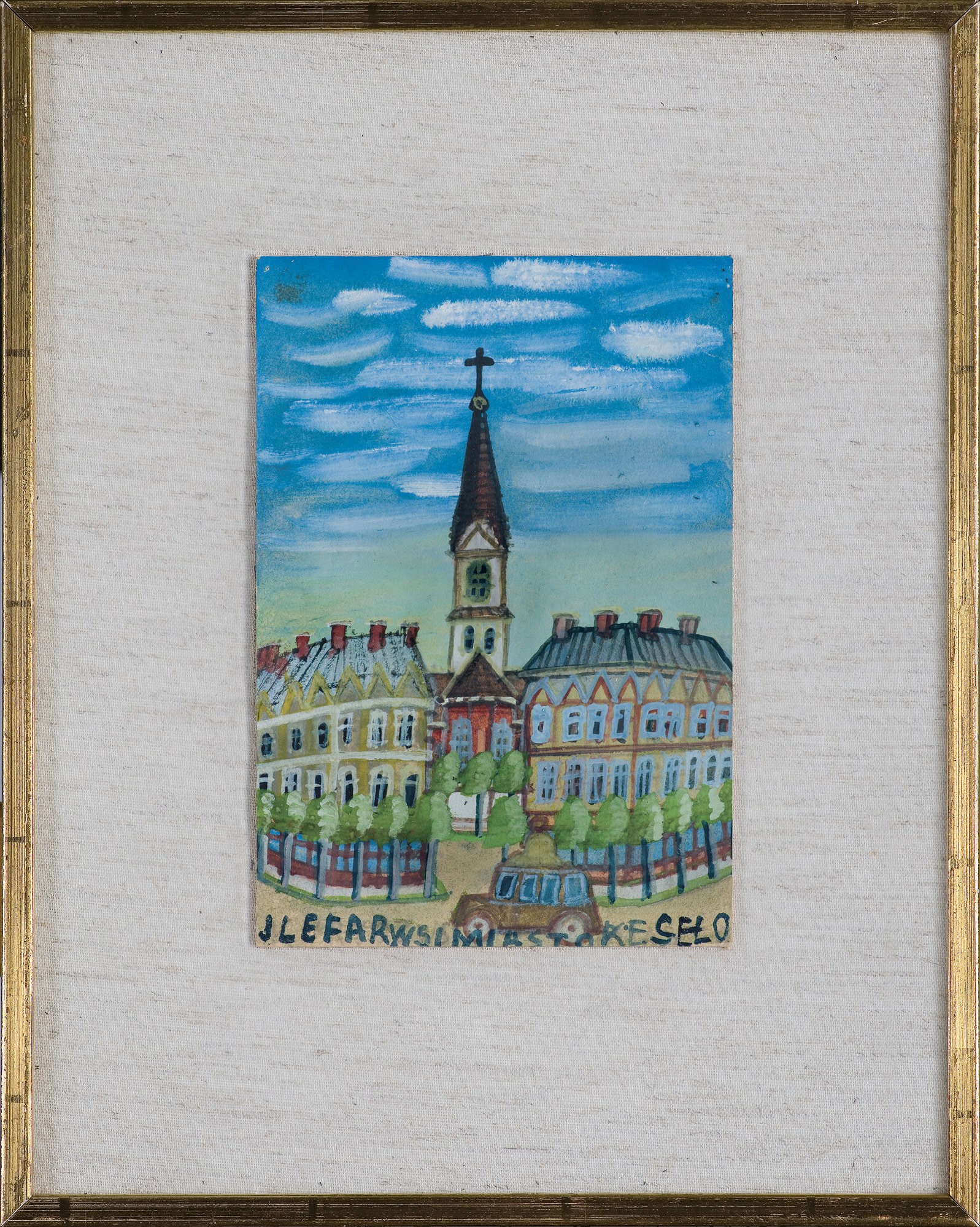
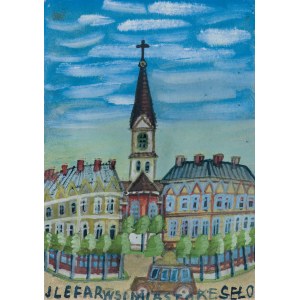
21 x 14.3 cm - watercolor, gouache, paper
inscription along the bottom edge: JLEFARWSIMIASTOKESEŁO
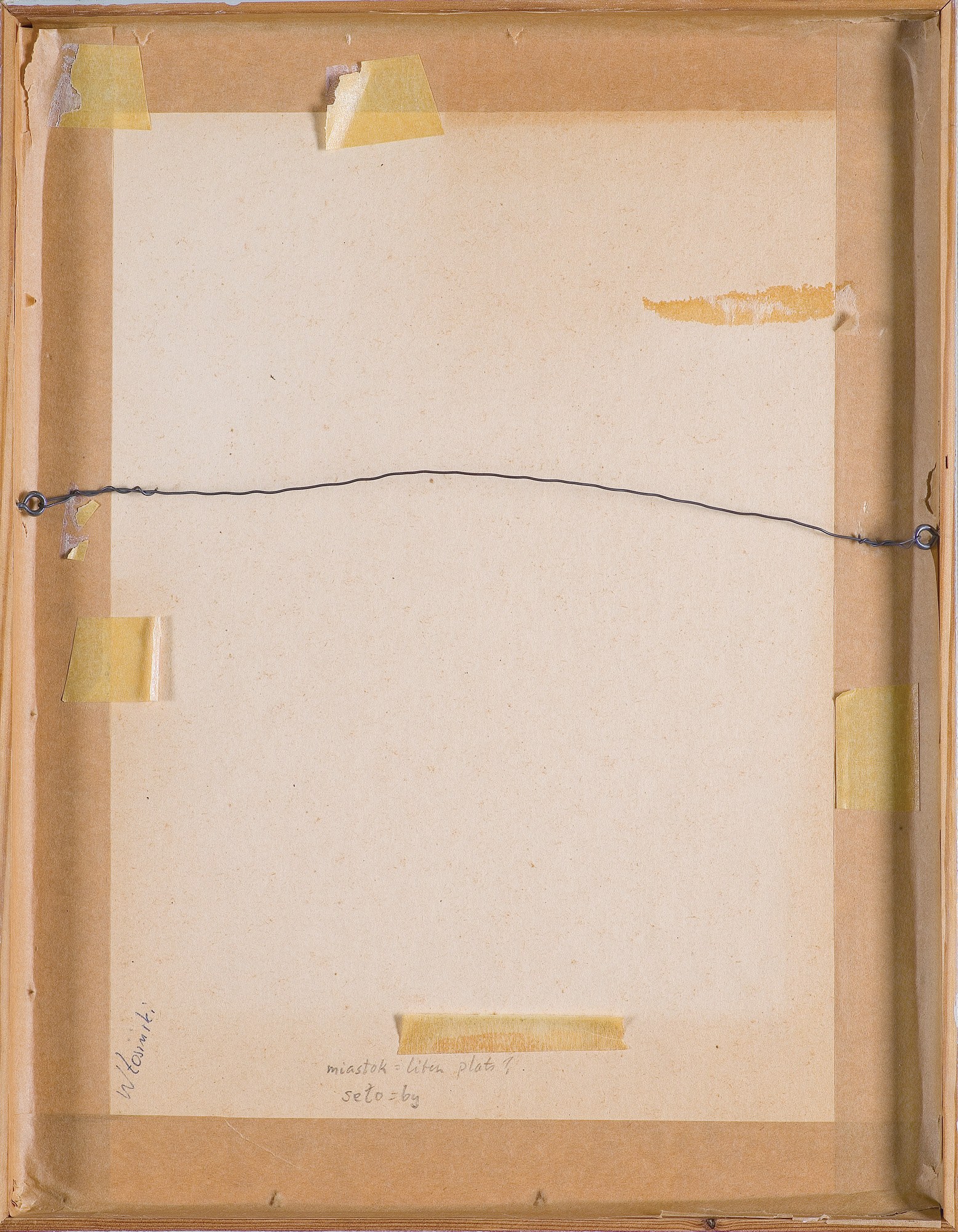
On the reverse, lower left (in pen): 35; additionally (in blue gouache): 1000ZŁ.
Provenance: Private collection, Sweden; purchased from a traveling exhibition in Sweden in 1966.
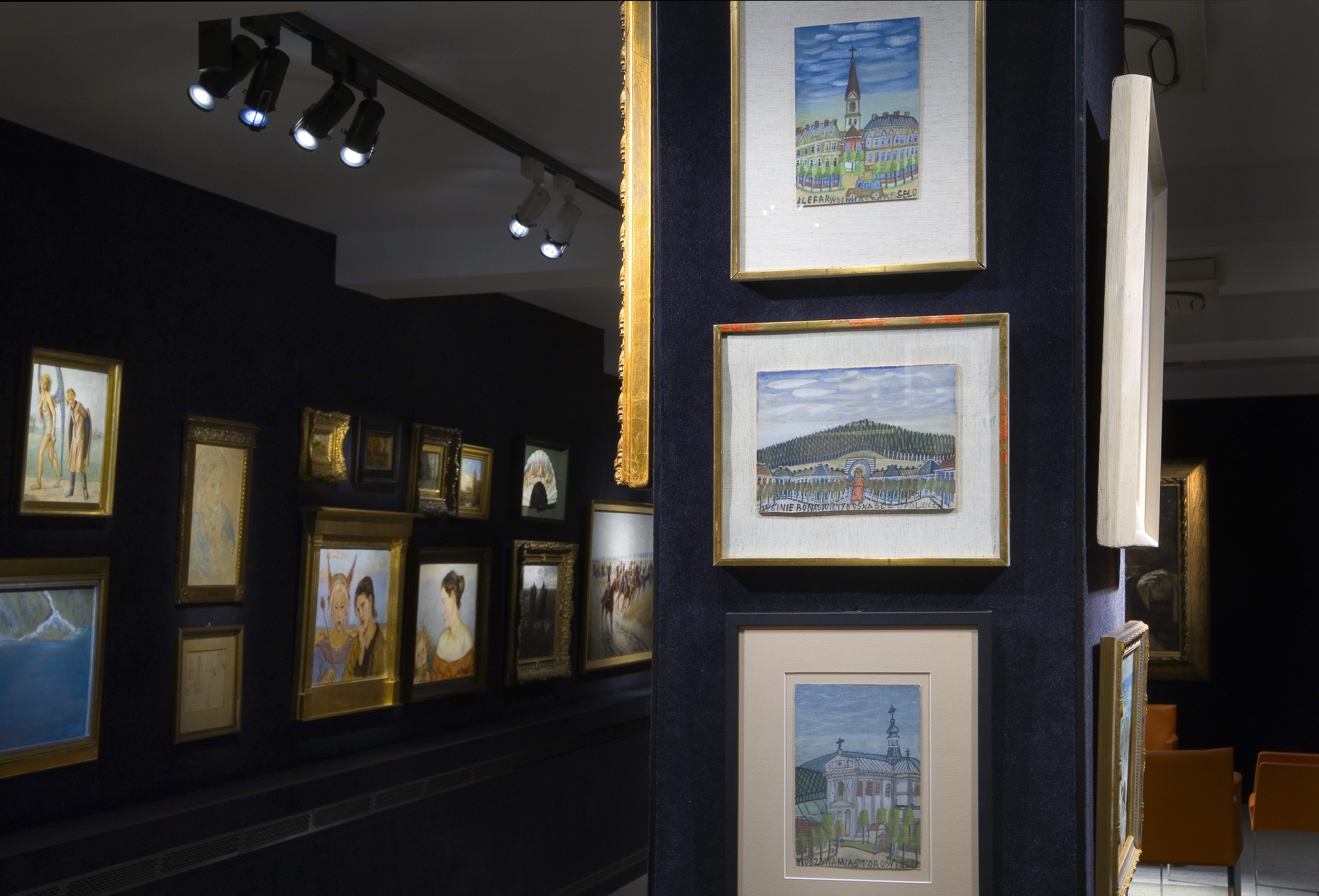
The painting was exhibited, mentioned, and reproduced, among others, in: – 1966 traveling exhibition, Hägerstens Konstförening, Midsommargarden, September 5–28,
Blackebergs Konstförening, Ängbykyrkan, October 1–9, Farsta Konstförening, Farsta Forum, November 5–13,
Vantörs Konstförening, Högdalen, November 19–27; Spanga Konstförening, Spanga Församlingshus, December 3–10;
Skarpnäcks Art Association, ABF Study Center, Arsta Centrum, Arsta, cat. no. 88 or 89.
♣ Resale Right: ♣ A fee will be added to the Purchase Price pursuant to the right of the artist and his heirs to receive remuneration in accordance with the Act of February 4, 1994, on Copyright and Related Rights (droit de suite).
Nikifor (born Epifaniusz Drowniak, known as Nikifor Krynicki since 1962; Krynica ca. 1895 – Krynica 1968) — Łemek, a well-known naive painter from Krynica, was self-taught. He suffered from hearing and speech impairments; he never attended school and could neither read nor write. Painting was his true passion and his means of communicating with the world. He began painting at an early age—the artist’s earliest known works date back to before 1920. He painted in watercolor, often using a pencil as well. He made use of every available scrap of paper, including notebook covers and cigarette packs. He created entire series of pictures—touchingly naive depictions of architecture, landscapes, saints, and portraits. He often signed his works with incomprehensible strings of “printed” letters and pasted frames made of colored paper around them. His work had already attracted attention in the 1930s (among the Kapists), but the true discovery of the Nikifor phenomenon did not occur until after the war, when he was taken under the wing of the art community and admitted to the Association of Polish Fine Artists (ZPAP). In 1962, he was given the surname Krynicki. Convinced of the importance of his art, he also used the nickname Matejko.










Последно разглеждани позиции
Влезте, за да се запознаете със списъка с артикулите
Любими
Влезте, за да се запознаете със списъка с артикулите