


Dimensions: 29 cm x 19.5 cm
Medium: oil on canvas
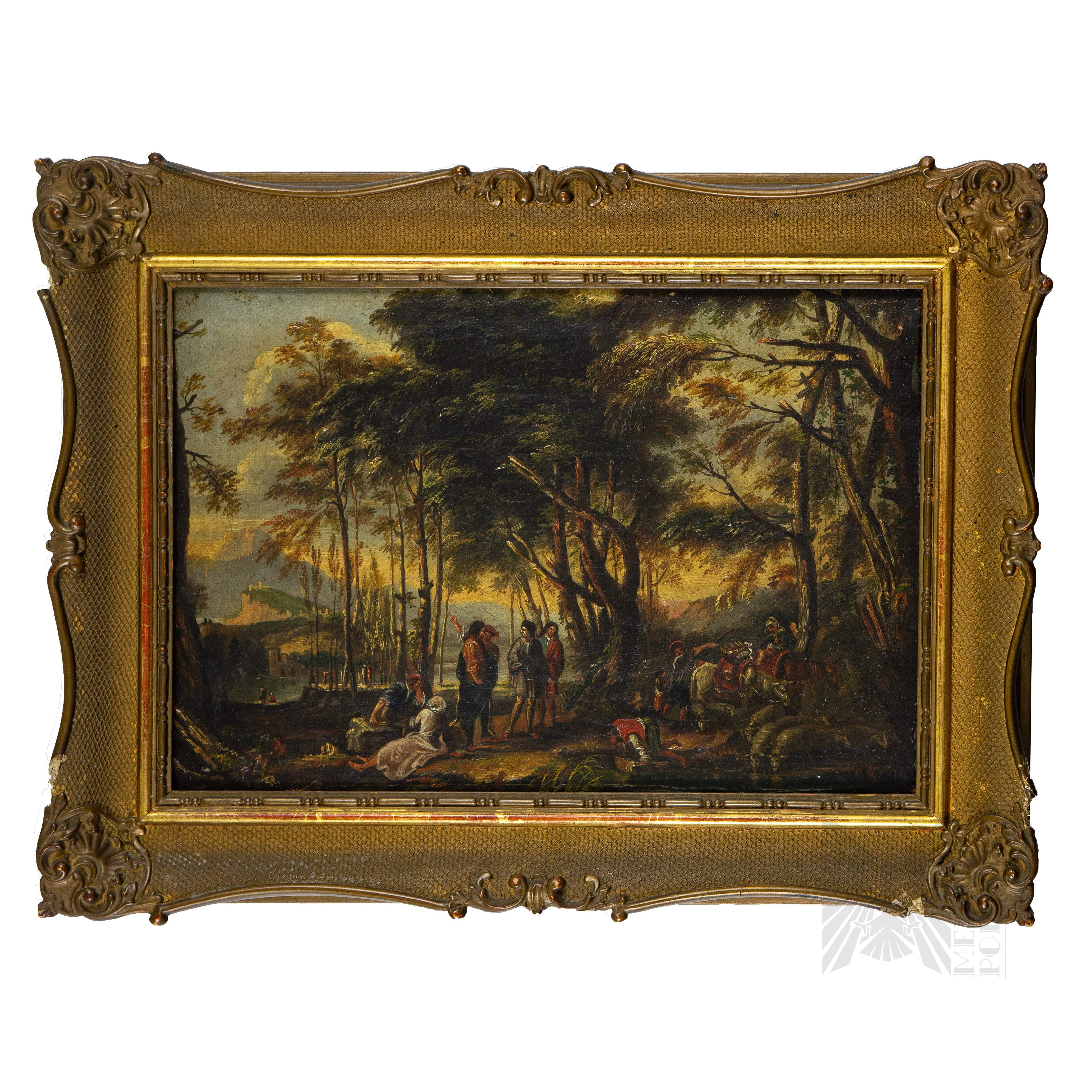
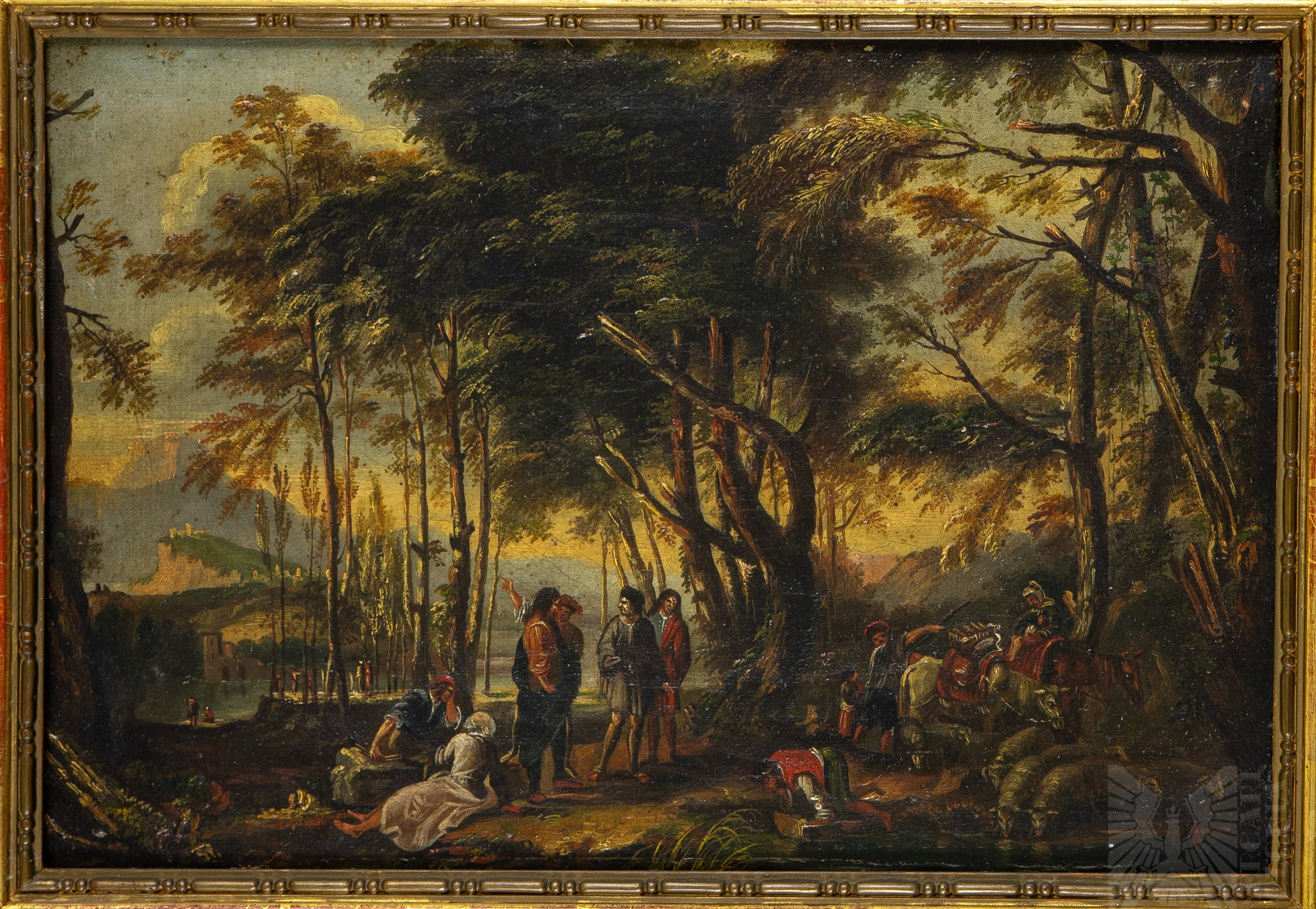
The painting has a horizontal composition and depicts a vast forest landscape dominated by a group of tall, slender trees with spreading crowns. In the central part of the composition, human figures are visible—several people are standing and talking, while others are sitting or resting on the ground. On the right side are horses laden with luggage and additional figures, suggesting a travelers’ rest stop. On the left, in the background, water is visible, along with the outlines of buildings or a small settlement. The painting’s color palette is warm, consisting of shades of brown, green, and muted yellows. The light falls softly, creating contrasts between the bright sky and the shaded interior of the forest. The brushstrokes are fine and detailed, particularly in the areas depicting vegetation and the characters’ clothing.
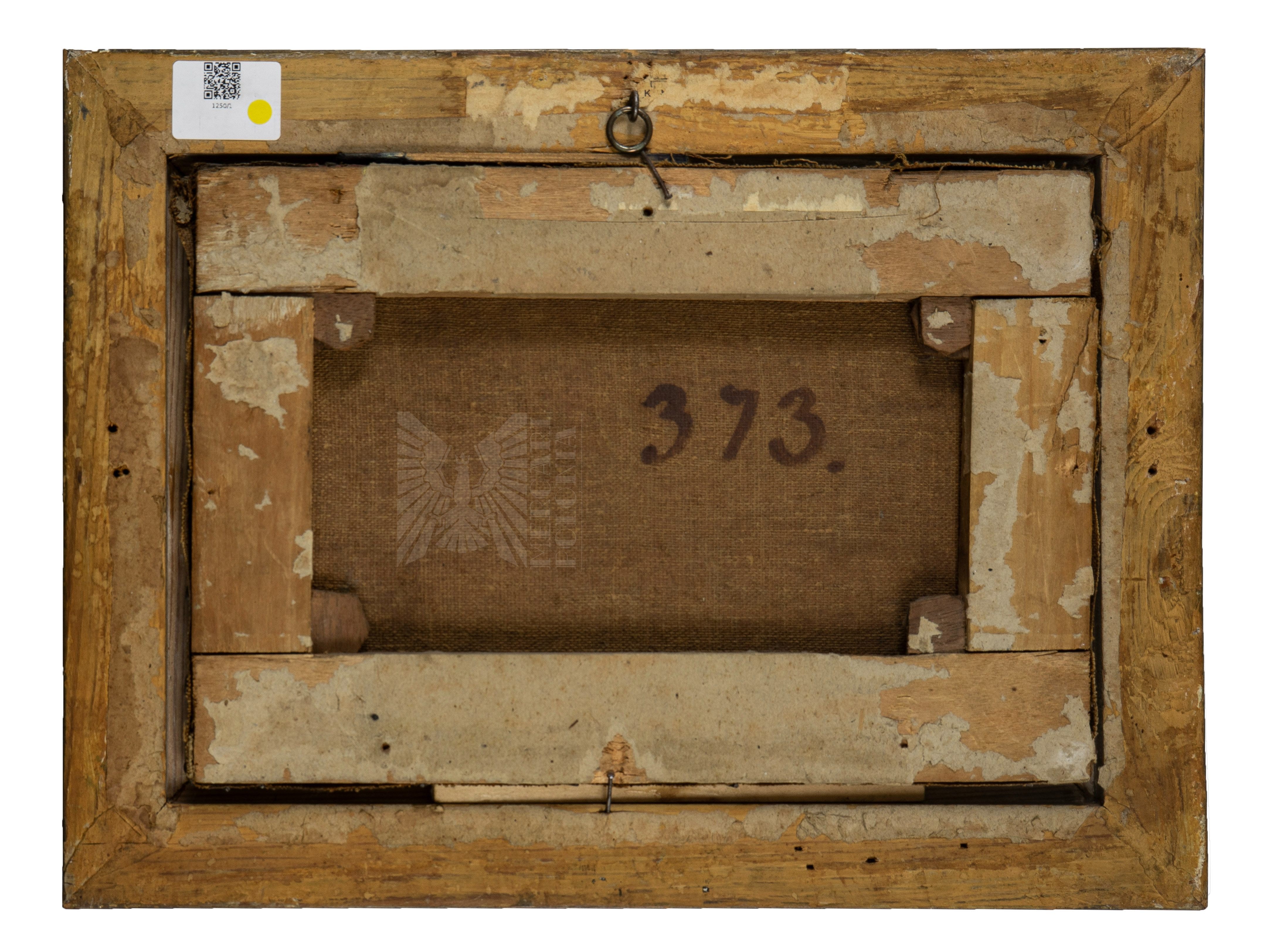
Condition as shown in the photos
An 18th-century copy of a famous painting by a renowned Italian master of Baroque painting. A copy of this work by Rosa is housed, among other places, at the National Gallery in London (according to the British museum’s description: “It depicts an episode from the life of Diogenes, the ancient Greek philosopher who sought to free himself from all earthly attachments. Upon seeing a man drinking from a stream, Diogenes threw away his bowl, the last thing he owned. The philosopher, dressed in blue, appears in the center of the painting, clutching the bowl in his right hand.”)
Salvator Rosa (1615 Naples – Rome 1673), an outstanding painter of the Italian Baroque, ranks among the most distinctive artists of the 17th century. Born near Naples, he worked in Italy’s major artistic centers, including Rome and Florence, where he developed his distinctive, easily recognizable style.
The artist became famous above all as a creator of emotionally charged landscapes that deviated from the classical, idealized vision of nature. His compositions depict wild, often rugged landscapes in which small figures—soldiers, travelers, hermits—play a narrative role, emphasizing the monumentality of their surroundings. Rosa’s style is characterized by dynamic composition, distinct chiaroscuro, and a penchant for drama and atmosphere.
The artist’s work had a significant influence on the development of European landscape painting, and his works were particularly prized by collectors for their expressiveness and intellectual character. In the 18th century, his style inspired numerous imitators, which contributed to the widespread presence of compositions inspired by his work on the art market.
Works attributed to the Salvator Rosa circle remain sought after by collectors to this day, serving as an important link in the history of landscape painting and a testament to the enduring influence of Italian Baroque aesthetics.











Последно разглеждани позиции
Влезте, за да се запознаете със списъка с артикулите
Любими
Влезте, за да се запознаете със списъка с артикулите