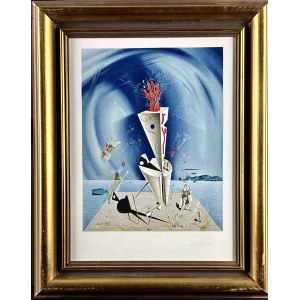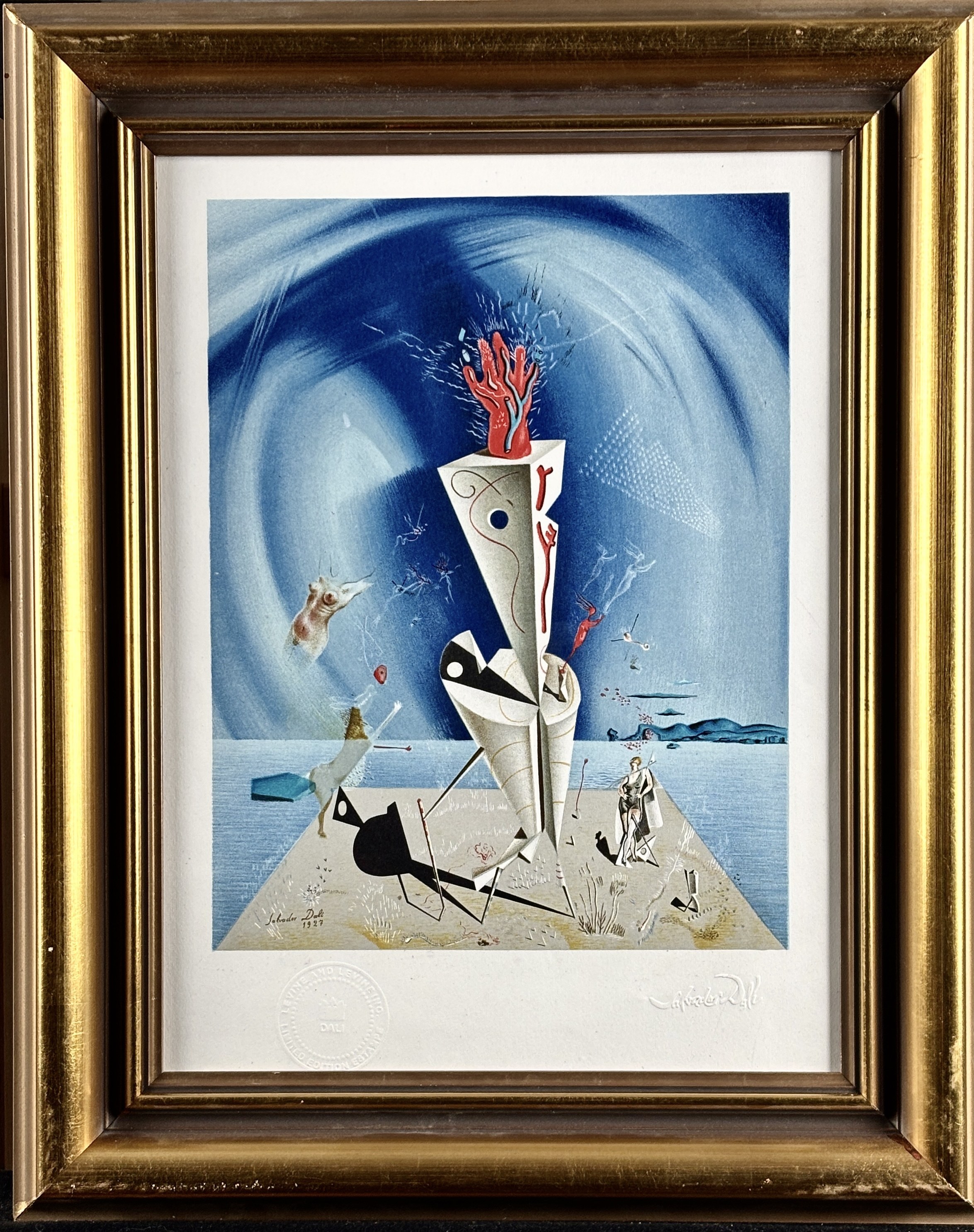
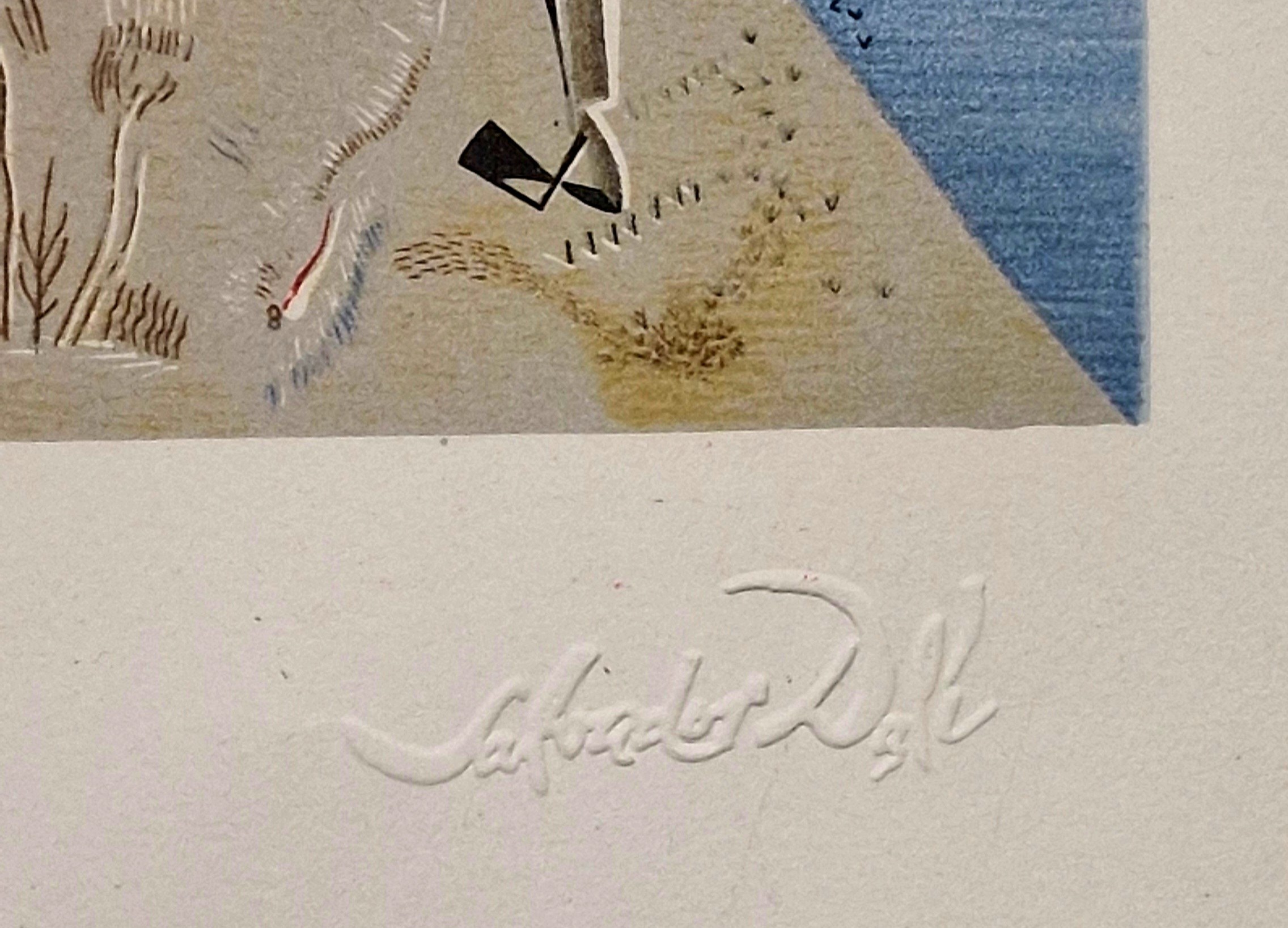
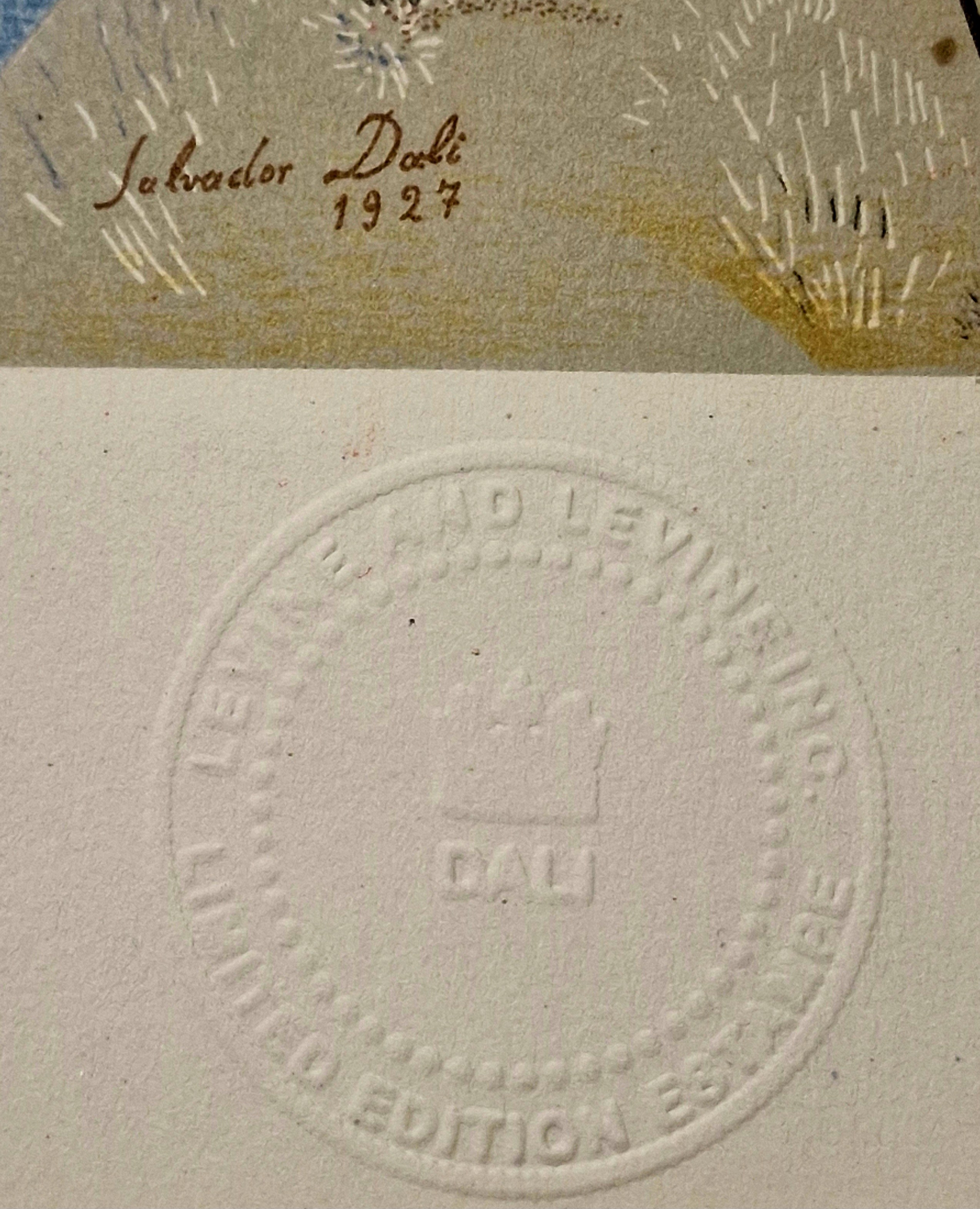
Color lithograph, paper 54 x 44 cm; mounted in a decorative frame; signed with a dry stamp bearing Dalí’s signature on the lower right; publisher’s dry stamp “Levin & Levine” on the lower left.
Publisher: Levin & Levine (New York, USA)
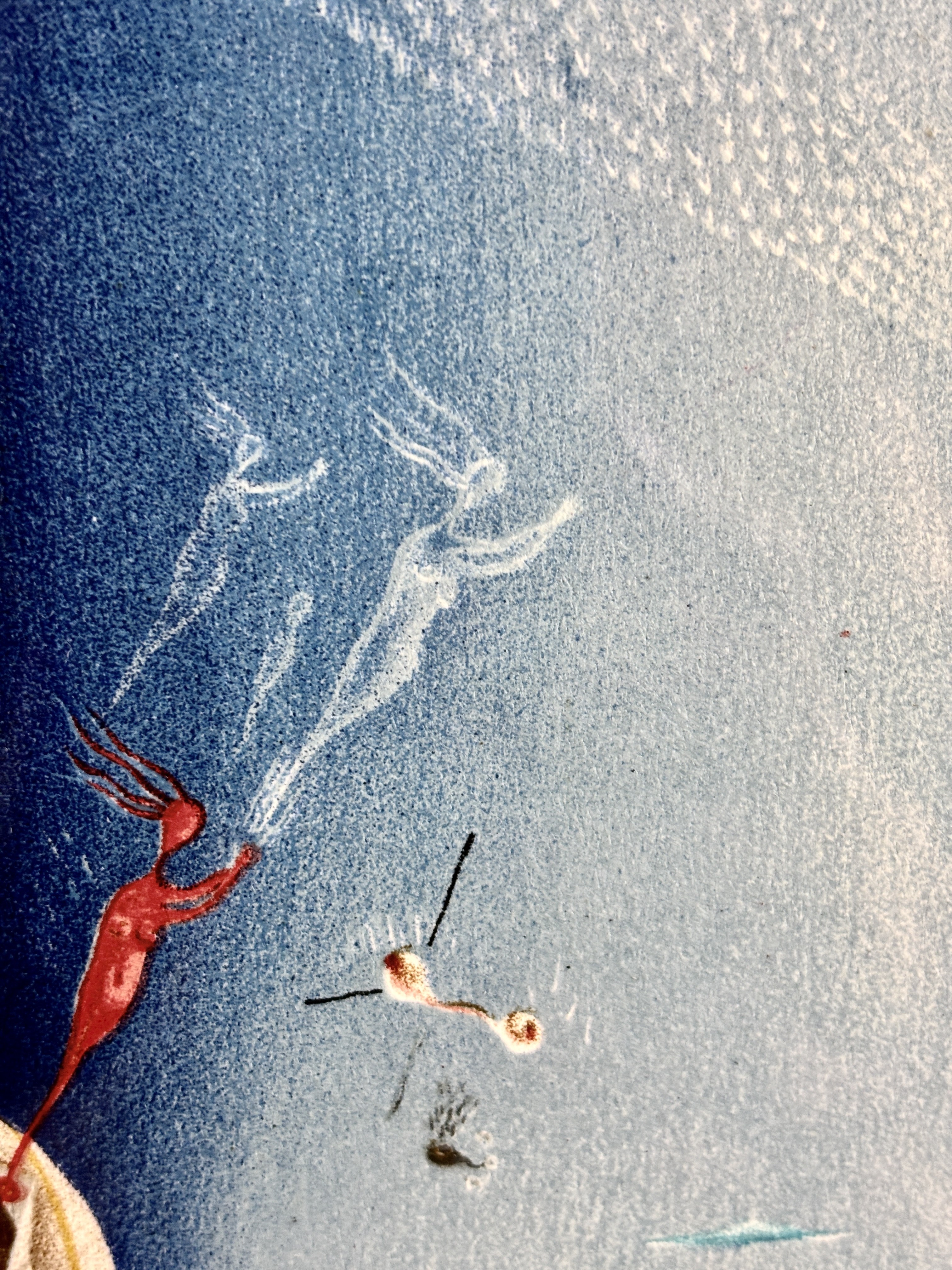
The composition consists of geometric cones and prisms supported by thin legs resembling stilts or canes (a frequent motif in Dalí’s work symbolizing instability). From its summit emerges a swollen, red hand with blood vessels trickling down it.
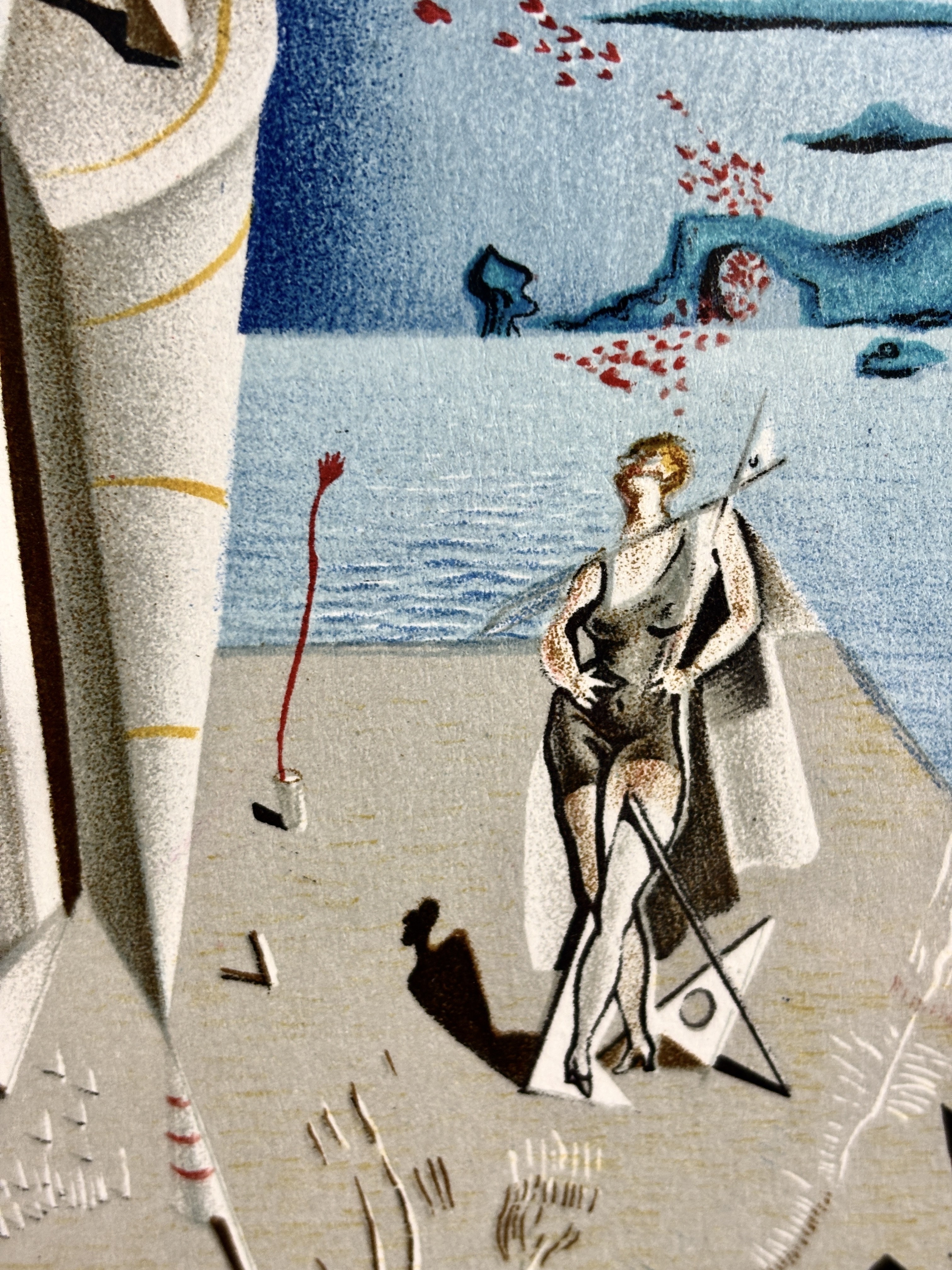
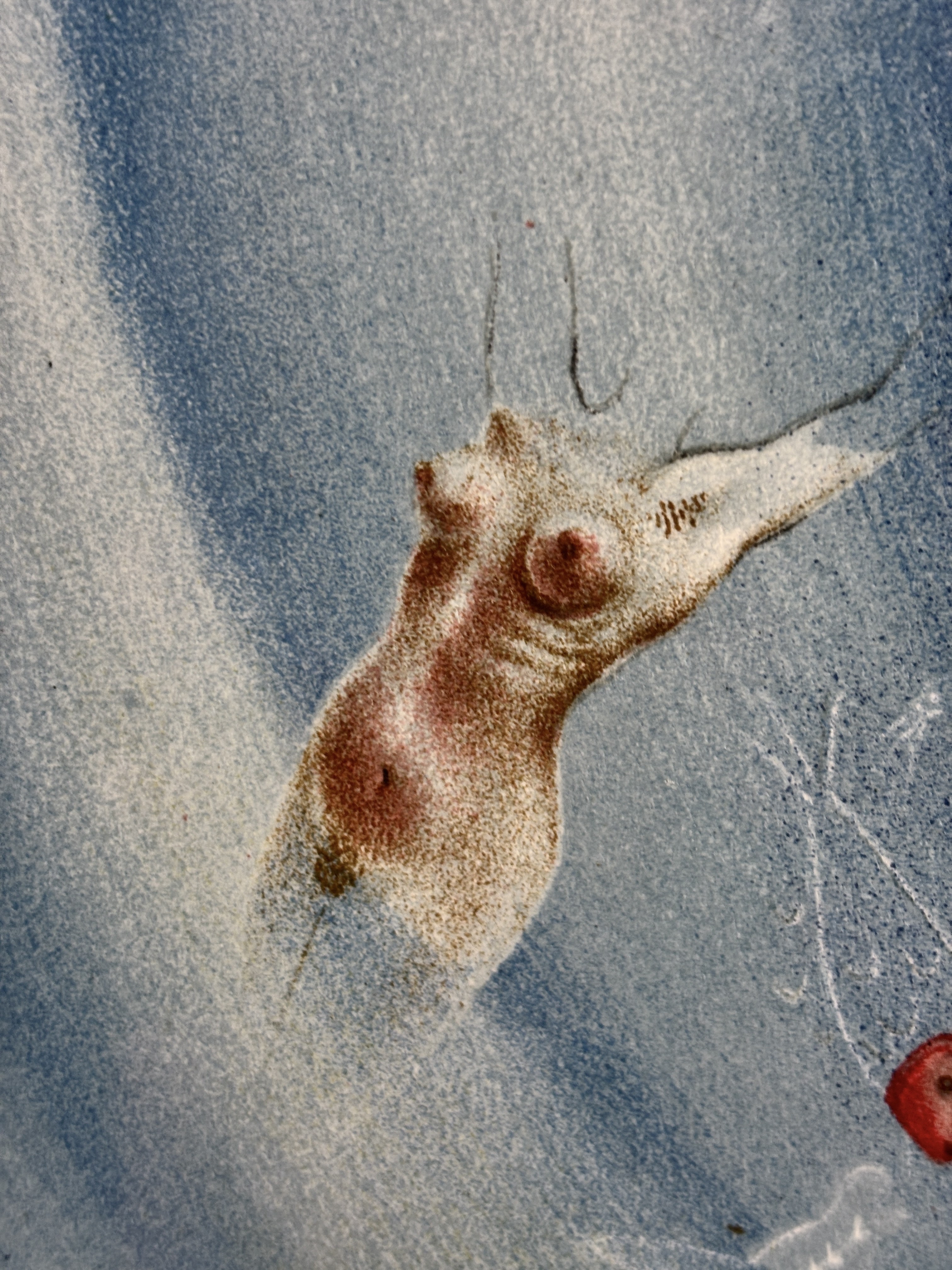
Semi-transparent, ghostly figures of female nudes and torsos levitate around the central “structure.” On the right is a figure with classical sculptural proportions, contrasting with the geometric form. The entire composition is set on a sandy, triangular promontory against the backdrop of a calm, blue sea (a reference to the landscape of Cadaqués and Port Ligat in Catalonia).
The original, painted in 1927 shortly after Dalí completed his military service, is housed at the Museum in St. Petersburg, Florida (USA). The original is part of the permanent collection, bequeathed by A. Reynolds and Eleanor Morse (the most famous American collectors of Dalí’s works).