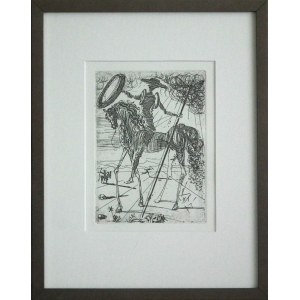
Etching "restrike" , heavyweight velin paper,, 17 x 12.5 cm (plate imprint), signed on plate p.d.
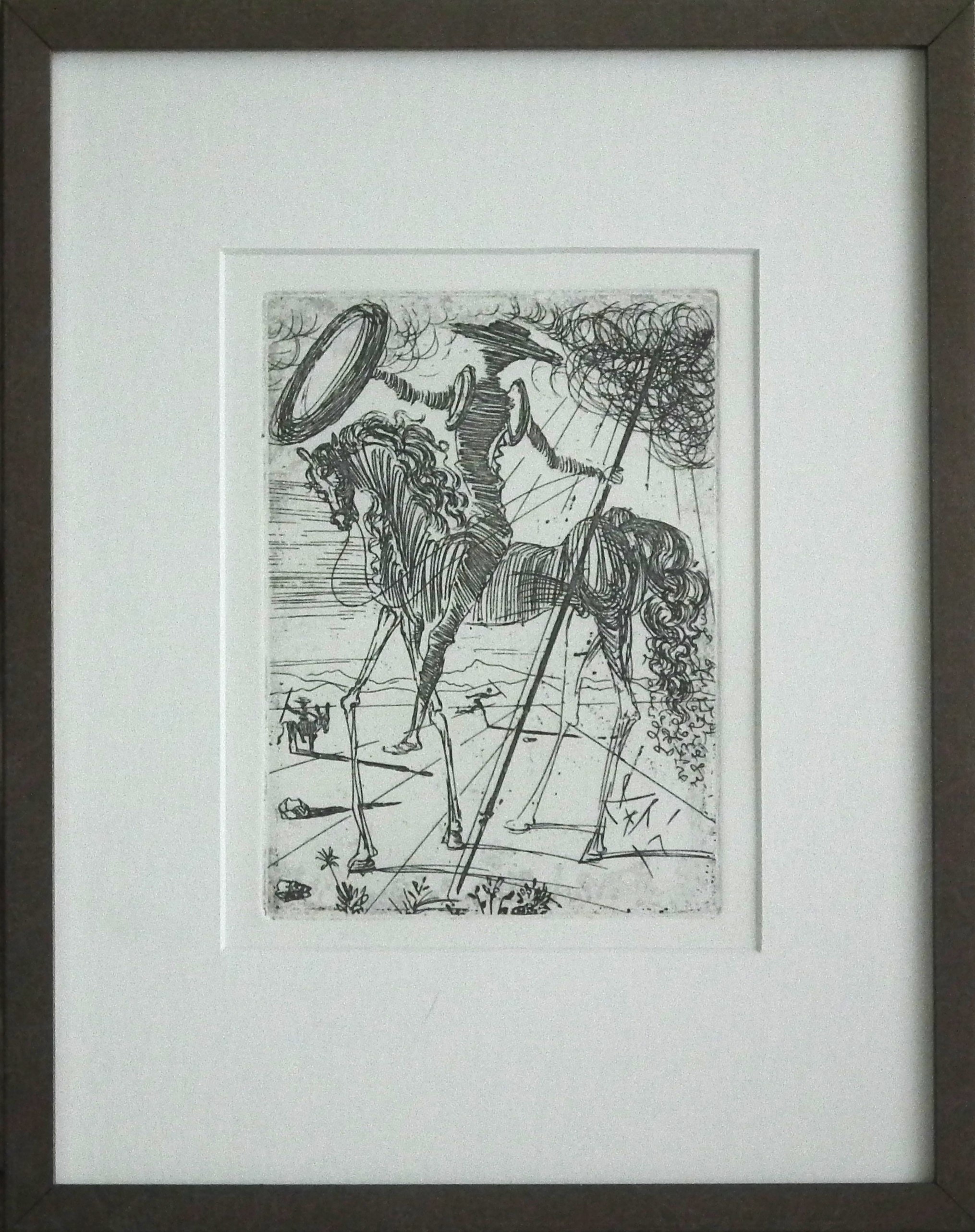
Salvador Dalí, one of the most famous Surrealists, created many works inspired by literature and culture, including the composition "Don Quichotte" made in ink on paper. Dalí was fascinated by the character of Don Quixote, the protagonist ofMiguel de Cervantes' novel, which was reflected in hiswork.
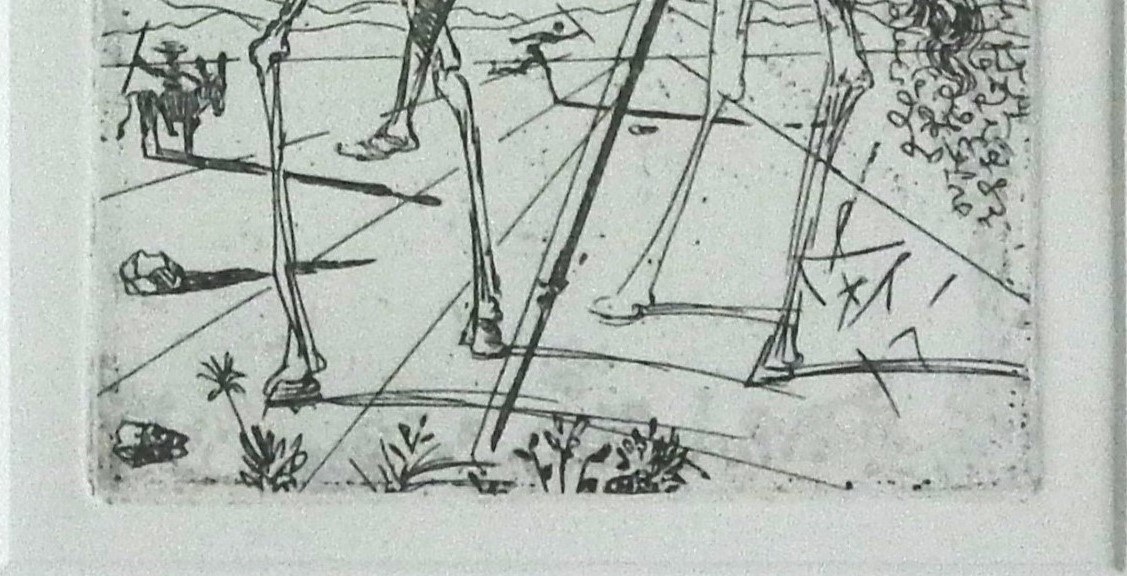
Salvador Dalí's composition "Don Quichotte" depicts thefigure of Don Quixote in the artist's characteristic surrealist style: Don Quixote is depicted as a tall, emaciatedfigure, in keeping with Cervantes' literary description. He is usually shown riding a horse, symbolizing his chivalrous ambition andquestfor great deeds.
Dalíuses simple lines and contours that capture the essence of the figure without excess detail. Thisapproachemphasizes the abstract and timeless nature of the character in a minimalist form. The lines of the drawing are dynamic, suggesting movement and energy, in keeping with Don Quixote's adventurous nature. Dalí often used symbolism in his works, and "Don Quichotte" is no exception: Thefigureof Don Quixote is a symbol of idealism and the struggle for unrealistic goals. Dalí, like Don Quixote, was a dreamer who pushed the boundaries ofreality in his works. Thecharacterof Don Quixote fits perfectly with the surrealist vision of theworld, in which the line betweenrealityand fantasy is fluid. As a leading representative of Surrealism, Dalí was fascinated by dreams, thesubconsciousandirrationality, which corresponded perfectly with the figure of Don Quixote, who often lived in a world ofimagination. As a Spaniard, Dalí had deep ties to his country's culture. Thefigureof Don Quixote, a symbol of theSpanishspirit, was a natural choice for the artist, who often used thecharacter of Don Quixote in hiswork.
Salvador Dalí's composition "Don Quichotte" is on display at the Fundació Gala-Salvador Dalí in Figueres, Spain. This foundation,foundedby Dalí himself, has one of the most extensive collections of his works and is a major center for thestudy of hiswork. Themuseum in Figueres, known as the Teatre-Museu Dalí, is one of themost important places on Spain's artistic map and attracts thousands of tourists from all over theworld tosee the works of the master of Surrealism.