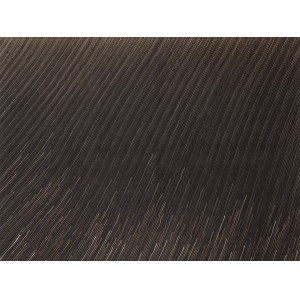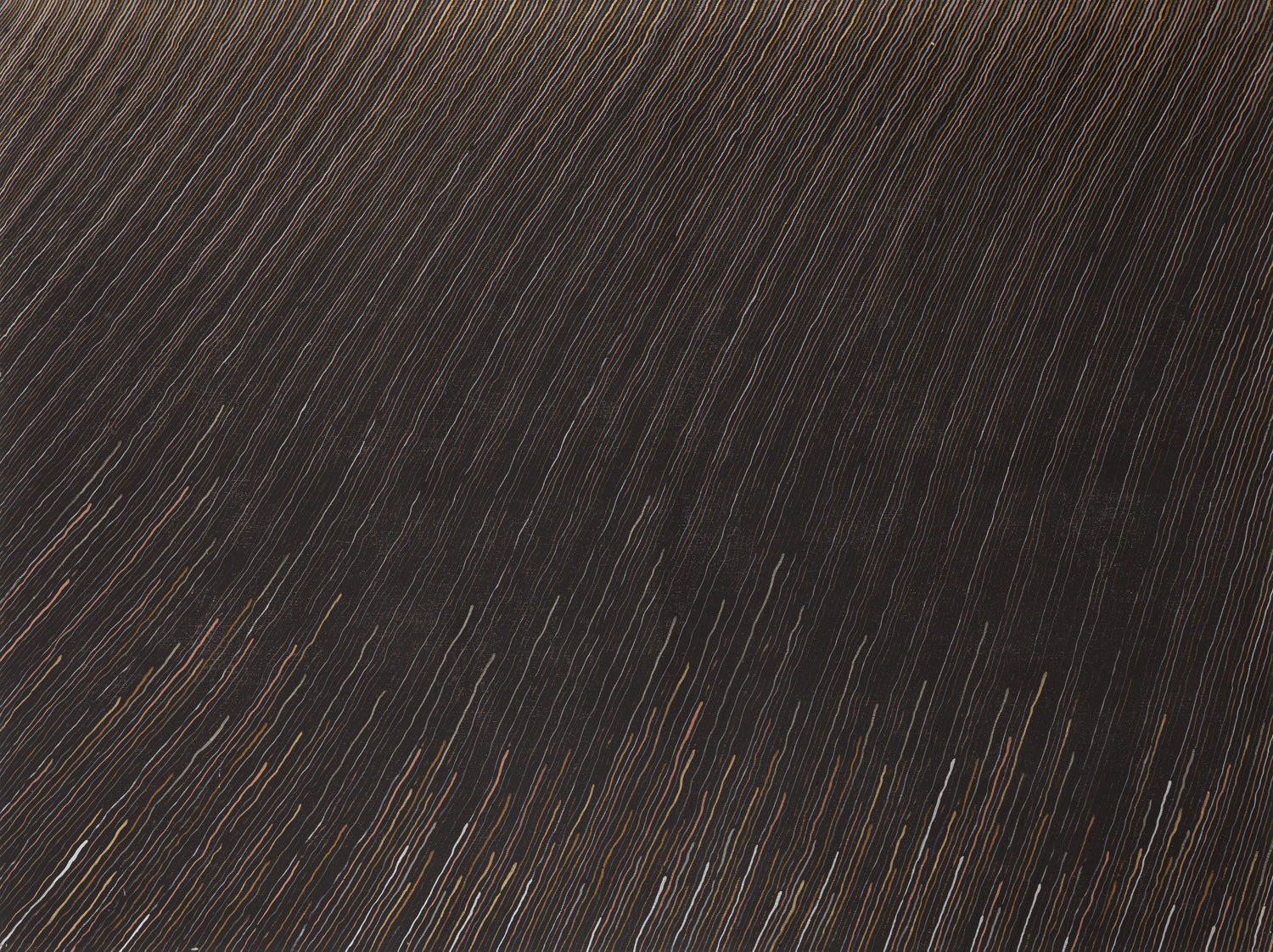


Dimensions: 120 x 160 cm
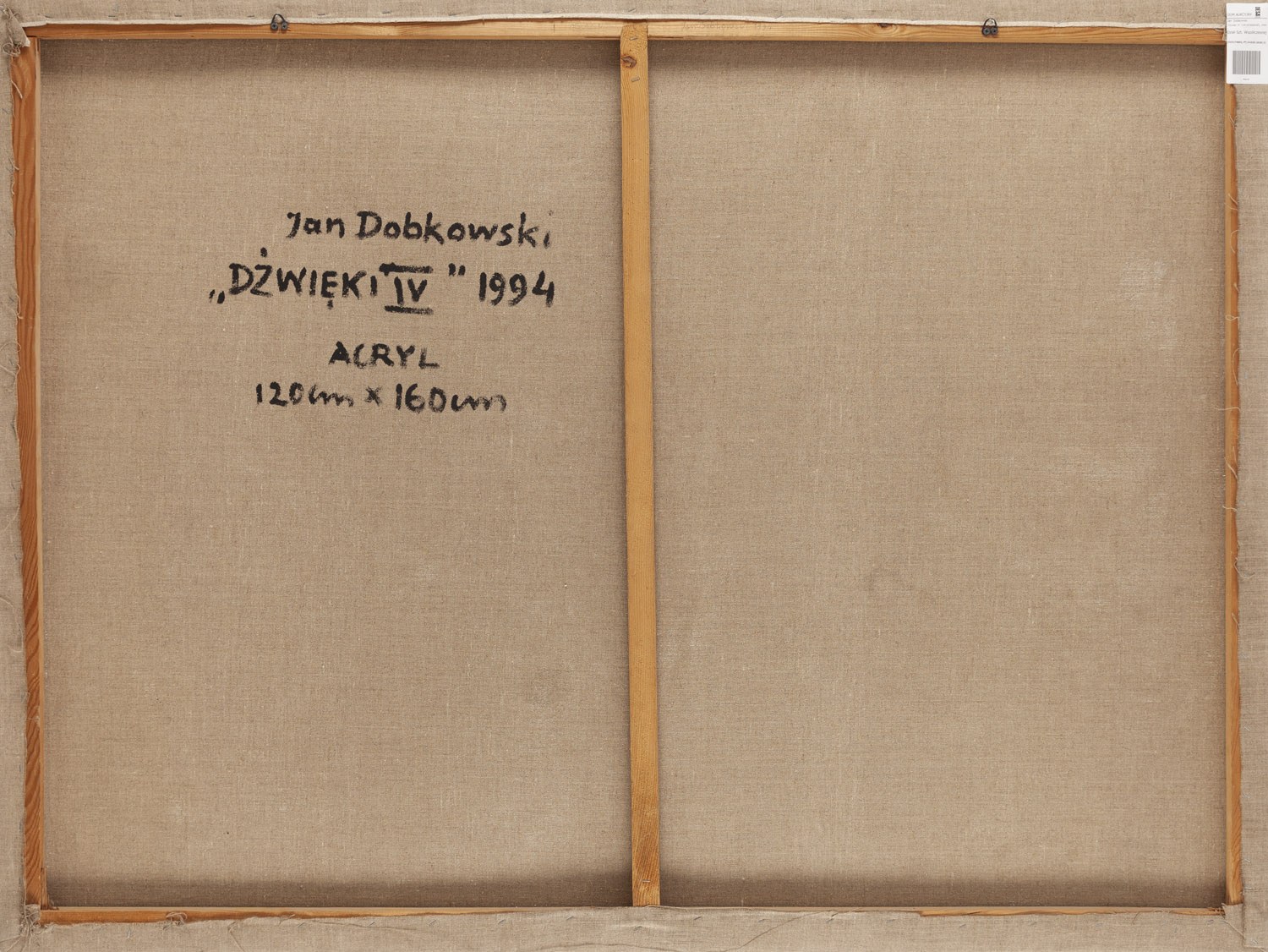
Signed, dated, and labeled on the reverse: "Jan Dobkowski | 'Sounds IV' 1994 | ACRYL | 120 x 160 cm"
Exhibited
“Jan Dobkowski. Prelude,” Art New Media Gallery, Warsaw, 2000
Biography
Painter and printmaker. From 1962 to 1968, he studied at the Academy of Fine Arts in Warsaw in the Department of Painting under Prof. Juliusz Studnicki and Prof. Jan Cybis. He was a co-founder (along with Jerzy Jurry Zieliński) of the “Neo-Neo” group (1967–1970). Illustrator of Guillaume Apollinaire’s poems *The Menagerie, or the Retinue of Orpheus* (1963). In 1968, Dobkowski participated in the exhibition “Secesja-Secesja?” at the Contemporary Art Gallery in Warsaw, which generated significant interest in the media and among critics. Following the success of that exhibition, his paintings were included in the prestigious exhibition “Polish Contemporary Painting: Sources and Explorations” in Paris. Soon after, the Guggenheim Museum in New York acquired his painting “Double Girl” (1968)—Dobkowski’s first red-and-green work—for its collection. An entire series of paintings in this color scheme was created a year later, all painted in a uniform 200 x 150 cm format. Against green backgrounds, red silhouettes of male and female figures appeared in various situations; the latter were most often voluptuous, caricatured, and exaggerated in form. Women with multiple breasts shaped like apples or pears exuded a powerful sense of eroticism and sensuality. Some forms in Dobkowski’s paintings transformed seamlessly into others: a woman’s breast became a plump apple, a heart a sperm cell, and the spine and ribs an organic, supple structure. The green color suggested nature, elemental vitality, and life. These paintings became the starting point for many spatial projects and subsequent series of paintings. During martial law, he participated in independent cultural initiatives. In 1972, he was a fellow of the Kosciuszko Foundation in New York. He is the recipient of awards including: the Cyprian Kamil Norwid Critics’ Award (1978); the Jan Cybis Award (1994) for his lifetime achievement.